Min Byulchorong, Lee Heejin, Song Ji Hye, Han Myung Joo, Chung Jayong
Department of Food and Nutrition, College of Human Ecology, Kyung Hee University, 26 Kyungheedae-ro, Dongdaemun-gu, Seoul 130-701, Korea.
Nutr Res Pract. 2014 Dec;8(6):655-61. doi: 10.4162/nrp.2014.8.6.655. Epub 2014 Oct 15.
BACKGROUND/OBJECTIVES: The purpose of this study was to examine the effects and associated mechanisms of arctiin, a lignan compound found in burdock, on adipogenesis in 3T3-L1 cells. Also, the effects of arctiin supplementation in obese mice fed a high-fat diet on adiposity were examined.
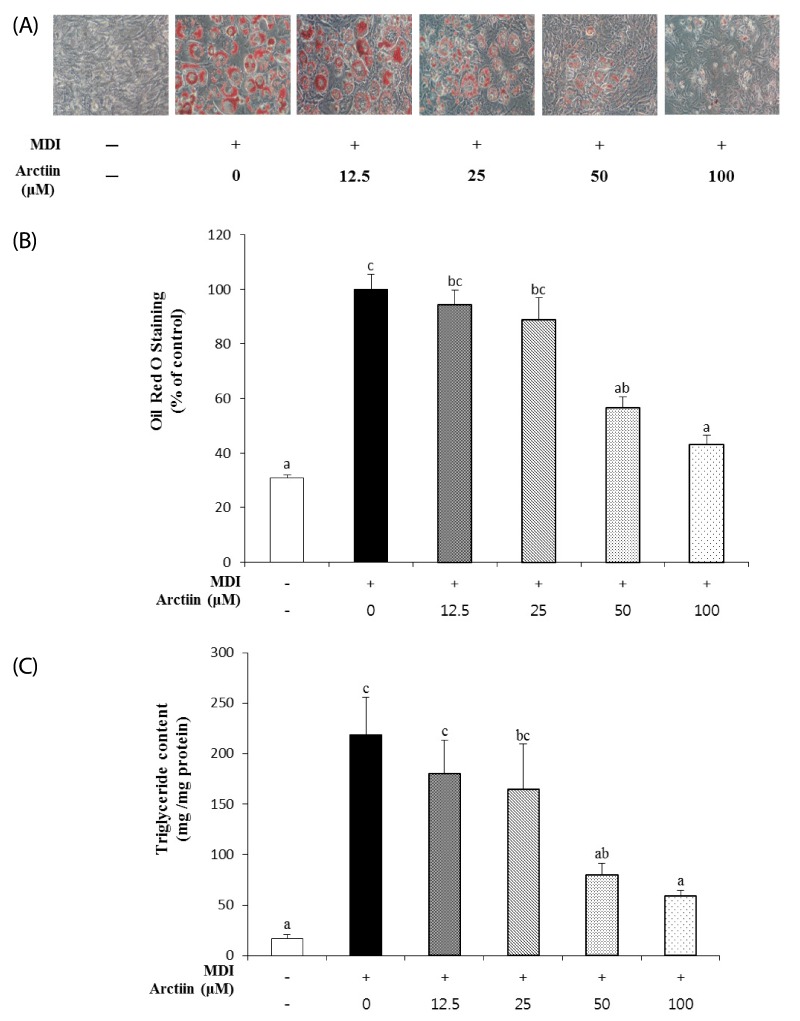
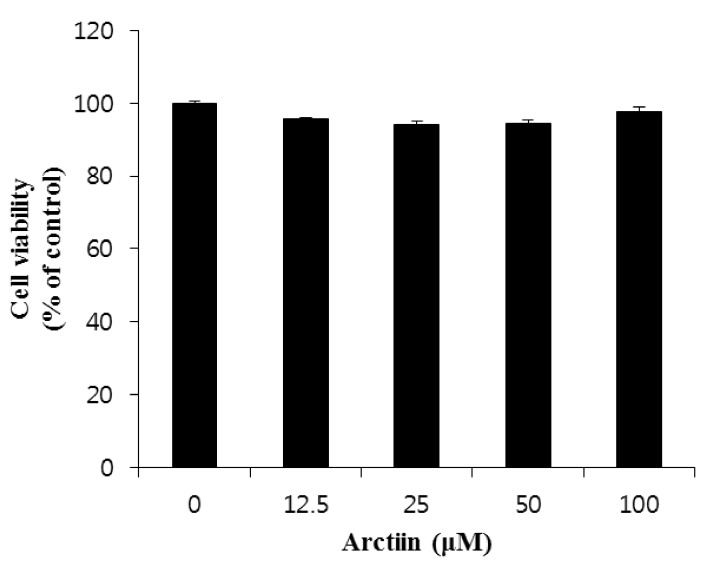
MATERIALS/METHODS: 3T3-L1 cells were treated with arctiin (12.5 to 100 µM) during differentiation for 8 days. The accumulation of lipid droplets was determined by Oil Red O staining and intracellular triglyceride contents. The expressions of genes related to adipogenesis were measured by real-time RT-PCR and Western blot analyses. For in vivo study, C57BL/6J mice were first fed either a control diet (CON) or high-fat diet (HF) to induce obesity, and then fed CON, HF, or HF with 500 mg/kg BW arctiin (HF + AC) for four weeks.
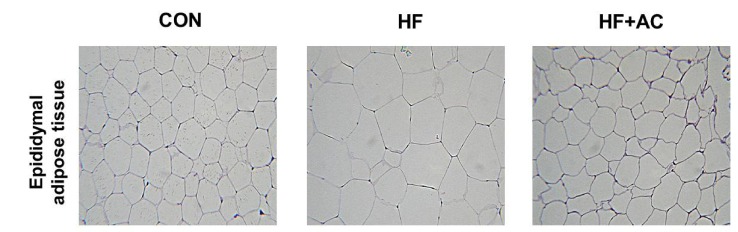
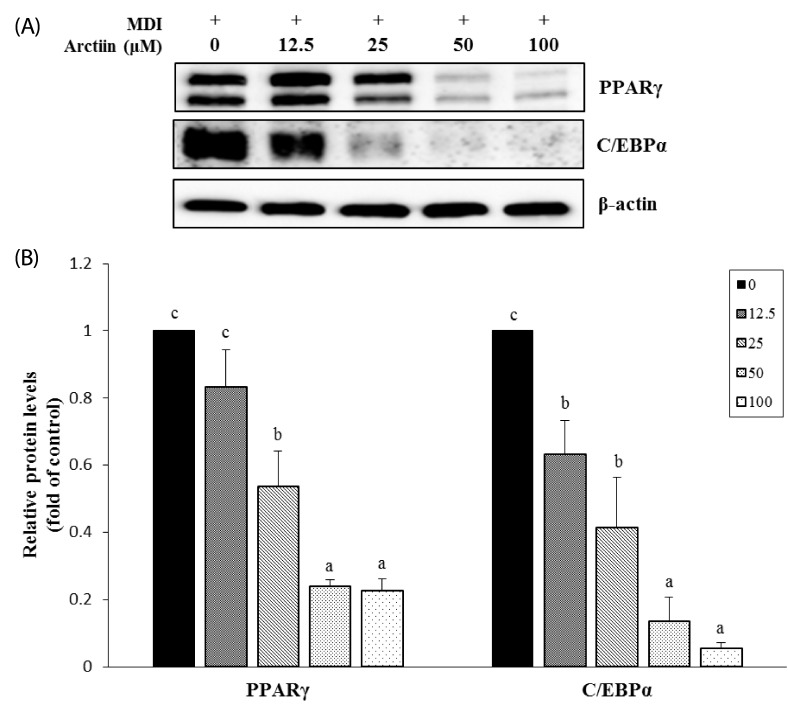
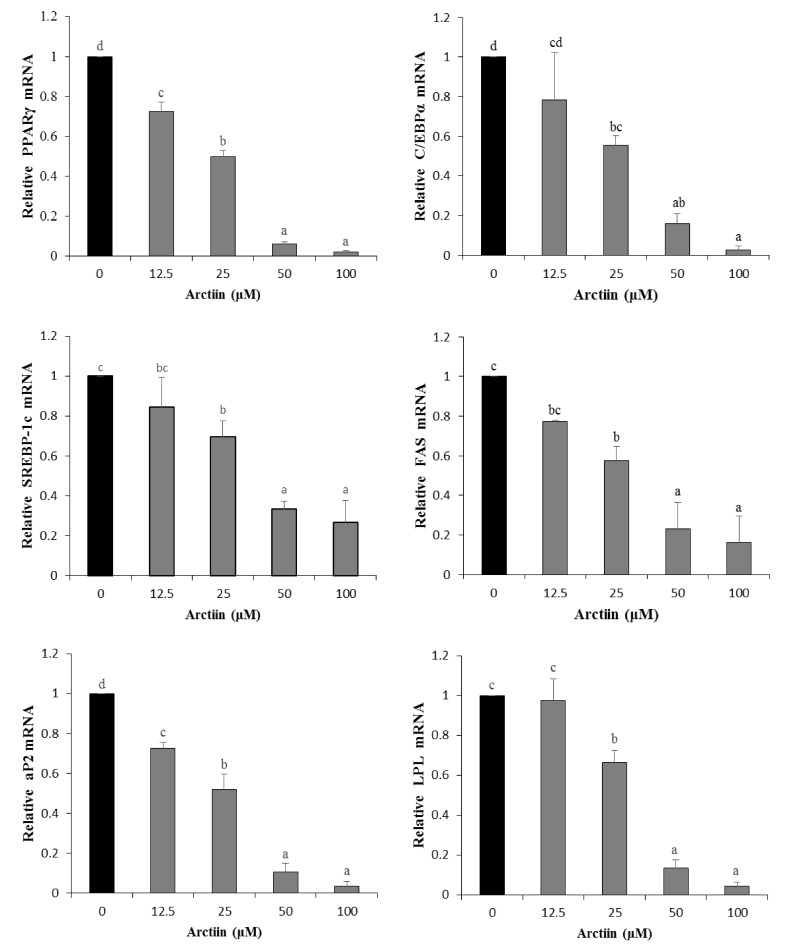
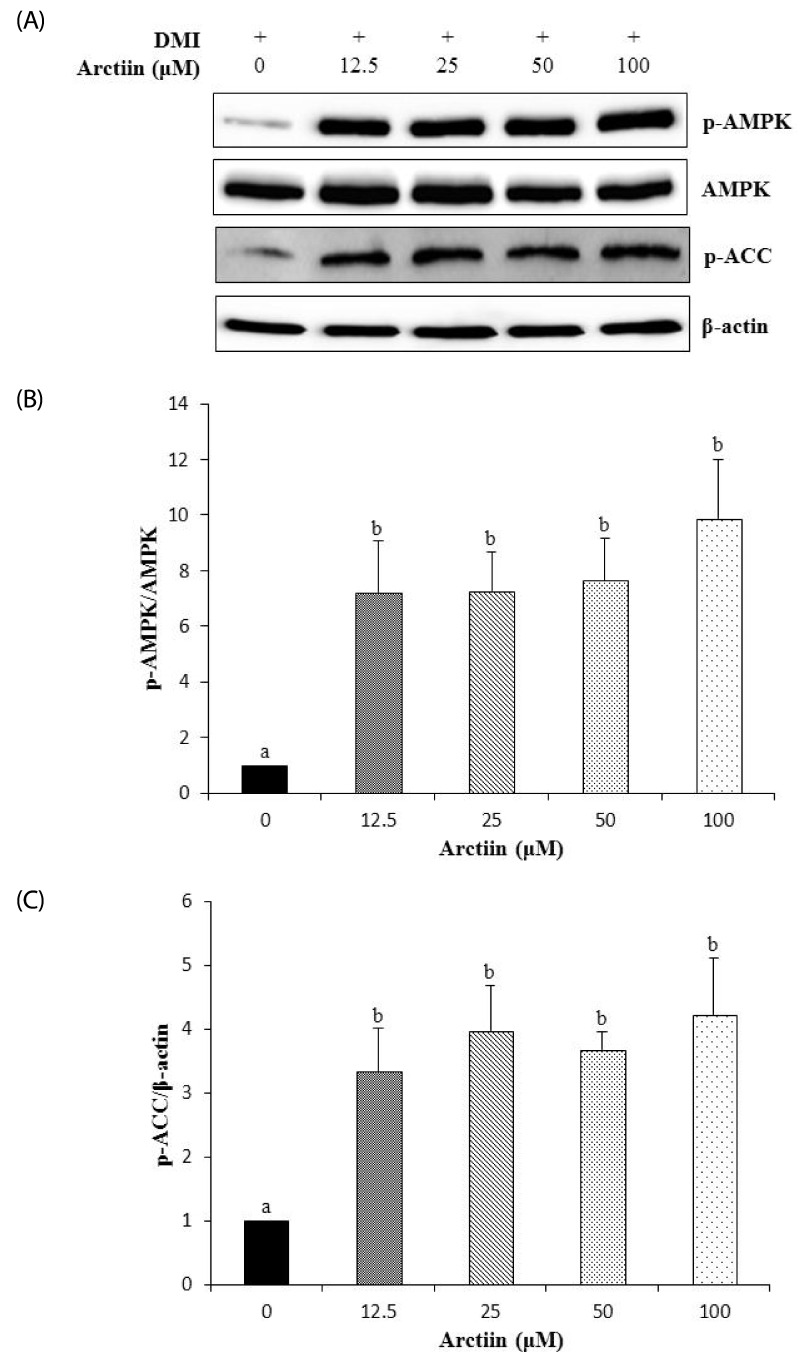
Arctiin treatment to 3T3-L1 pre-adipocytes markedly decreased adipogenesis in a dose-dependent manner. The arctiin treatment significantly decreased the protein levels of the key adipogenic regulators PPARγ and C/EBPα, and also significantly inhibited the expression of SREBP-1c, fatty acid synthase, fatty acid-binding protein and lipoprotein lipase. Also, arctiin greatly increased the phosphorylation of AMP-activated protein kinase (AMPK) and its downstream target phosphorylated-acetyl CoA carboxylase. Furthermore, administration of arctiin significantly decreased the body weight in obese mice fed with the high-fat diet. The epididymal, perirenal or total visceral adipose tissue weights of mice were all significantly lower in the HF + AC than in the HF. Arctiin administration also decreased the sizes of lipid droplets in the epididymal adipose tissue.
Arctiin inhibited adipogenesis in 3T3-L1 adipocytes through the inhibition of PPARγ and C/EBPα and the activation of AMPK signaling pathways. These findings suggest that arctiin has a potential benefit in preventing obesity.
背景/目的:本研究旨在探讨牛蒡中发现的木脂素化合物牛蒡子苷对3T3-L1细胞脂肪生成的影响及其相关机制。此外,还研究了在高脂饮食喂养的肥胖小鼠中补充牛蒡子苷对肥胖的影响。
材料/方法:在3T3-L1细胞分化的8天时间里,用牛蒡子苷(12.5至100μM)对其进行处理。通过油红O染色和细胞内甘油三酯含量来测定脂滴的积累情况。通过实时逆转录聚合酶链反应(RT-PCR)和蛋白质免疫印迹分析来检测与脂肪生成相关基因的表达。对于体内研究,首先给C57BL/6J小鼠喂食对照饮食(CON)或高脂饮食(HF)以诱导肥胖,然后分别喂食CON、HF或添加500mg/kg体重牛蒡子苷的HF(HF + AC)四周。
用牛蒡子苷处理3T3-L1前脂肪细胞可显著降低脂肪生成,且呈剂量依赖性。牛蒡子苷处理显著降低了关键脂肪生成调节因子PPARγ和C/EBPα的蛋白质水平,还显著抑制了SREBP-1c、脂肪酸合酶、脂肪酸结合蛋白和脂蛋白脂肪酶的表达。此外,牛蒡子苷极大地增加了AMP激活的蛋白激酶(AMPK)及其下游靶点磷酸化乙酰辅酶A羧化酶的磷酸化水平。此外,给高脂饮食喂养的肥胖小鼠施用牛蒡子苷可显著降低其体重。HF + AC组小鼠的附睾、肾周或总内脏脂肪组织重量均显著低于HF组。施用牛蒡子苷还减小了附睾脂肪组织中脂滴的大小。
牛蒡子苷通过抑制PPARγ和C/EBPα以及激活AMPK信号通路来抑制3T3-L1脂肪细胞的脂肪生成。这些发现表明牛蒡子苷在预防肥胖方面具有潜在益处。