Li Zhiwei, Jia Zhiliang, Gao Yong, Xie Dacheng, Wei Daoyan, Cui Jiujie, Mishra Lopa, Huang Suyun, Zhang Yanqiao, Xie Keping
Department of Gastrointestinal Oncology, The Harbin Medical University Cancer Hospital, Harbin, People's Republic of China. Department of Gastroenterology, Hepatology & Nutrition, The University of Texas MD Anderson Cancer Center, Houston, Texas. Department of Neurosurgery, The University of Texas MD Anderson Cancer Center, Houston, Texas.
Department of Gastroenterology, Hepatology & Nutrition, The University of Texas MD Anderson Cancer Center, Houston, Texas.
Clin Cancer Res. 2015 Feb 15;21(4):844-53. doi: 10.1158/1078-0432.CCR-14-2437. Epub 2014 Dec 11.
Dysregulated signaling of nuclear transcription factors vitamin D receptor (VDR) and Forkhead box M1 (FOXM1) plays important roles in transformation and tumorigenesis. In this study, we sought to determine whether VDR signaling causally affected FOXM1 signaling in and pathogenesis of pancreatic ductal adenocarcinoma (PDAC).
Genetic and pharmacologic approaches were used to manipulate VDR signaling. The impacts of altered VDR signaling on FOXM1 expression and function in PDAC cells were determined using molecular and biochemical methods, whereas those on PDAC cell biology and tumorigenicity were determined using in vitro and in vivo experimental systems. The clinical relevance of our findings was validated by analyzing human PDAC specimens.
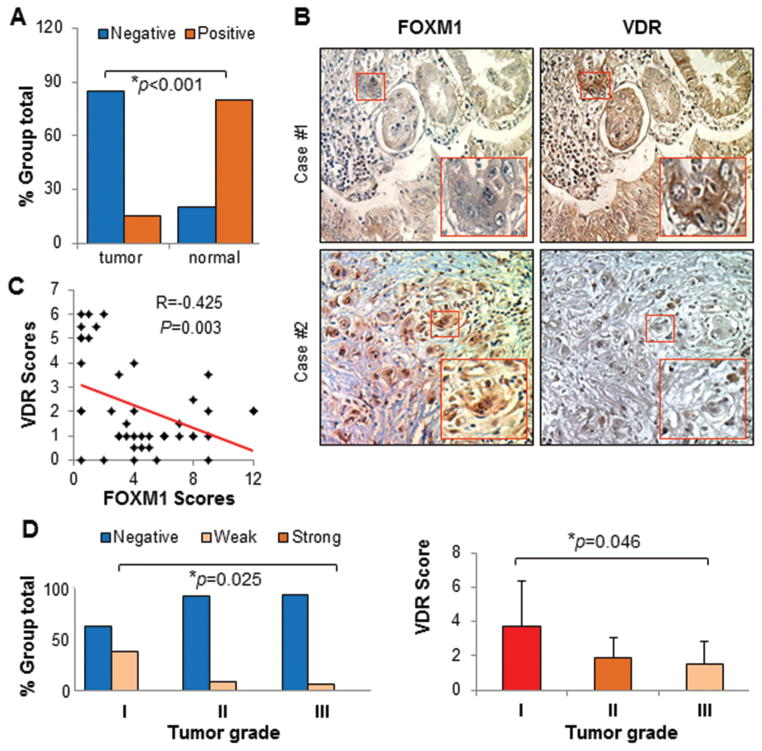
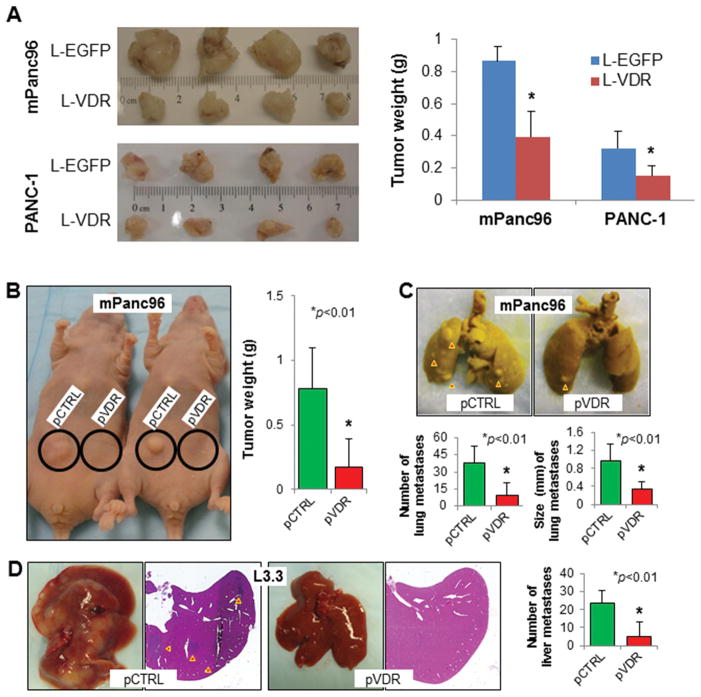
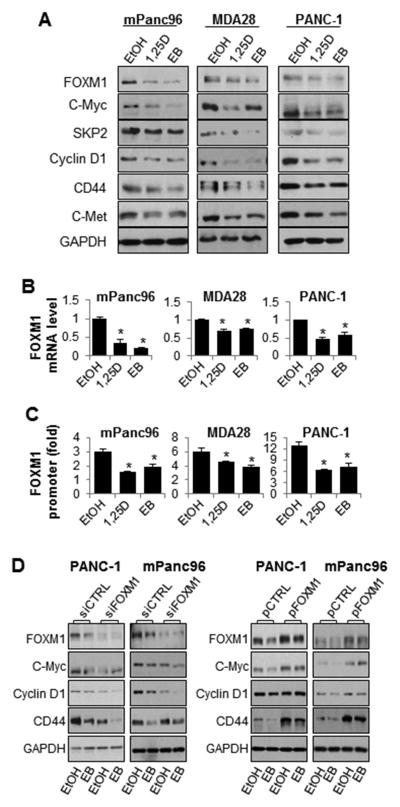
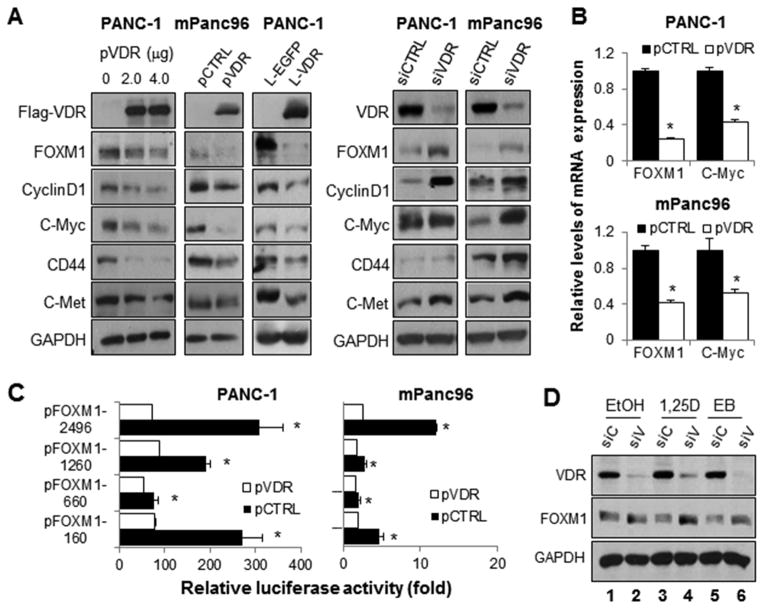
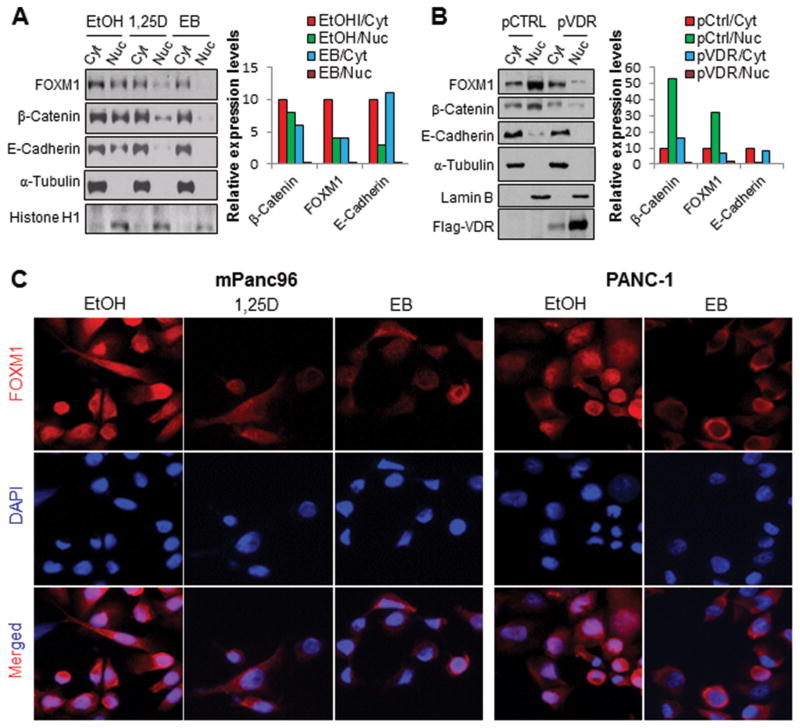
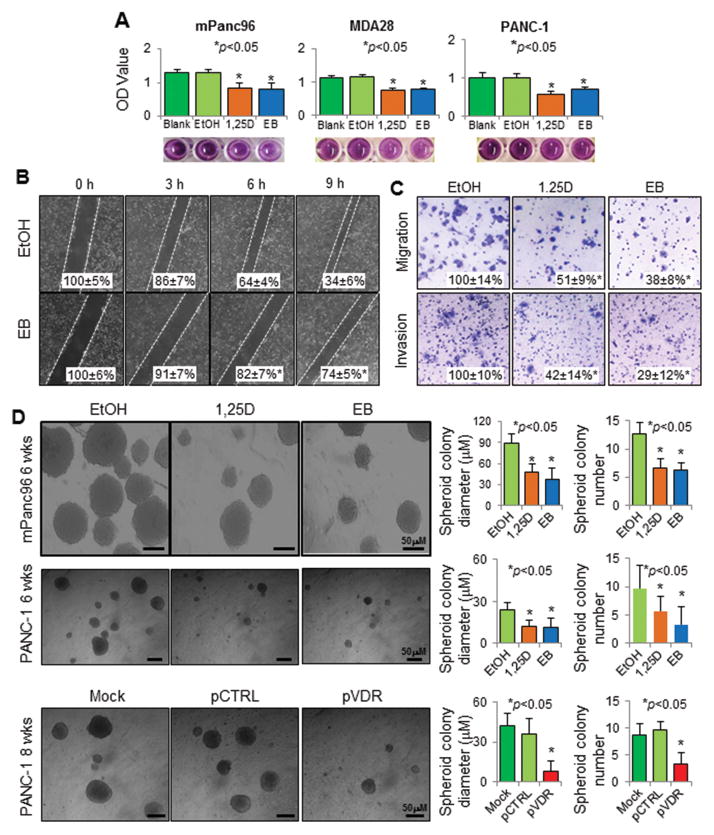
There was a striking inverse correlation between reduced expression of VDR and increased expression of FOXM1 in human PDAC cells and tissues. Treatment of PDAC cells with 1,25-dihydroxyvitamin D3 (1,25D), its synthetic analogue EB1089 (EB), and VDR transgenics drastically inhibited FOXM1 signaling and markedly suppressed tumor stemness, growth, and metastasis. Mechanistically, 1,25D and EB repressed FOXM1 transcription and reduced the expression level of nuclear FOXM1 protein.
Inactivation of Vitamin D/VDR signaling is a critical contributor to PDAC development and progression via elevated expression and function of FOXM1 and enhanced PDAC cell stemness, invasion, and metastasis.
核转录因子维生素D受体(VDR)和叉头框蛋白M1(FOXM1)信号失调在细胞转化和肿瘤发生中起重要作用。在本研究中,我们试图确定VDR信号是否在胰腺导管腺癌(PDAC)的发病机制中因果性地影响FOXM1信号。
采用基因和药理学方法来调控VDR信号。使用分子和生化方法确定VDR信号改变对PDAC细胞中FOXM1表达和功能的影响,而使用体外和体内实验系统确定其对PDAC细胞生物学和致瘤性的影响。通过分析人PDAC标本验证我们研究结果的临床相关性。
在人PDAC细胞和组织中,VDR表达降低与FOXM1表达增加之间存在显著的负相关。用1,25-二羟基维生素D3(1,25D)、其合成类似物EB1089(EB)和VDR转基因处理PDAC细胞可显著抑制FOXM1信号,并明显抑制肿瘤干性、生长和转移。机制上,1,25D和EB抑制FOXM1转录并降低核FOXM1蛋白的表达水平。
维生素D/VDR信号失活是PDAC发生发展的关键因素,其通过提高FOXM1的表达和功能以及增强PDAC细胞的干性、侵袭和转移能力来实现。