Sadat Abu, Jeon Junhyun, Mir Albely Afifa, Kim Seongbeom, Choi Jaeyoung, Lee Yong-Hwan
Department of Agricultural Biotechnology, Plant Genomics and Breeding Institute, and Research Institute for Agriculture and Life Sciences, Seoul National University, Seoul 151-921, Korea.
Department of Agricultural Biotechnology, Plant Genomics and Breeding Institute, and Research Institute for Agriculture and Life Sciences, Seoul National University, Seoul 151-921, Korea ; Center for Fungal Pathogenesis, Plant Genomics and Breeding Institute, and Research Institute for Agriculture and Life Sciences, Seoul National University, Seoul 151-921, Korea ; Center for Fungal Genetic Resources, Plant Genomics and Breeding Institute, and Research Institute for Agriculture and Life Sciences, Seoul National University, Seoul 151-921, Korea.
Plant Pathol J. 2014 Dec;30(4):367-74. doi: 10.5423/PPJ.OA.08.2014.0072. Epub 2014 Dec 15.
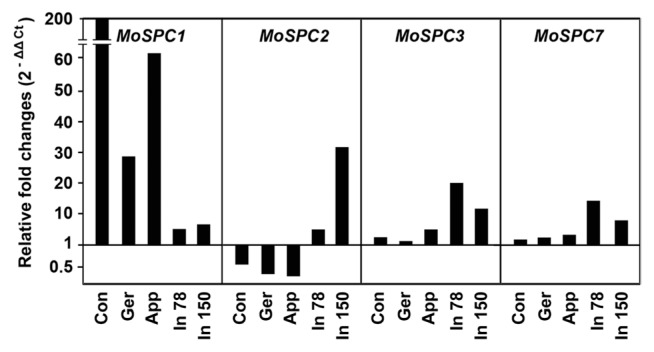
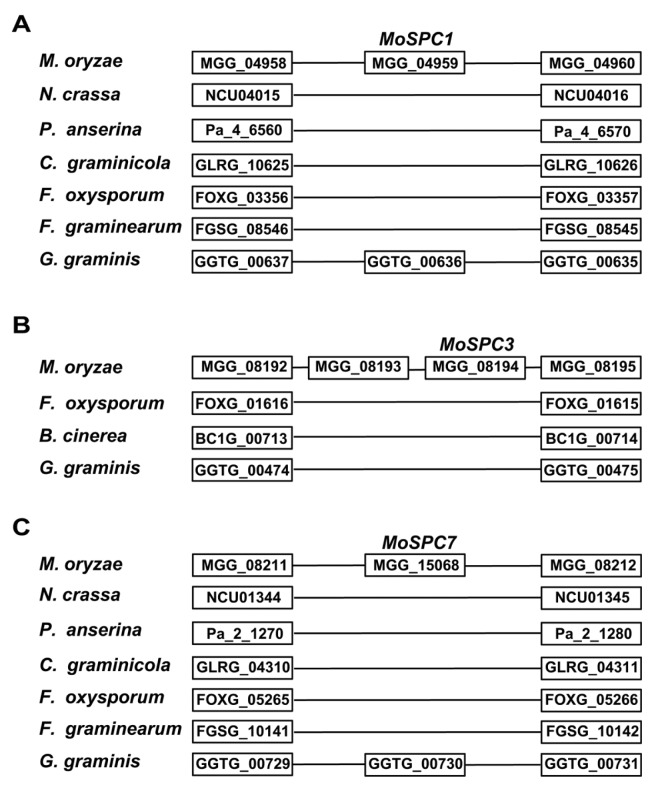
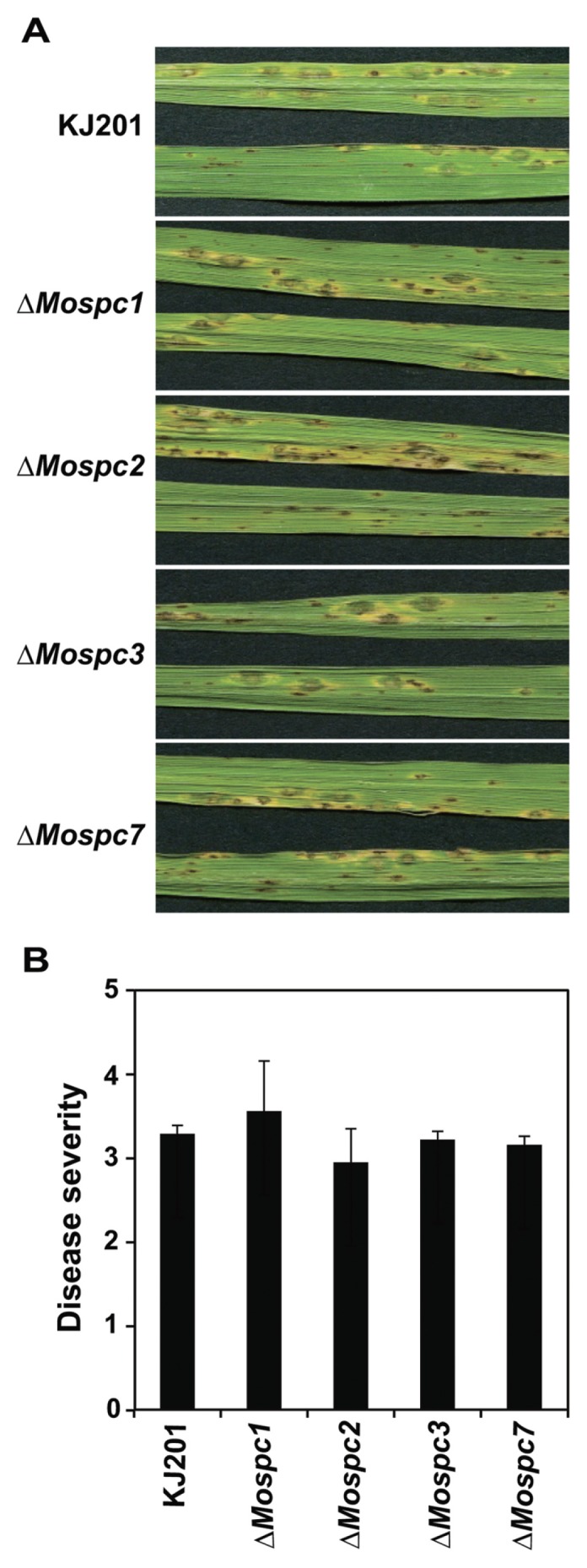
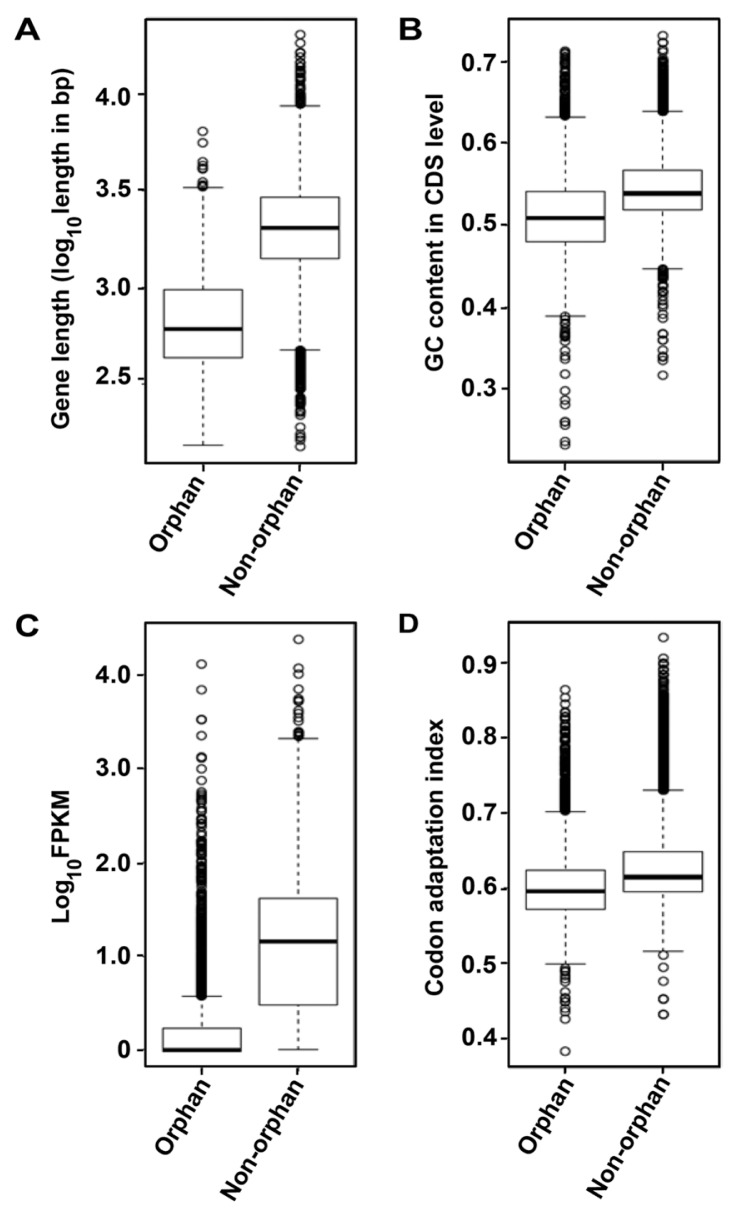
Genomes contain a large number of unique genes which have not been found in other species. Although the origin of such "orphan" genes remains unclear, they are thought to be involved in species-specific adaptive processes. Here, we analyzed seven orphan genes (MoSPC1 to MoSPC7) prioritized based on in planta expressed sequence tag data in the rice blast fungus, Magnaporthe oryzae. Expression analysis using qRT-PCR confirmed the expression of four genes (MoSPC1, MoSPC2, MoSPC3 and MoSPC7) during plant infection. However, individual deletion mutants of these four genes did not differ from the wild-type strain for all phenotypes examined, including pathogenicity. The length, GC contents, codon adaptation index and expression during mycelial growth of the four genes suggest that these genes formed during the evolutionary history of M. oryzae. Synteny analyses using closely related fungal species corroborated the notion that these genes evolved de novo in the M. oryzae genome. In this report, we discuss our inability to detect phenotypic changes in the four deletion mutants. Based on these results, the four orphan genes may be products of de novo gene birth processes, and their adaptive potential is in the course of being tested for retention or extinction through natural selection.
基因组包含大量在其他物种中未被发现的独特基因。尽管此类“孤儿”基因的起源尚不清楚,但它们被认为参与了物种特异性的适应性过程。在此,我们分析了基于稻瘟病菌(Magnaporthe oryzae)植物表达序列标签数据而被优先选择的七个孤儿基因(MoSPC1至MoSPC7)。使用qRT-PCR进行的表达分析证实了四个基因(MoSPC1、MoSPC2、MoSPC3和MoSPC7)在植物感染过程中的表达。然而,这四个基因的单个缺失突变体在包括致病性在内的所有检测表型上与野生型菌株并无差异。这四个基因的长度、GC含量、密码子适应指数以及在菌丝生长过程中的表达表明,这些基因是在稻瘟病菌的进化历史中形成的。使用密切相关真菌物种进行的共线性分析证实了这些基因在稻瘟病菌基因组中从头进化的观点。在本报告中,我们讨论了未能在四个缺失突变体中检测到表型变化的情况。基于这些结果,这四个孤儿基因可能是从头基因诞生过程的产物,并且它们的适应潜力正通过自然选择接受保留或淘汰的检验。