Kianianmomeni Arash, Ong Cheng Soon, Rätsch Gunnar, Hallmann Armin
Department of Cellular and Developmental Biology of Plants, University of Bielefeld, Universitätsstr, 25, D-33615 Bielefeld, Germany.
BMC Genomics. 2014 Dec 16;15:1117. doi: 10.1186/1471-2164-15-1117.
Alternative splicing is an essential mechanism for increasing transcriptome and proteome diversity in eukaryotes. Particularly in multicellular eukaryotes, this mechanism is involved in the regulation of developmental and physiological processes like growth, differentiation and signal transduction.
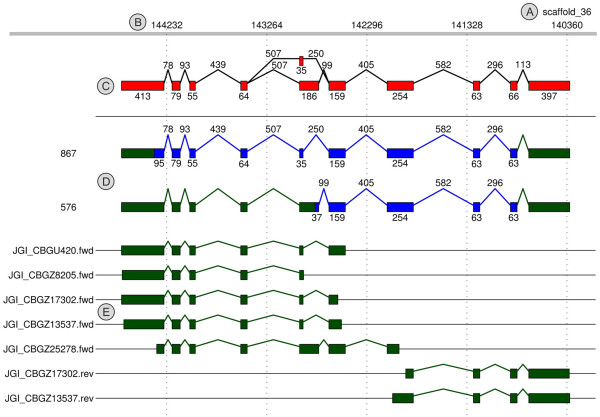
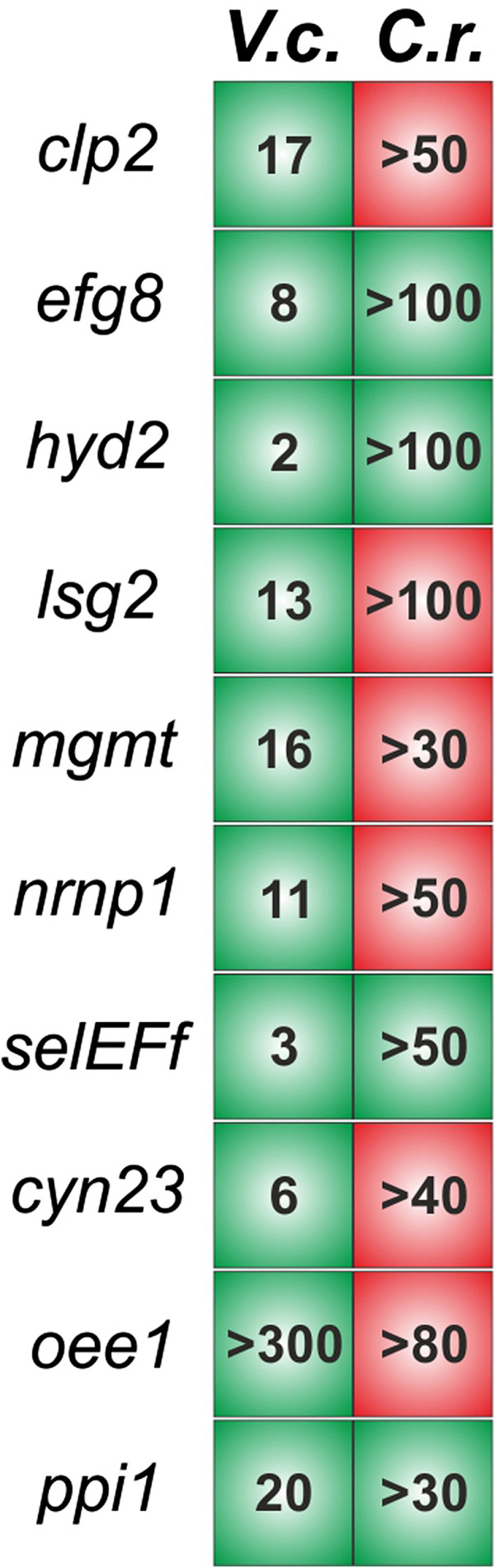
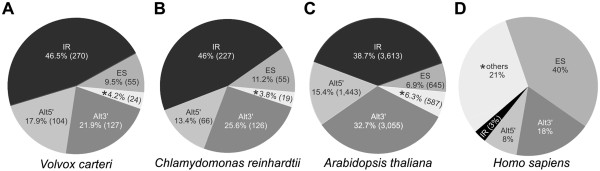
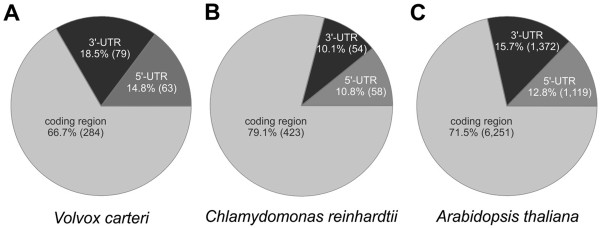
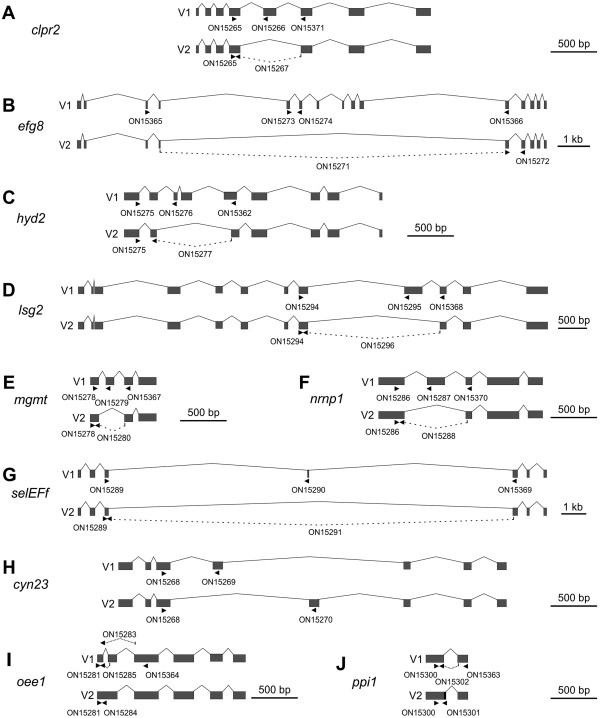
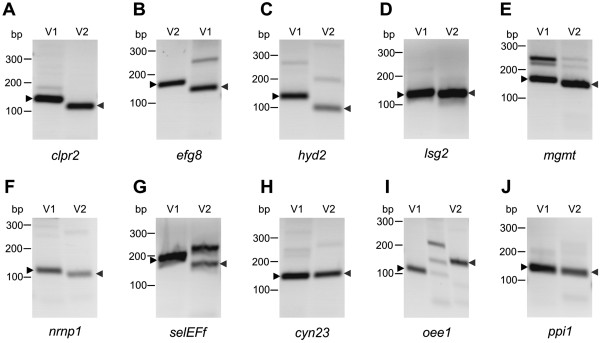
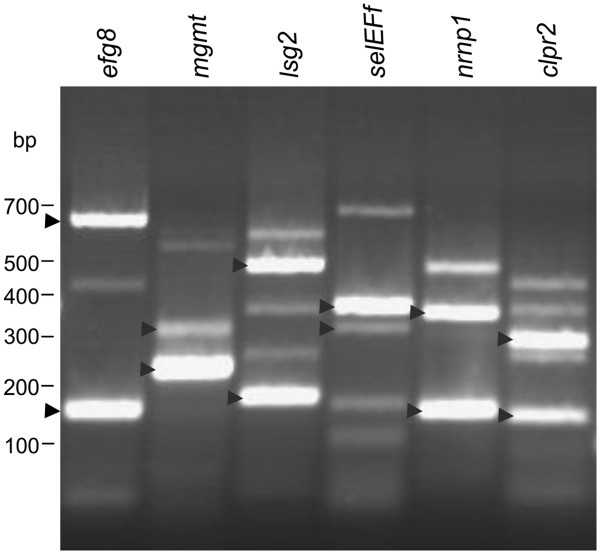
Here we report the genome-wide analysis of alternative splicing in the multicellular green alga Volvox carteri. The bioinformatic analysis of 132,038 expressed sequence tags (ESTs) identified 580 alternative splicing events in a total of 426 genes. The predominant type of alternative splicing in Volvox is intron retention (46.5%) followed by alternative 5' (17.9%) and 3' (21.9%) splice sites and exon skipping (9.5%). Our analysis shows that in Volvox at least 2.9% of the intron-containing genes are subject to alternative splicing. Considering the total number of sequenced ESTs, the Volvox genome seems to provide more favorable conditions (e.g., regarding length and GC content of introns) for the occurrence of alternative splicing than the genome of its close unicellular relative Chlamydomonas. Moreover, many randomly chosen alternatively spliced genes of Volvox do not show alternative splicing in Chlamydomonas. Since the Volvox genome contains about the same number of protein-coding genes as the Chlamydomonas genome (14,500 protein-coding genes), we assumed that alternative splicing may play a key role in generation of genomic diversity, which is required to evolve from a simple one-cell ancestor to a multicellular organism with differentiated cell types (Mol Biol Evol 31:1402-1413, 2014). To confirm the alternative splicing events identified by bioinformatic analysis, several genes with different types of alternatively splicing have been selected followed by experimental verification of the predicted splice variants by RT-PCR.
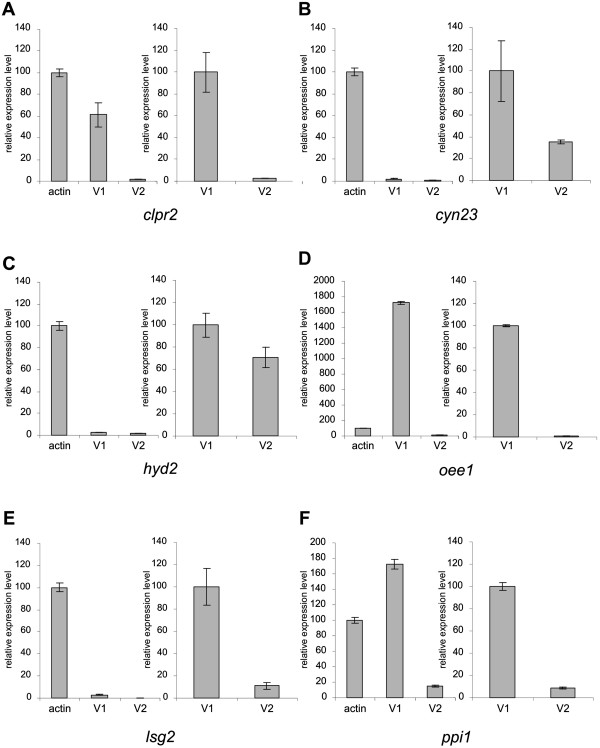
The results show that our approach for prediction of alternative splicing events in Volvox was accurate and reliable. Moreover, quantitative real-time RT-PCR appears to be useful in Volvox for analyses of relationships between the appearance of specific alternative splicing variants and different kinds of physiological, metabolic and developmental processes as well as responses to environmental changes.
可变剪接是增加真核生物转录组和蛋白质组多样性的重要机制。尤其在多细胞真核生物中,该机制参与调控生长、分化和信号转导等发育和生理过程。
在此我们报告了对多细胞绿藻团藻可变剪接的全基因组分析。对132,038个表达序列标签(EST)进行生物信息学分析,在总共426个基因中鉴定出580个可变剪接事件。团藻中主要的可变剪接类型是内含子保留(46.5%),其次是可变5'剪接位点(17.9%)、可变3'剪接位点(21.9%)和外显子跳跃(9.5%)。我们的分析表明,在团藻中至少约2.9%的含内含子基因会发生可变剪接。考虑到已测序EST的总数,与单细胞近亲衣藻的基因组相比,团藻基因组似乎为可变剪接的发生提供了更有利的条件(例如,关于内含子的长度和GC含量)。此外,许多随机选择的团藻可变剪接基因在衣藻中并未表现出可变剪接。由于团藻基因组中的蛋白质编码基因数量与衣藻基因组大致相同(约14,500个蛋白质编码基因),我们推测可变剪接可能在基因组多样性的产生中起关键作用,而这种多样性是从简单的单细胞祖先进化为具有分化细胞类型的多细胞生物所必需的(《分子生物学与进化》31:1402 - 1413, 2014)。为了证实通过生物信息学分析鉴定出的可变剪接事件,我们选择了几个具有不同类型可变剪接的基因,随后通过RT - PCR对预测的剪接变体进行实验验证。
结果表明我们预测团藻可变剪接事件的方法准确可靠。此外,定量实时RT - PCR似乎在团藻中对于分析特定可变剪接变体的出现与不同类型的生理、代谢和发育过程以及对环境变化的反应之间的关系很有用。