Kavanagh Deirdre M, Smyth Annya M, Martin Kirsty J, Dun Alison, Brown Euan R, Gordon Sarah, Smillie Karen J, Chamberlain Luke H, Wilson Rhodri S, Yang Lei, Lu Weiping, Cousin Michael A, Rickman Colin, Duncan Rory R
1] Institute of Biological Chemistry, Biophysics and Bioengineering, Heriot Watt University, Edinburgh EH14 4AS, UK [2] Edinburgh Super-Resolution Imaging Consortium, www.esric.org.
1] Institute of Biological Chemistry, Biophysics and Bioengineering, Heriot Watt University, Edinburgh EH14 4AS, UK [2] Edinburgh Super-Resolution Imaging Consortium, www.esric.org [3] Centre for Integrative Physiology, University of Edinburgh, George Square, Edinburgh EH8 9XD, UK.
Nat Commun. 2014 Dec 17;5:5774. doi: 10.1038/ncomms6774.
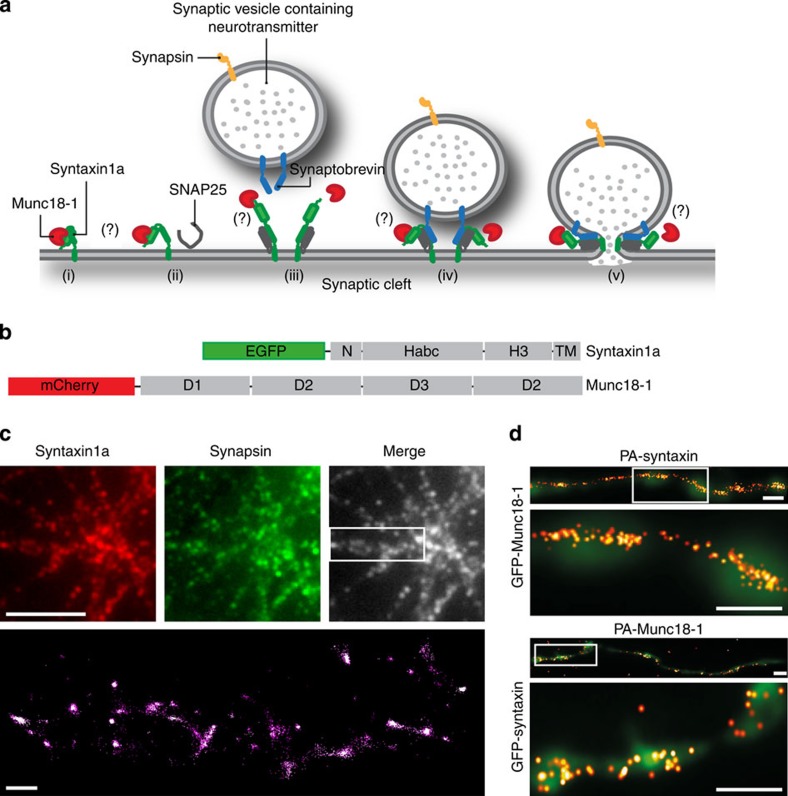
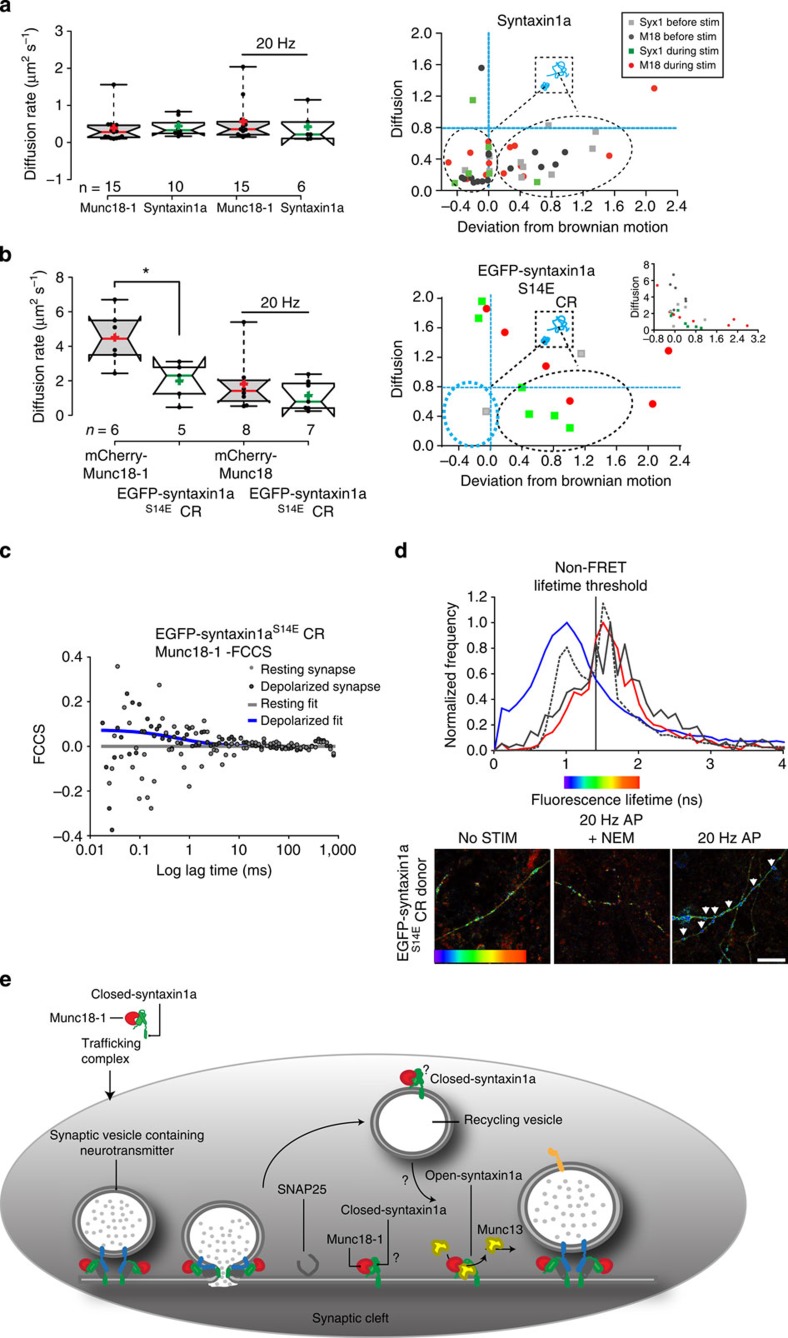
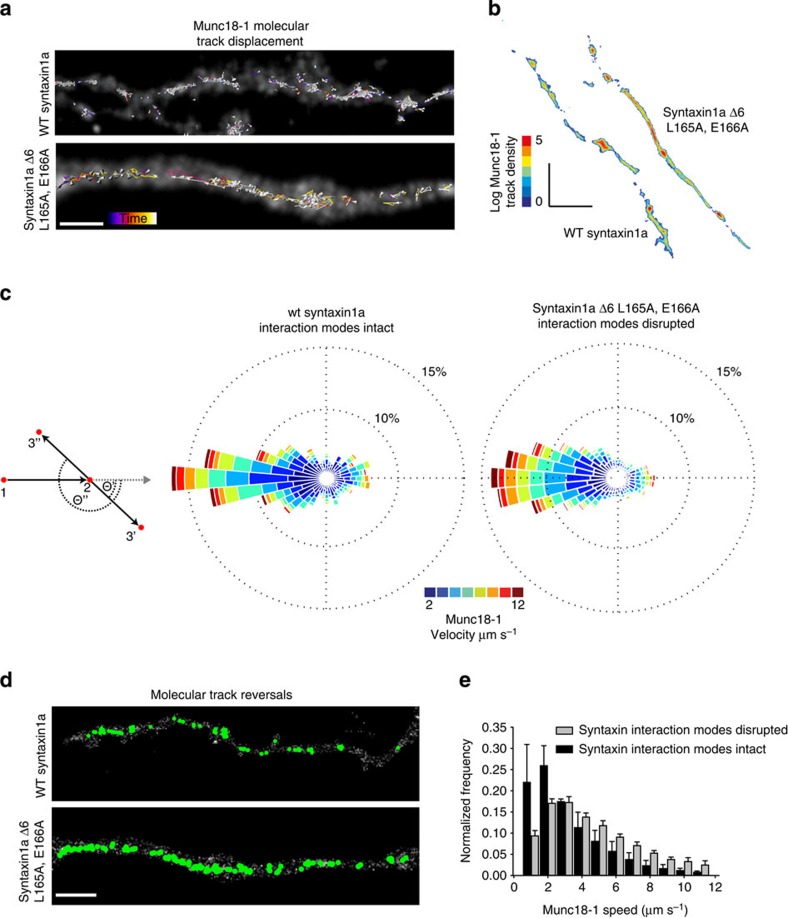
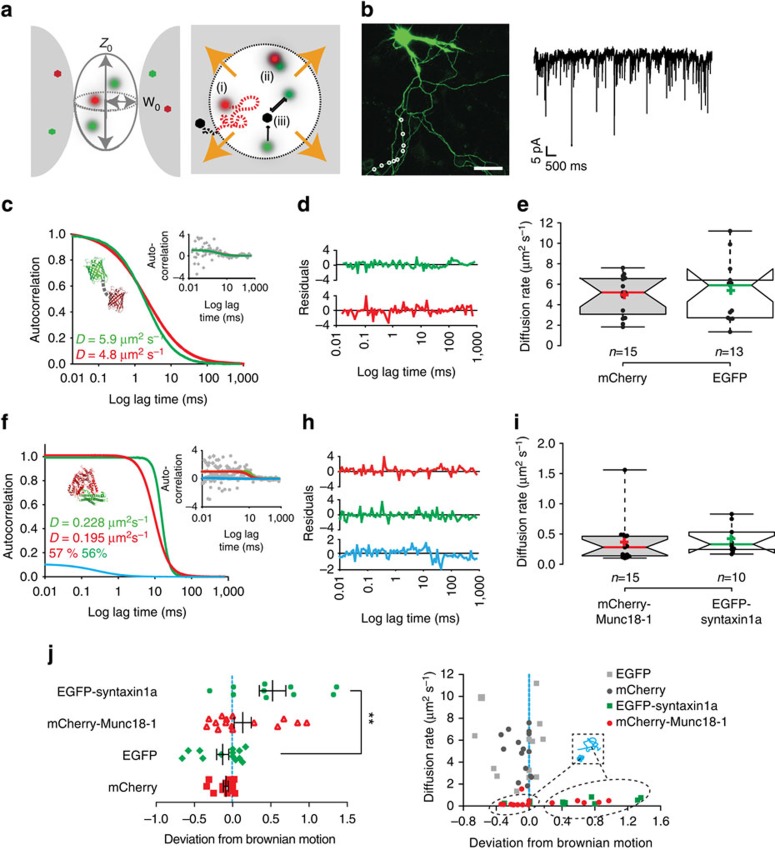
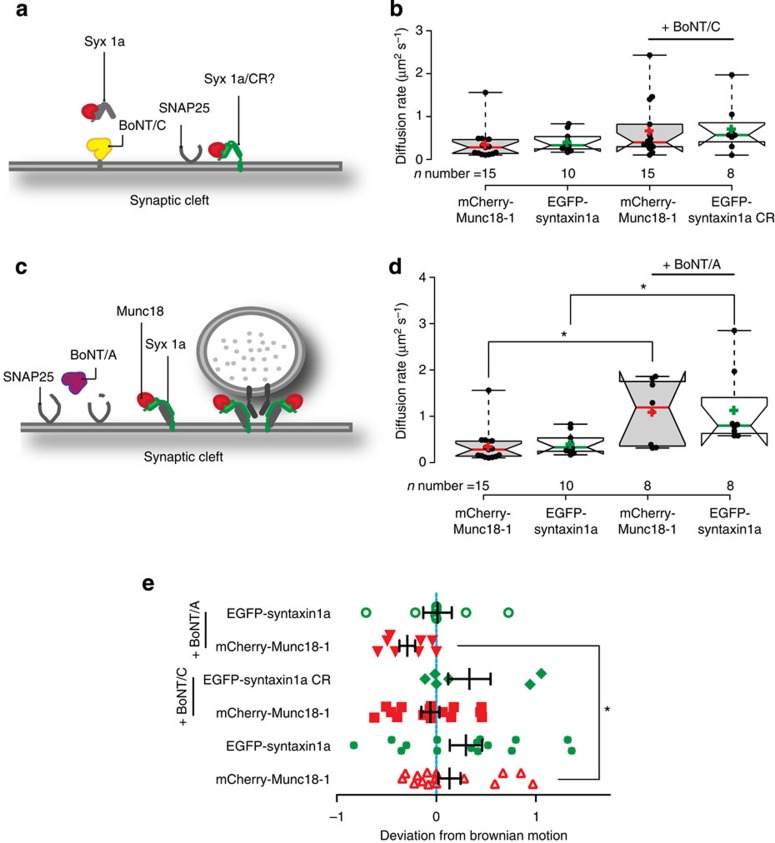
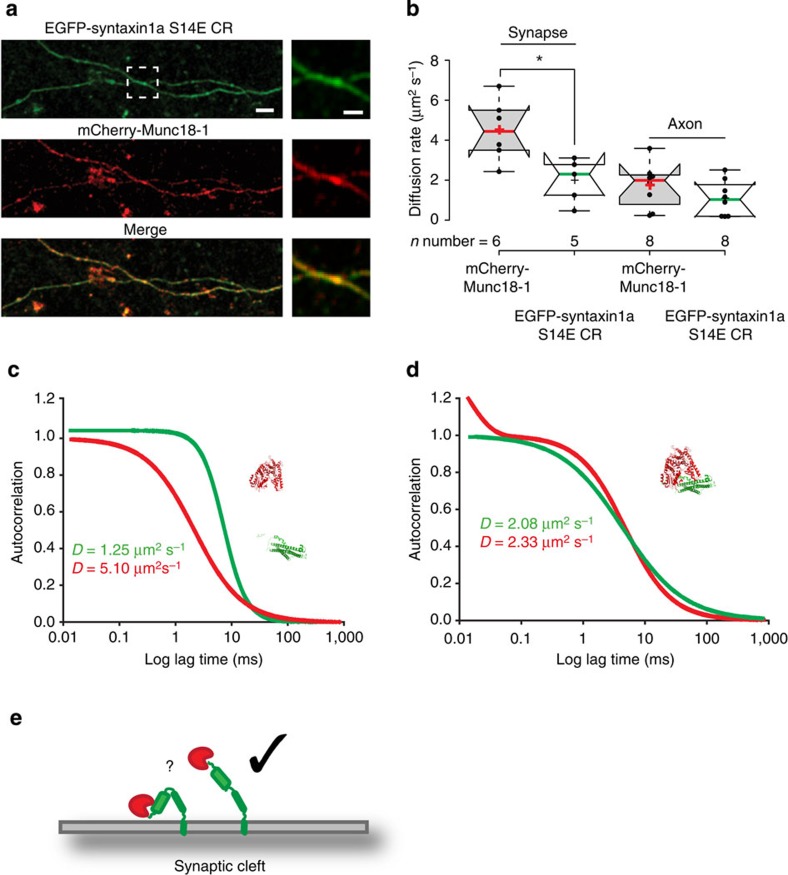
Neuronal synapses are among the most scrutinized of cellular systems, serving as a model for all membrane trafficking studies. Despite this, synaptic biology has proven difficult to interrogate directly in situ due to the small size and dynamic nature of central synapses and the molecules within them. Here we determine the spatial and temporal interaction status of presynaptic proteins, imaging large cohorts of single molecules inside active synapses. Measuring rapid interaction dynamics during synaptic depolarization identified the small number of syntaxin1a and munc18-1 protein molecules required to support synaptic vesicle exocytosis. After vesicle fusion and subsequent SNARE complex disassembly, a prompt switch in syntaxin1a and munc18-1-binding mode, regulated by charge alteration on the syntaxin1a N-terminal, sequesters monomeric syntaxin1a from other disassembled fusion complex components, preventing ectopic SNARE complex formation, readying the synapse for subsequent rounds of neurotransmission.
神经元突触是细胞系统中受到最严格审查的部分之一,是所有膜运输研究的模型。尽管如此,由于中枢突触及其内部分子的尺寸小且具有动态特性,突触生物学已被证明难以直接在原位进行研究。在这里,我们确定了突触前蛋白的空间和时间相互作用状态,对活跃突触内的大量单分子进行成像。测量突触去极化过程中的快速相互作用动力学,确定了支持突触小泡胞吐作用所需的少量 syntaxin1a 和 munc18-1 蛋白分子。在小泡融合及随后的 SNARE 复合体解体后,由 syntaxin1a N 端电荷改变调节的 syntaxin1a 和 munc18-1 结合模式的迅速转变,将单体 syntaxin1a 与其他解体的融合复合体成分隔离,防止异位 SNARE 复合体形成,为突触进行后续轮次的神经传递做好准备。