Kasula Ravikiran, Chai Ye Jin, Bademosi Adekunle T, Harper Callista B, Gormal Rachel S, Morrow Isabel C, Hosy Eric, Collins Brett M, Choquet Daniel, Papadopulos Andreas, Meunier Frédéric A
Queensland Brain Institute, Clem Jones Centre for Ageing Dementia Research, The University of Queensland, Brisbane, Queensland 4072, Australia.
Queensland Brain Institute, Clem Jones Centre for Ageing Dementia Research, The University of Queensland, Brisbane, Queensland 4072, Australia Australian Institute for Bioengineering and Nanotechnology, The University of Queensland, Brisbane, Queensland 4072, Australia.
J Cell Biol. 2016 Sep 26;214(7):847-58. doi: 10.1083/jcb.201508118. Epub 2016 Sep 19.
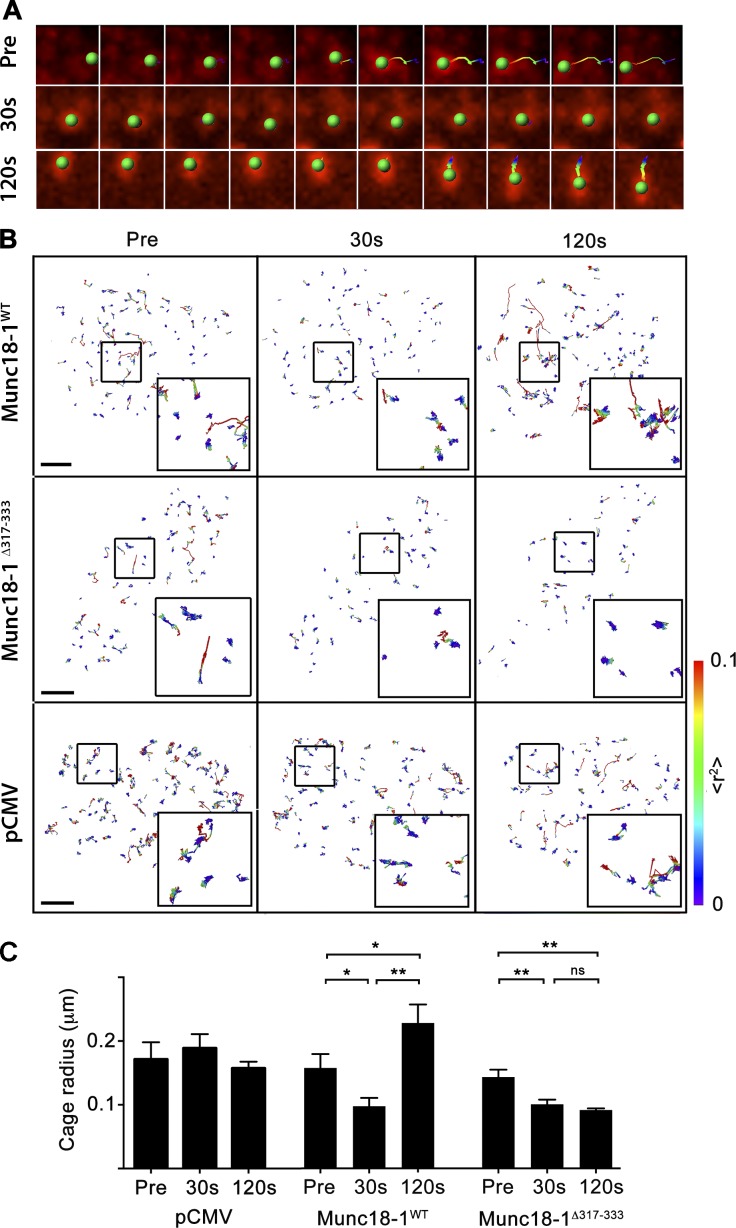
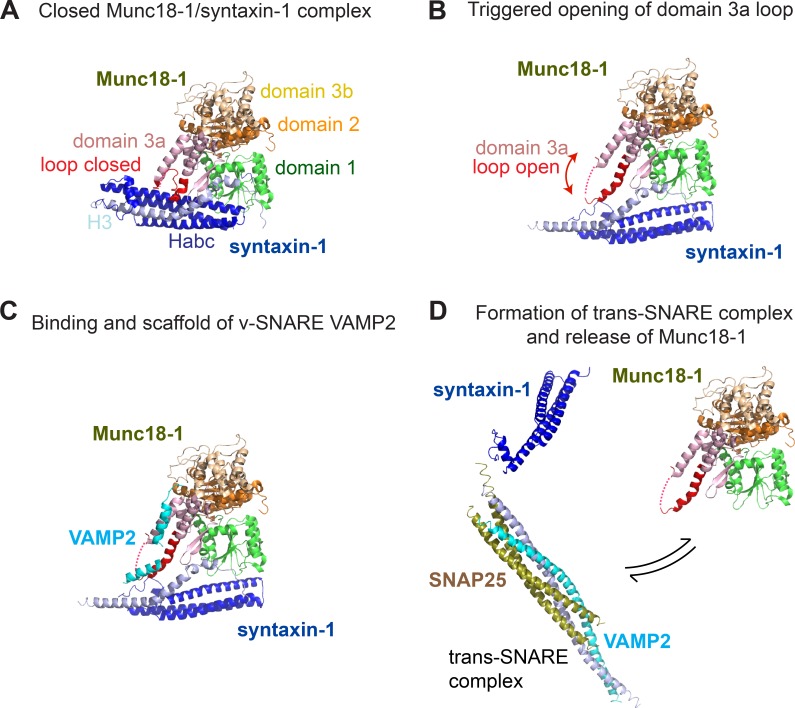
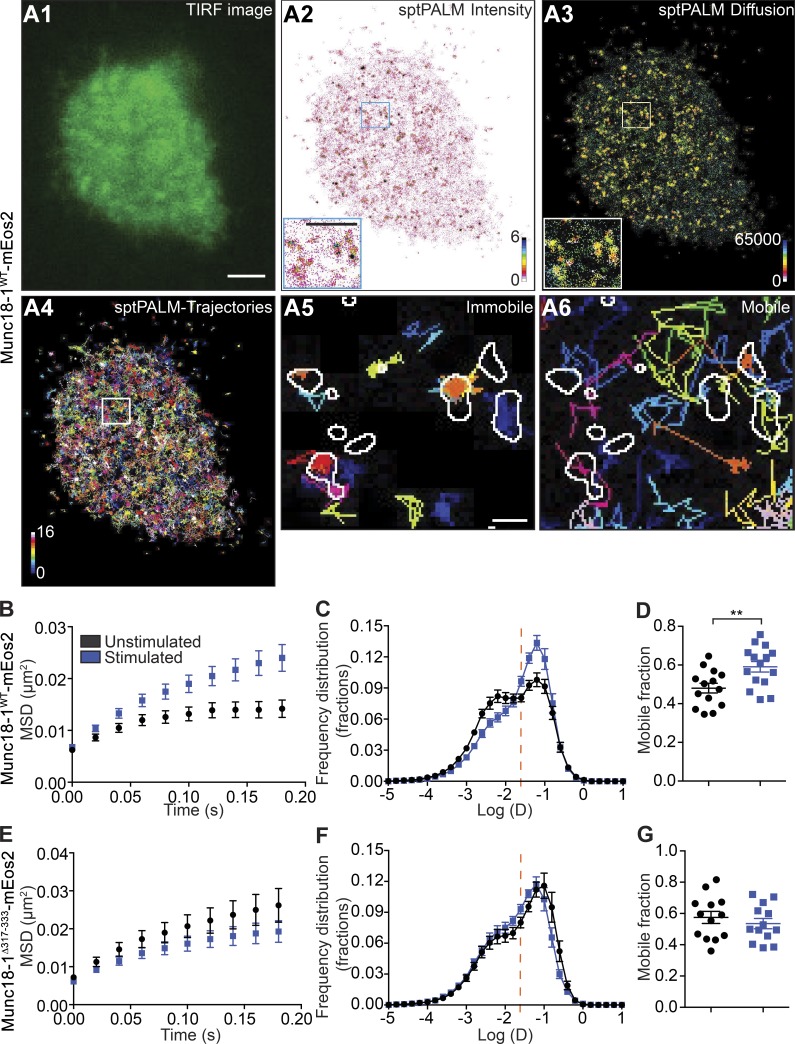
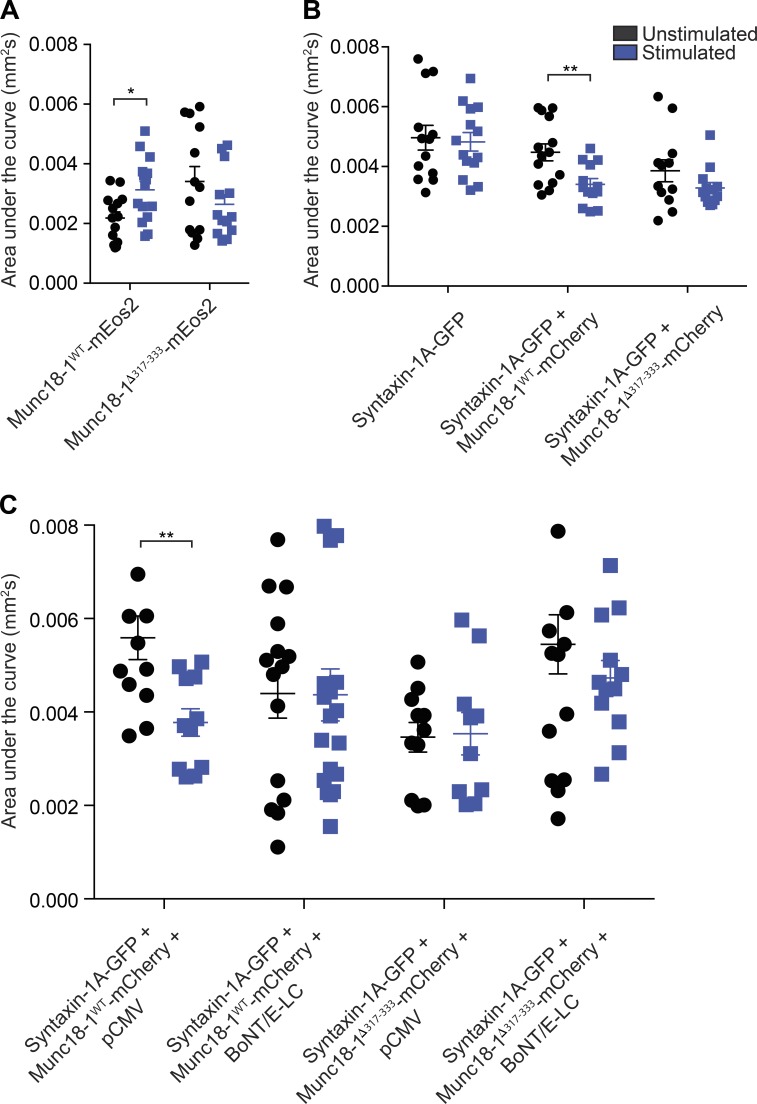
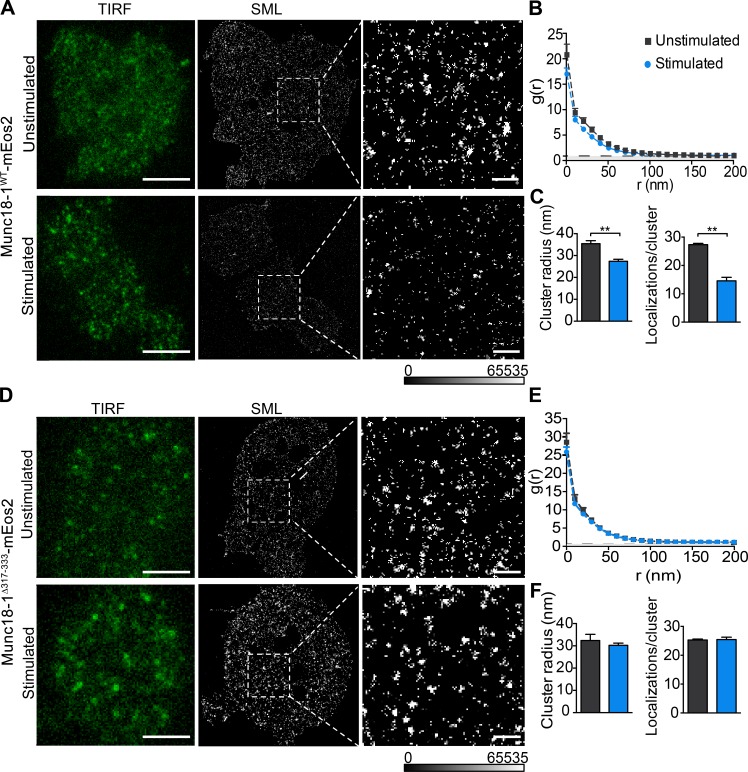
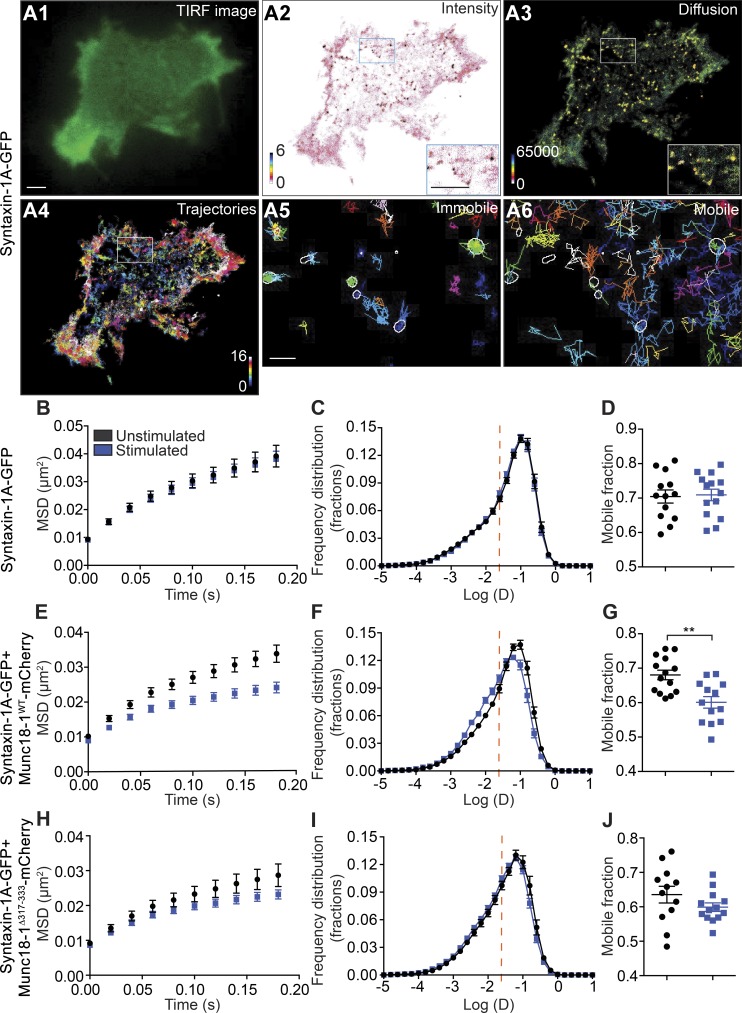
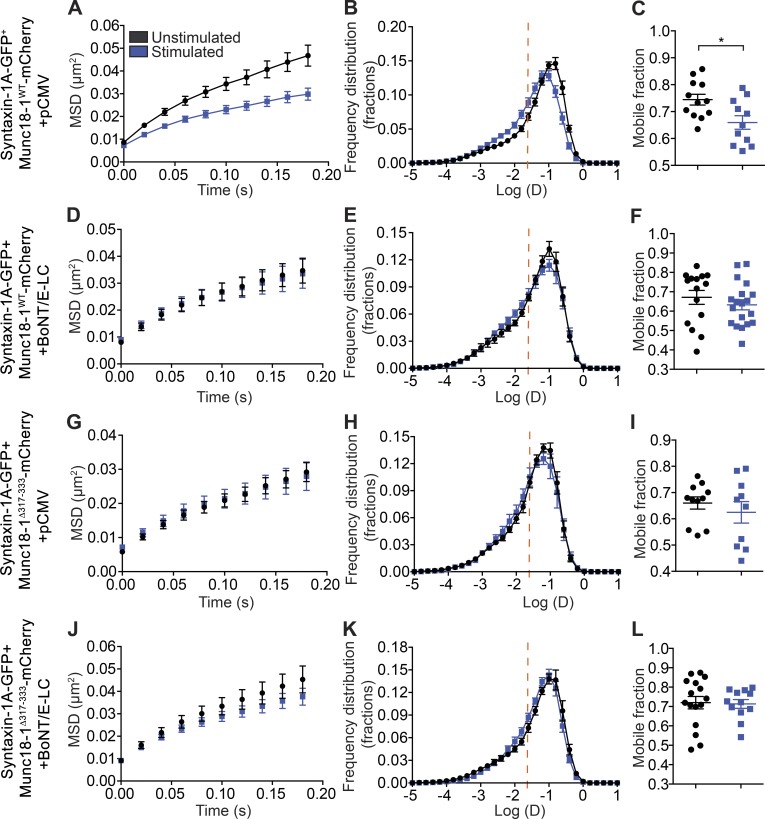
Munc18-1 and syntaxin-1A control SNARE-dependent neuroexocytosis and are organized in nanodomains on the plasma membrane of neurons and neurosecretory cells. Deciphering the intra- and intermolecular steps via which they prepare secretory vesicles (SVs) for fusion is key to understanding neuronal and hormonal communication. Here, we demonstrate that expression of a priming-deficient mutant lacking 17 residues of the domain 3a hinge-loop (Munc18-1(Δ317-333)) in PC12 cells engineered to knockdown Munc18-1/2 markedly prolonged SV docking. Single-molecule analysis revealed nonhomogeneous diffusion of Munc18-1 and syntaxin-1A in and out of partially overlapping nanodomains. Whereas Munc18-1(WT) mobility increased in response to stimulation, syntaxin-1A became less mobile. These Munc18-1 and syntaxin-1A diffusional switches were blocked by the expression of Munc18-1(Δ317-333), suggesting that a conformational change in the Munc18-1 hinge-loop controls syntaxin-1A and subsequent SNARE complex assembly. Accordingly, syntaxin-1A confinement was prevented by expression of botulinum neurotoxin type E. The Munc18-1 domain 3a hinge-loop therefore controls syntaxin-1A engagement into SNARE complex formation during priming.
Munc18-1和 syntaxin-1A 控制依赖SNARE的神经递质释放,且在神经元和神经分泌细胞的质膜上组织成纳米域。解析它们为分泌囊泡(SV)融合做准备的分子内和分子间步骤,是理解神经元和激素通讯的关键。在这里,我们证明,在经过基因改造敲低Munc18-1/2的PC12细胞中,表达缺失结构域3a铰链环17个残基的引发缺陷型突变体(Munc18-1(Δ317-333))会显著延长SV对接时间。单分子分析揭示了Munc18-1和syntaxin-1A在部分重叠的纳米域内外的非均匀扩散。虽然Munc18-1(WT)的流动性在刺激下增加,但syntaxin-1A的流动性降低。这些Munc18-1和syntaxin-1A的扩散开关被Munc18-1(Δ317-333)的表达所阻断,表明Munc18-1铰链环的构象变化控制syntaxin-1A及随后的SNARE复合体组装。因此,E型肉毒杆菌神经毒素的表达可防止syntaxin-1A的受限。因此,Munc18-1结构域3a铰链环在引发过程中控制syntaxin-1A参与SNARE复合体的形成。