Nguyen Cuong Thach, Kim Eun-Hye, Luong Truc Thanh, Pyo Suhkneung, Rhee Dong-Kwon
School of Pharmacy, Sungkyunkwan University, Suwon 440-746, Korea.
Mol Cells. 2015 Jan 31;38(1):58-64. doi: 10.14348/molcells.2015.2231. Epub 2014 Dec 16.
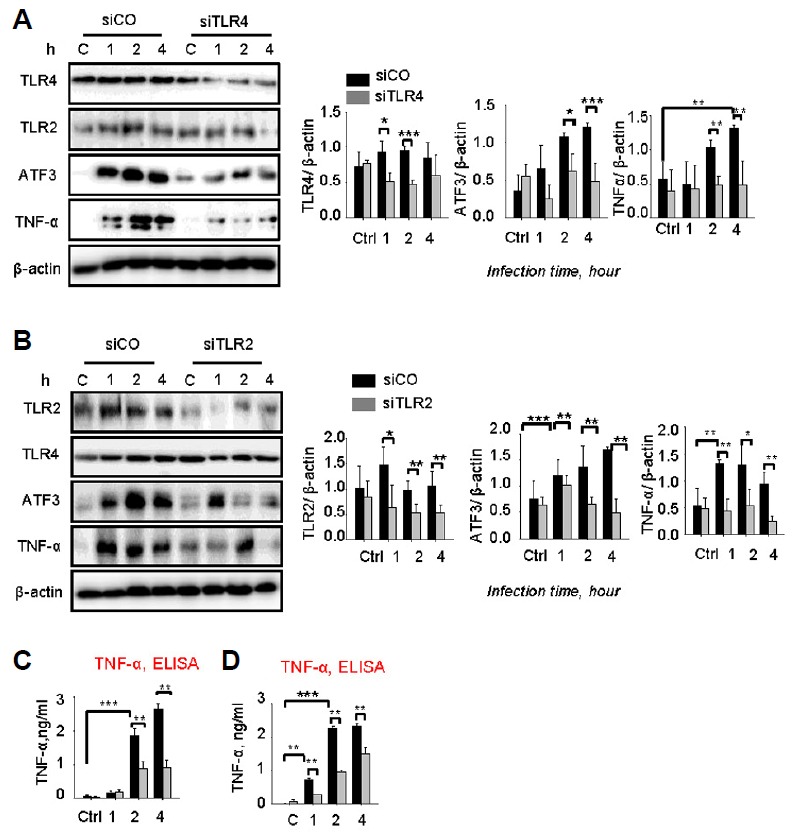
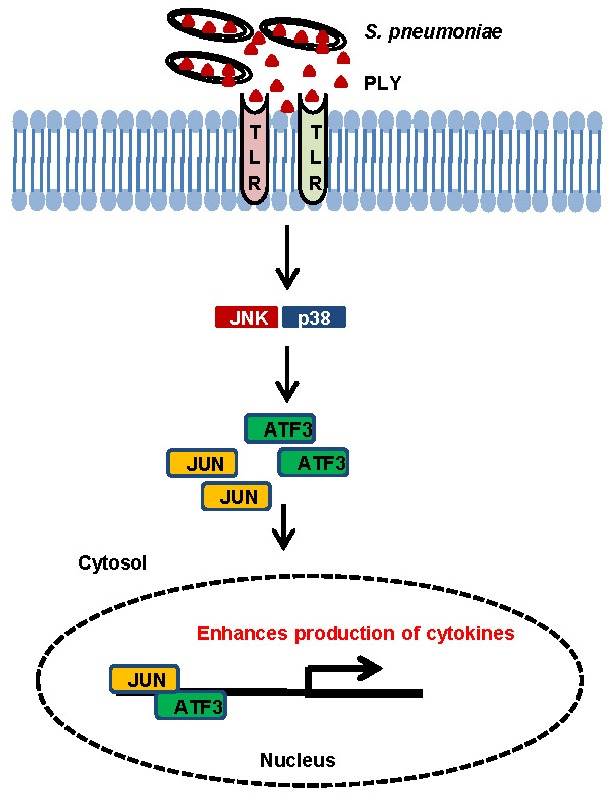
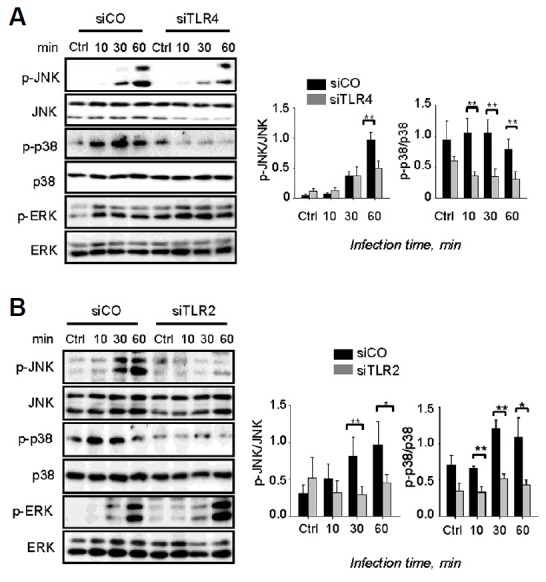
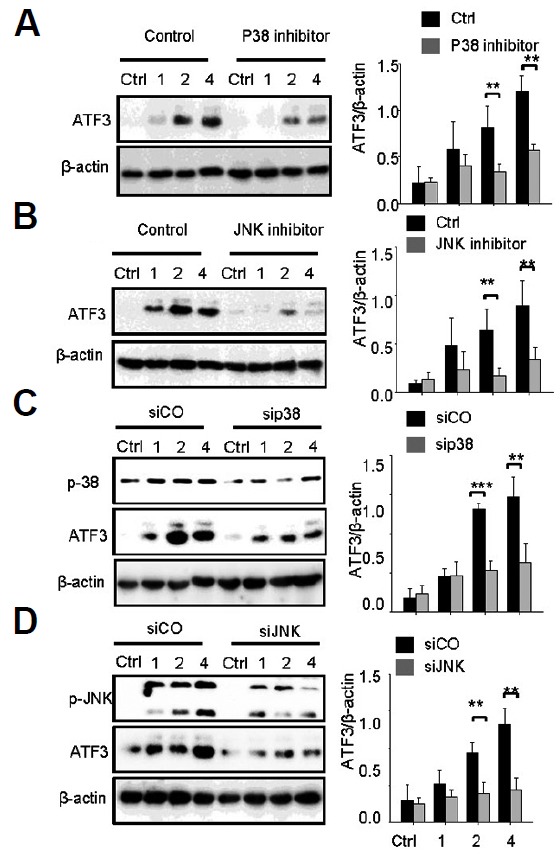
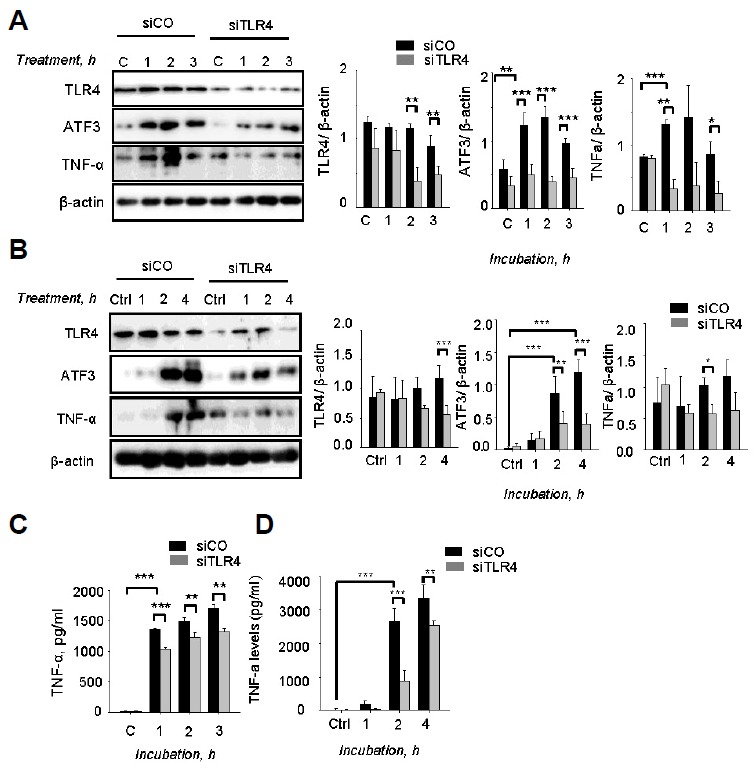
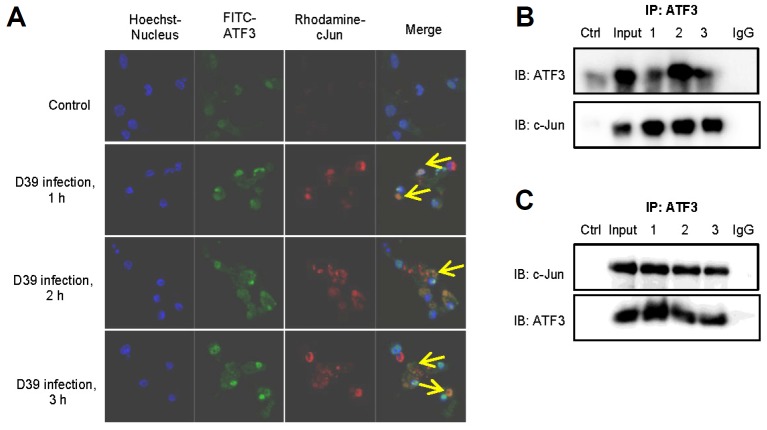
Activating transcription factor-3 (ATF3) acts as a negative regulator of cytokine production during Gram-negative bacterial infection. A recent study reported that ATF3 provides protection from Streptococcus pneumoniae infection by activating cytokines. However, the mechanism by which S. pneumoniae induces ATF3 after infection is still unknown. In this study, we show that ATF3 was upregulated via Toll-like receptor (TLR) pathways in response to S. pneumoniae infection in vitro. Induction was mediated by TLR4 and TLR2, which are in the TLR family. The expression of ATF3 was induced by pneumolysin (PLY), a potent pneumococcal virulence factor, via the TLR4 pathway. Furthermore, ATF3 induction is mediated by p38 mitogen-activated protein kinase (MAPK) and c-Jun N-terminal kinase (JNK). Thus, this study reveals a potential role of PLY in modulating ATF3 expression, which is required for the regulation of immune responses against pneumococcal infection in macrophages.
活化转录因子3(ATF3)在革兰氏阴性菌感染期间作为细胞因子产生的负调节因子。最近一项研究报道,ATF3通过激活细胞因子为肺炎链球菌感染提供保护。然而,肺炎链球菌感染后诱导ATF3的机制仍不清楚。在本研究中,我们发现体外肺炎链球菌感染可通过Toll样受体(TLR)途径上调ATF3。诱导由TLR家族中的TLR4和TLR2介导。肺炎链球菌的一种强效毒力因子——肺炎溶血素(PLY)通过TLR4途径诱导ATF3表达。此外,ATF3的诱导由p38丝裂原活化蛋白激酶(MAPK)和c-Jun氨基末端激酶(JNK)介导。因此,本研究揭示了PLY在调节ATF3表达中的潜在作用,而这是巨噬细胞中针对肺炎链球菌感染的免疫反应调节所必需的。