Waris Saboora, Wilce Matthew Charles James, Wilce Jacqueline Anne
Department of Biochemistry and Molecular Biology, Monash University, Victoria 3800, Australia.
Int J Mol Sci. 2014 Dec 16;15(12):23377-88. doi: 10.3390/ijms151223377.
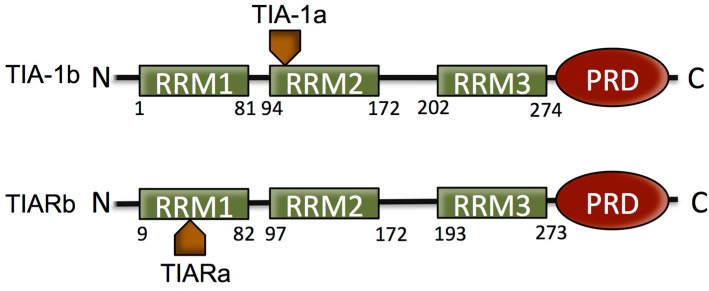
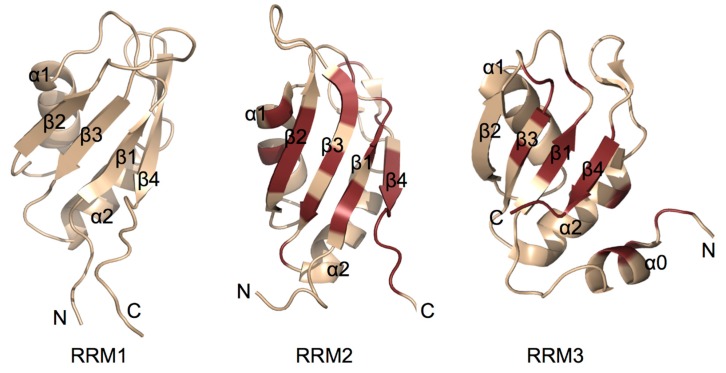
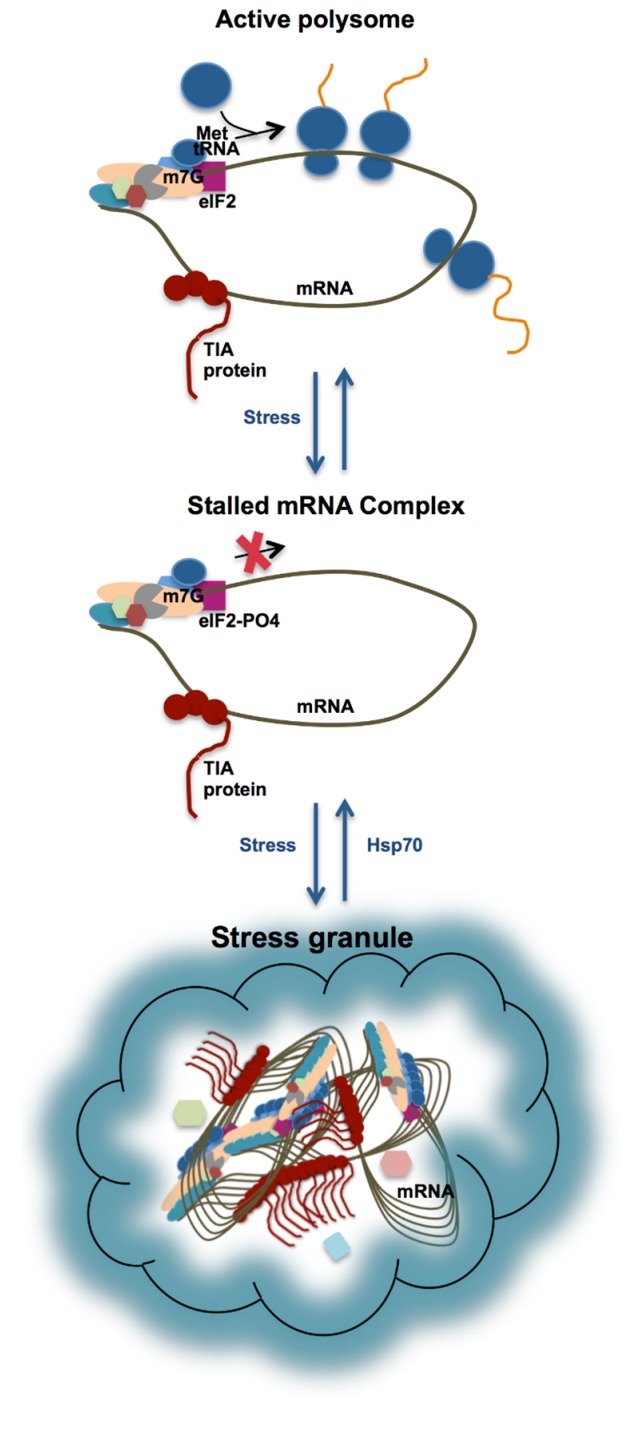
Stress granule (SG) formation is a primary mechanism through which gene expression is rapidly modulated when the eukaryotic cell undergoes cellular stresses (including heat, oxidative, viral infection, starvation). In particular, the sequestration of specifically targeted translationally stalled mRNAs into SGs limits the expression of a subset of genes, but allows the expression of heatshock proteins that have a protective effect in the cell. The importance of SGs is seen in several disease states in which SG function is disrupted. Fundamental to SG formation are the T cell restricted intracellular antigen (TIA) proteins (TIA-1 and TIA-1 related protein (TIAR)), that both directly bind to target RNA and self-associate to seed the formation of SGs. Here a summary is provided of the current understanding of the way in which TIA proteins target specific mRNA, and how TIA self-association is triggered under conditions of cellular stress.
应激颗粒(SG)的形成是一种主要机制,当真核细胞受到细胞应激(包括热、氧化、病毒感染、饥饿)时,基因表达可通过该机制被快速调节。特别地,将特异性靶向的翻译停滞的mRNA隔离到应激颗粒中会限制一部分基因的表达,但允许具有细胞保护作用的热休克蛋白表达。应激颗粒的重要性在几种应激颗粒功能被破坏的疾病状态中可见一斑。应激颗粒形成的基础是T细胞限制性细胞内抗原(TIA)蛋白(TIA-1和TIA-1相关蛋白(TIAR)),它们既直接结合靶RNA,又能自我缔合以引发应激颗粒的形成。本文总结了目前对TIA蛋白靶向特定mRNA的方式以及在细胞应激条件下如何触发TIA自我缔合的理解。