Center of Molecular Medicine (CIMMBA), University of Florence, Florence, Italy.
Brigham and Women's Hospital, Boston, Massachusetts.
J Am Coll Cardiol. 2014 Dec 23;64(24):2589-2600. doi: 10.1016/j.jacc.2014.09.059.
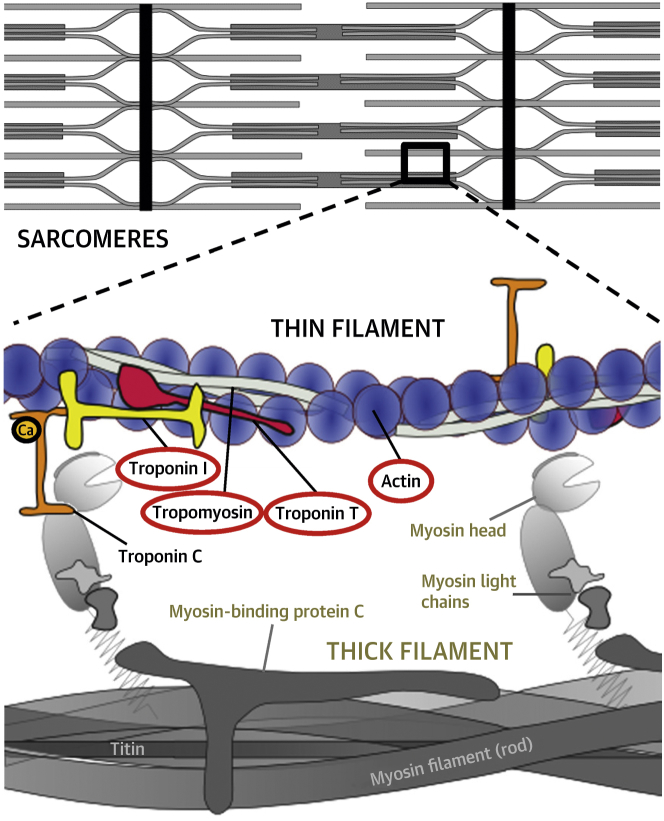
Mild hypertrophy but increased arrhythmic risk characterizes the stereotypic phenotype proposed for hypertrophic cardiomyopathy (HCM) caused by thin-filament mutations. However, whether such clinical profile is different from more prevalent thick-filament-associated disease is unresolved.
This study aimed to assess clinical features and outcomes in a large cohort of patients with HCM associated with thin-filament mutations compared with thick-filament HCM.
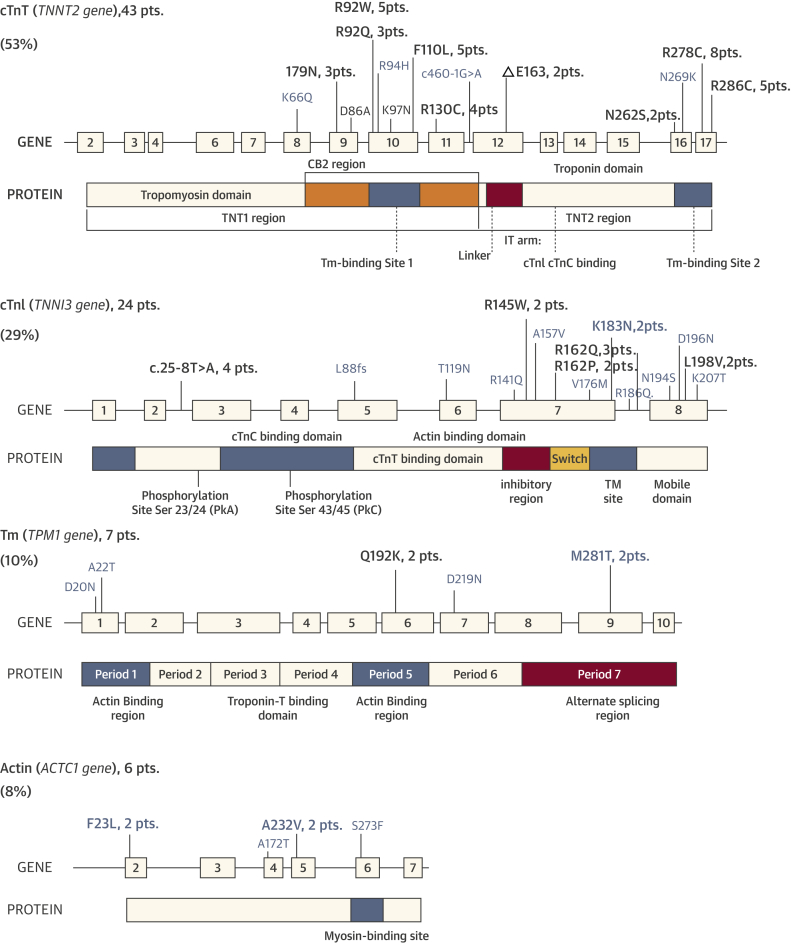
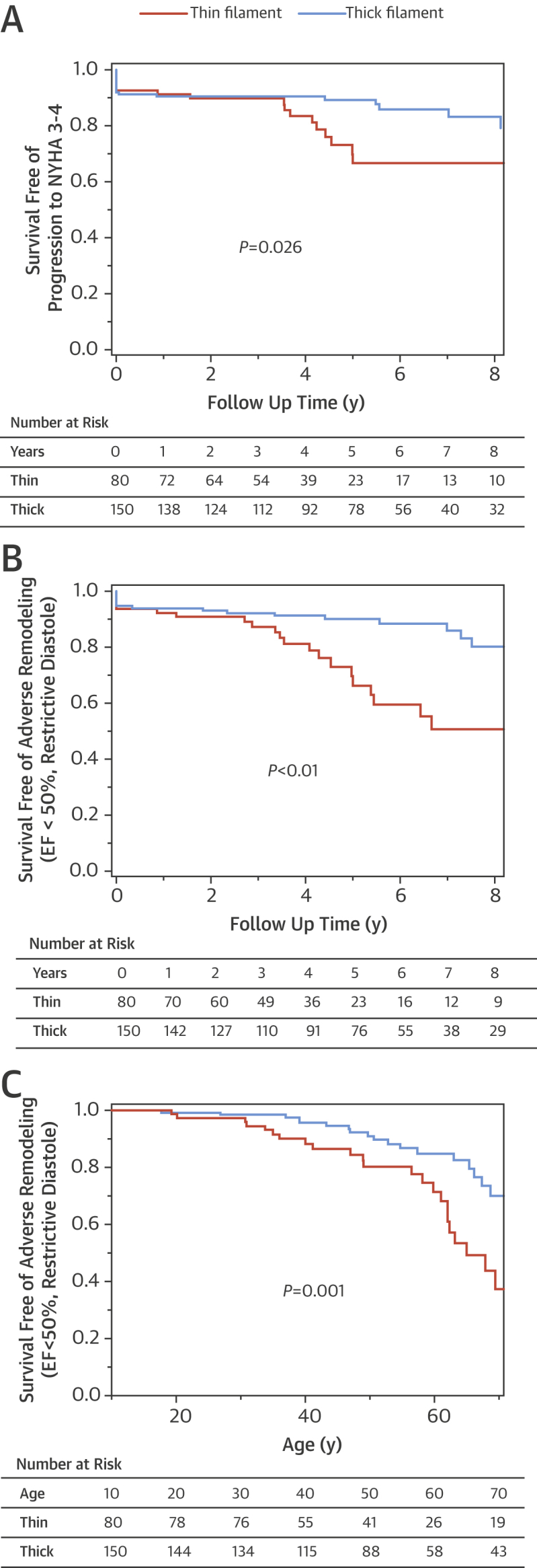
Adult HCM patients (age >18 years), 80 with thin-filament and 150 with thick-filament mutations, were followed for an average of 4.5 years.
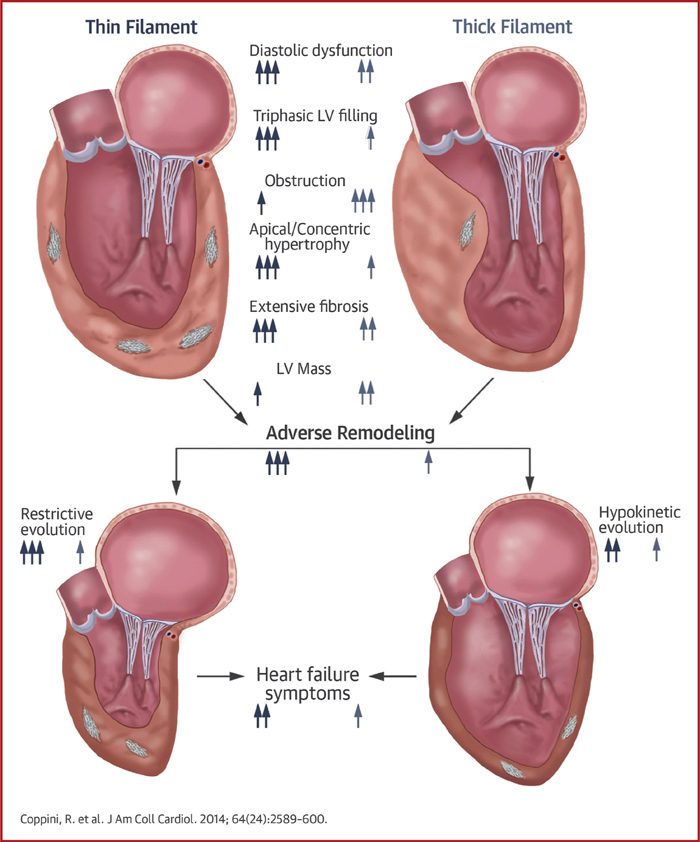
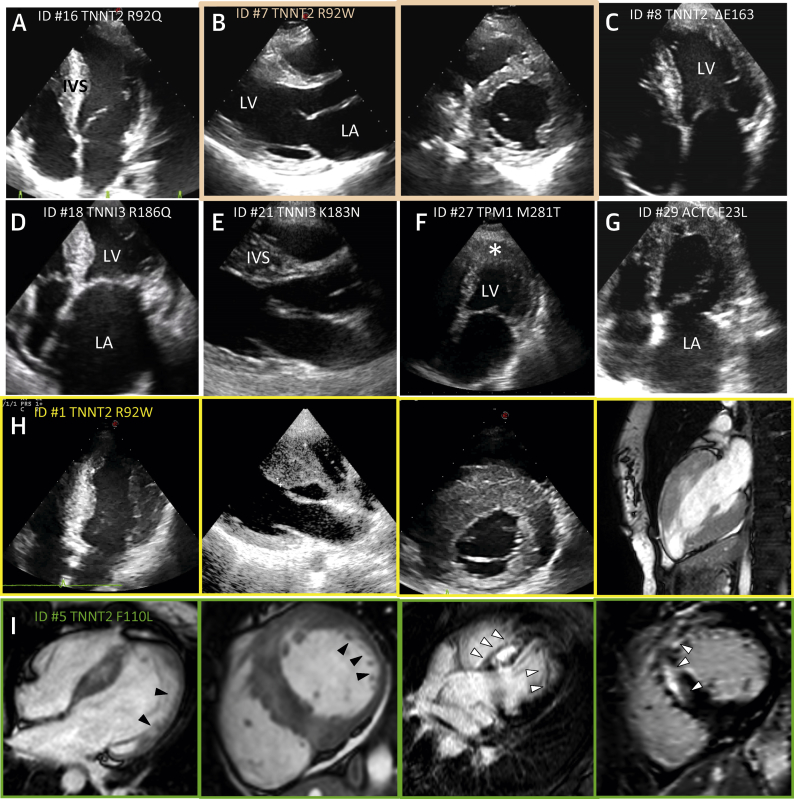
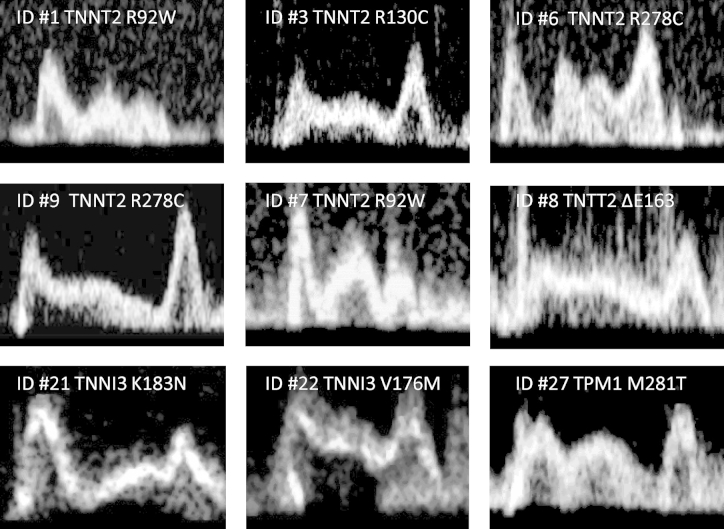
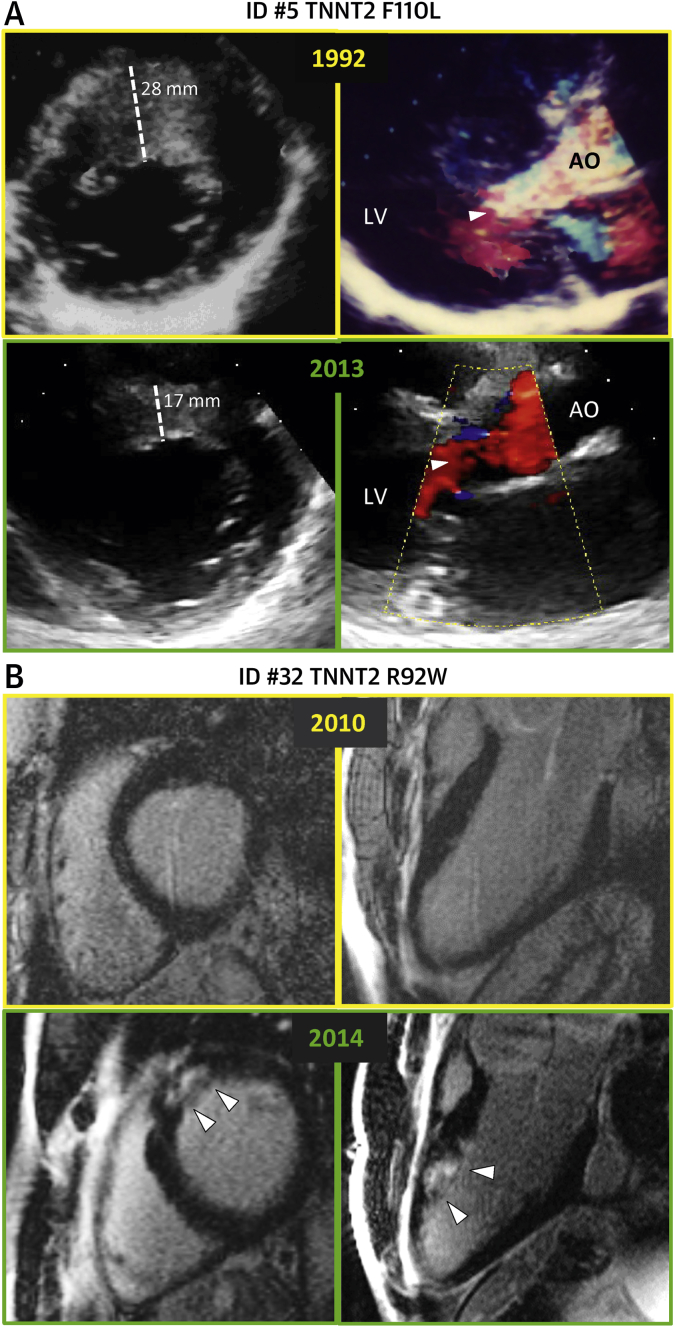
Compared with thick-filament HCM, patients with thin-filament mutations showed: 1) milder and atypically distributed left ventricular (LV) hypertrophy (maximal wall thickness 18 ± 5 mm vs. 24 ± 6 mm; p < 0.001) and less prevalent outflow tract obstruction (19% vs. 34%; p = 0.015); 2) higher rate of progression to New York Heart Association functional class III or IV (15% vs. 5%; p = 0.013); 3) higher prevalence of systolic dysfunction or restrictive LV filling at last evaluation (20% vs. 9%; p = 0.038); 4) 2.4-fold increase in prevalence of triphasic LV filling pattern (26% vs. 11%; p = 0.002); and 5) similar rates of malignant ventricular arrhythmias and sudden cardiac death (p = 0.593).
In adult HCM patients, thin-filament mutations are associated with increased likelihood of advanced LV dysfunction and heart failure compared with thick-filament disease, whereas arrhythmic risk in both subsets is comparable. Triphasic LV filling is particularly common in thin-filament HCM, reflecting profound diastolic dysfunction.
薄丝突变引起的肥厚型心肌病(HCM)表现为典型的轻度心肌肥厚但心律失常风险增加。然而,这种临床表型是否与更常见的厚丝相关疾病不同尚未解决。
本研究旨在评估与厚丝相关的 HCM 相比,大量伴有薄丝突变的 HCM 患者的临床特征和结局。
80 例伴有薄丝突变的成年 HCM 患者(年龄>18 岁)和 150 例伴有厚丝突变的 HCM 患者接受了平均 4.5 年的随访。
与厚丝 HCM 相比,薄丝突变患者表现为:1)左心室(LV)肥厚程度较轻且分布不典型(最大壁厚度 18±5mm 与 24±6mm;p<0.001),流出道梗阻的发生率较低(19%与 34%;p=0.015);2)进展为纽约心脏协会功能分级 III 或 IV 级的发生率较高(15%与 5%;p=0.013);3)最后评估时收缩功能障碍或限制性 LV 充盈的发生率较高(20%与 9%;p=0.038);4)LV 充盈三相模式的发生率增加 2.4 倍(26%与 11%;p=0.002);5)恶性室性心律失常和心源性猝死的发生率相似(p=0.593)。
在成年 HCM 患者中,与厚丝疾病相比,薄丝突变与 LV 功能障碍和心力衰竭进展的可能性增加相关,而这两个亚组的心律失常风险相当。三相 LV 充盈在薄丝 HCM 中特别常见,反映了严重的舒张功能障碍。