Zhang Jiaxiang, Rowe James B
Cognition and Brain Sciences Unit, Medical Research Council, Cambridge CB2 7EF, UK.
Cognition and Brain Sciences Unit, Medical Research Council, Cambridge CB2 7EF, UK; Department of Clinical Neurosciences, University of Cambridge, Cambridge CB2 2QQ, UK; Behavioural and Clinical Neuroscience Institute, Cambridge, CB2 3EB, UK.
Neuroimage. 2015 Feb 15;107:266-276. doi: 10.1016/j.neuroimage.2014.12.021. Epub 2014 Dec 15.
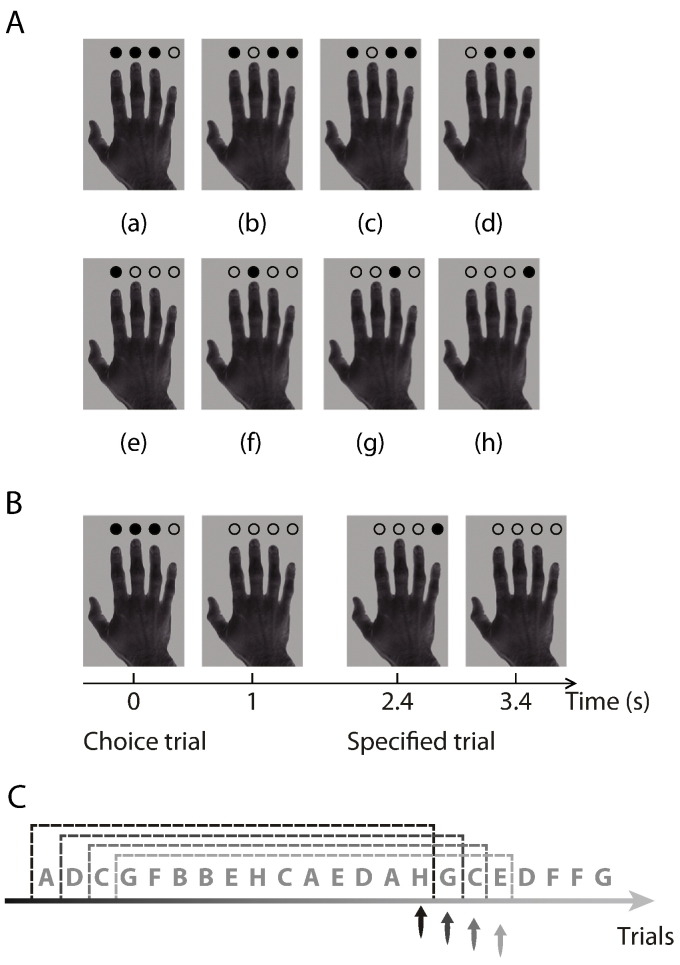
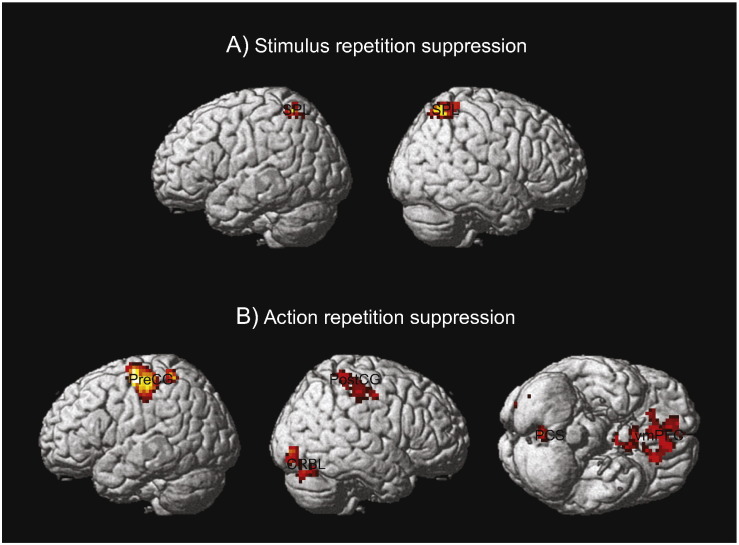
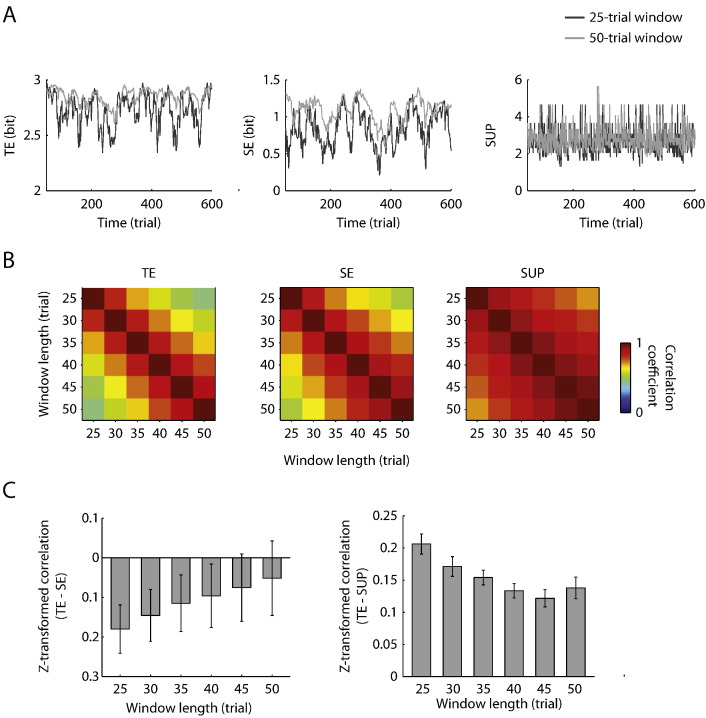
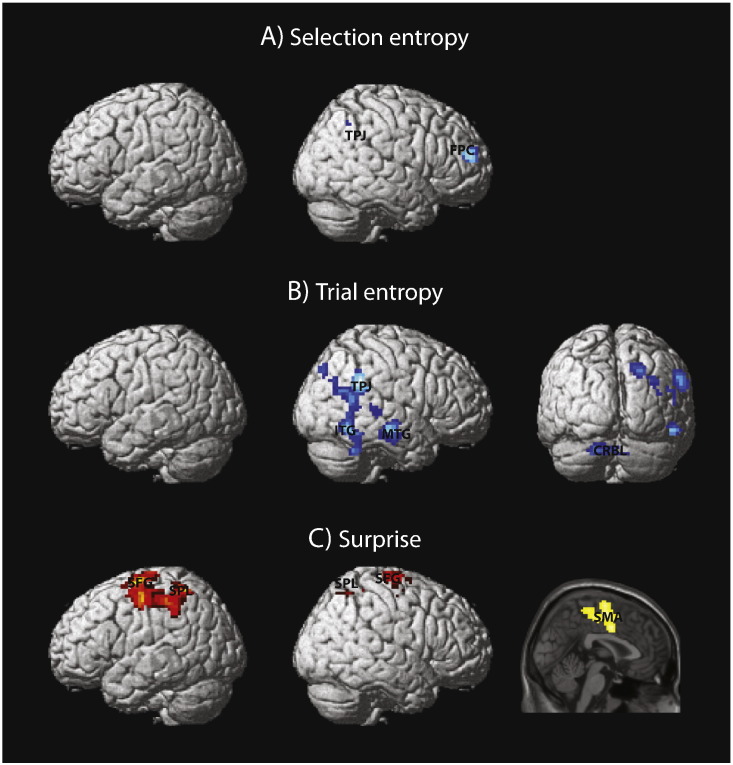
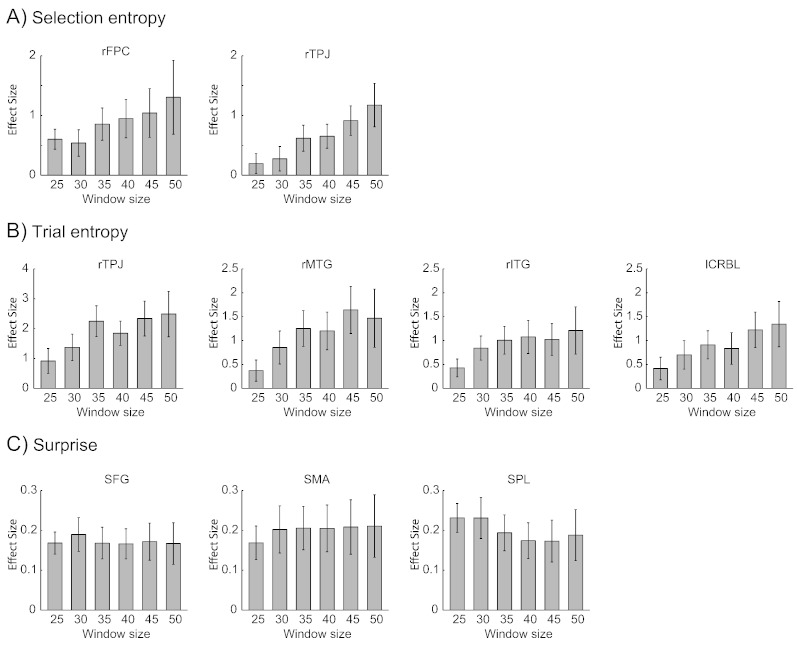
Statistical regularities exist at different timescales in temporally unfolding event sequences. Recent studies have identified brain regions that are sensitive to the levels of regularity in sensory inputs, enabling the brain to construct a representation of environmental structure and adaptively generate actions or predictions. However, the temporal specificity of the statistical regularity to which the brain responds remains largely unknown. This uncertainty applies to the regularities of sensory inputs as well as instrumental actions. Here, we used fMRI to investigate the neural correlates of regularity in sequences of task events and action selections in a visuomotor choice task. We quantified timescale-dependent regularity measures by calculating Shannon's entropy and surprise from a sliding-window of consecutive task events and actions. Activity in the frontopolar cortex negatively correlated with the entropy in action selection, while activity in the temporoparietal junction, the striatum, and the cerebellum negatively correlated with the entropy in stimulus events at longer timescales. In contrast, activity in the supplementary motor area, the superior frontal gyrus, and the superior parietal lobule was positively correlated with the surprise of each stimulus across different timescales. The results suggest a spatial distribution of regions sensitive to various information regularities according to a temporal hierarchy, which may play a central role in concurrently monitoring the regularity in previous and current events over different timescales to optimize behavioral control in a dynamic environment.
在随时间展开的事件序列中,统计规律存在于不同的时间尺度上。最近的研究已经确定了对感觉输入的规律水平敏感的脑区,使大脑能够构建环境结构的表征并适应性地产生行动或预测。然而,大脑所响应的统计规律的时间特异性在很大程度上仍然未知。这种不确定性适用于感觉输入的规律以及工具性行动。在这里,我们使用功能磁共振成像(fMRI)来研究视觉运动选择任务中任务事件序列和行动选择的规律的神经相关性。我们通过从连续任务事件和行动的滑动窗口计算香农熵和惊奇度来量化与时间尺度相关的规律度量。额极皮层的活动与行动选择中的熵呈负相关,而颞顶联合区、纹状体和小脑的活动在较长时间尺度上与刺激事件中的熵呈负相关。相反,辅助运动区、额上回和顶上小叶的活动在不同时间尺度上与每个刺激的惊奇度呈正相关。结果表明,根据时间层次结构,对各种信息规律敏感的区域存在空间分布,这可能在同时监测不同时间尺度上先前和当前事件的规律以优化动态环境中的行为控制方面发挥核心作用。