Zhu Yin, Cheng Ming, Yang Zhen, Zeng Chun-Yan, Chen Jiang, Xie Yong, Luo Shi-Wen, Zhang Kun-He, Zhou Shu-Feng, Lu Nong-Hua
Department of Gastroenterology, The First Affiliated Hospital of Nanchang University, Jiangxi, People's Republic of China.
Department of Orthopedics, The First Affiliated Hospital of Nanchang University, Jiangxi, People's Republic of China.
Drug Des Devel Ther. 2014 Dec 9;8:2449-62. doi: 10.2147/DDDT.S71466. eCollection 2014.
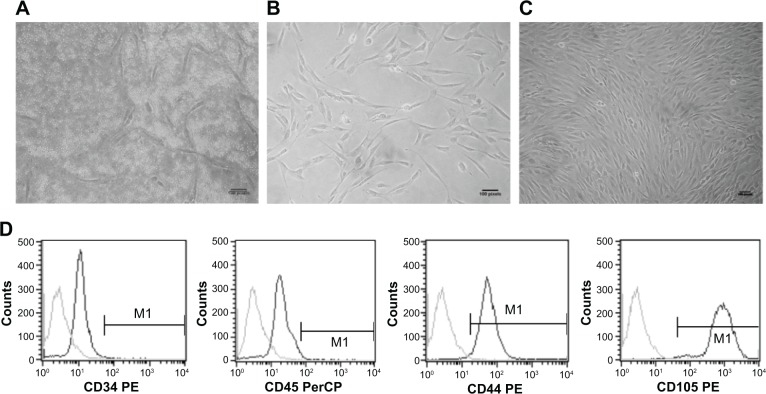
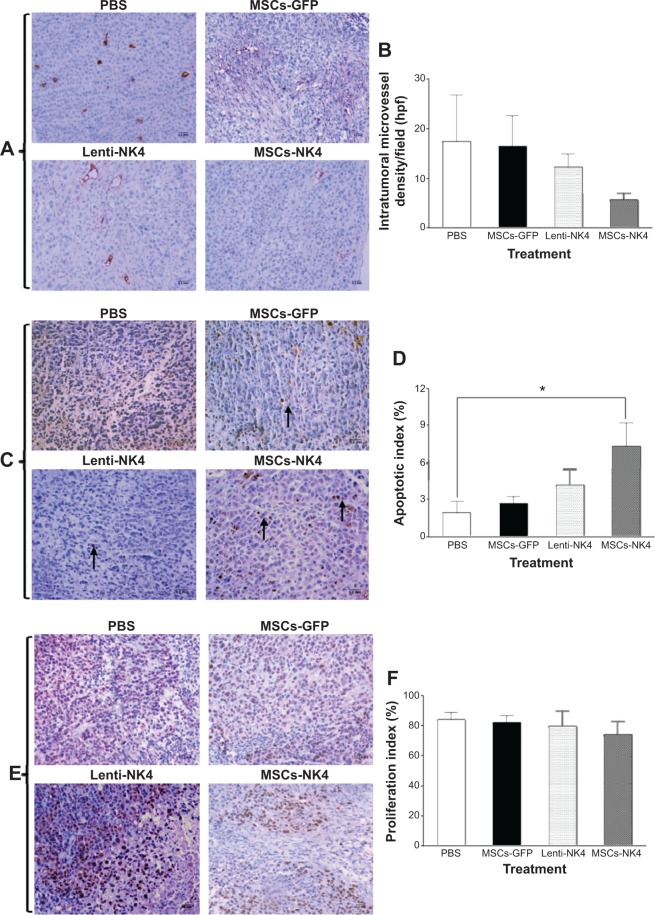
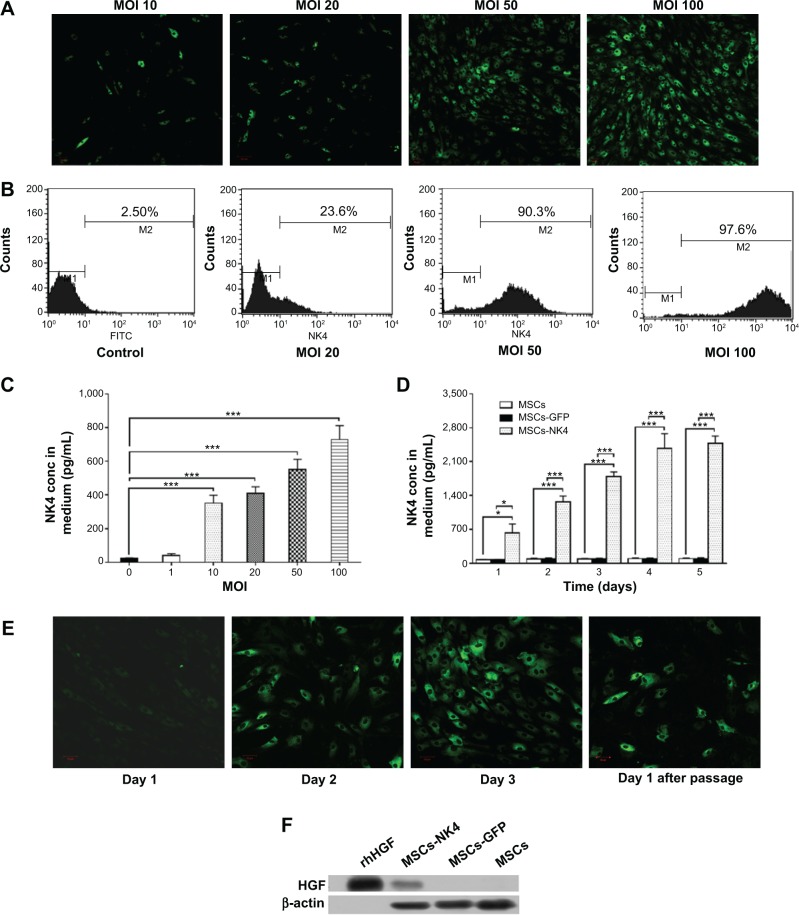
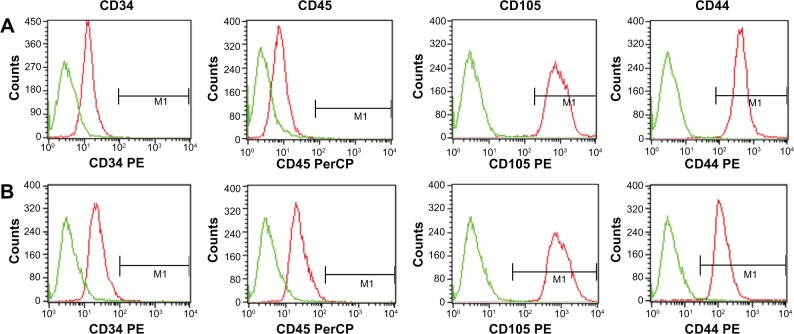
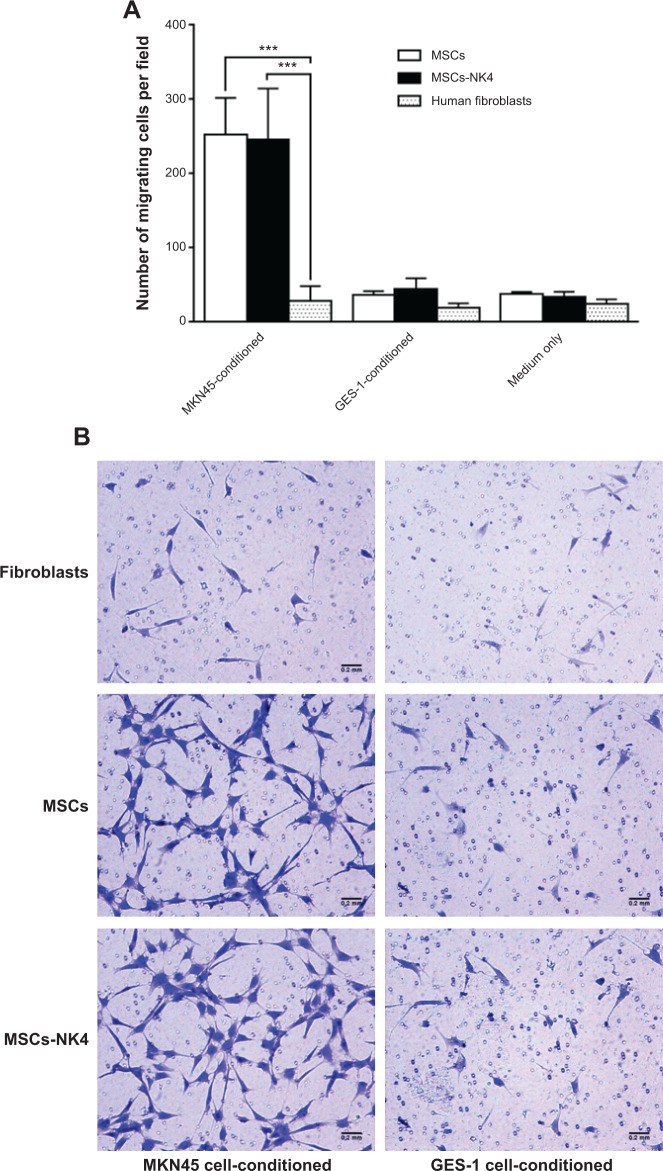
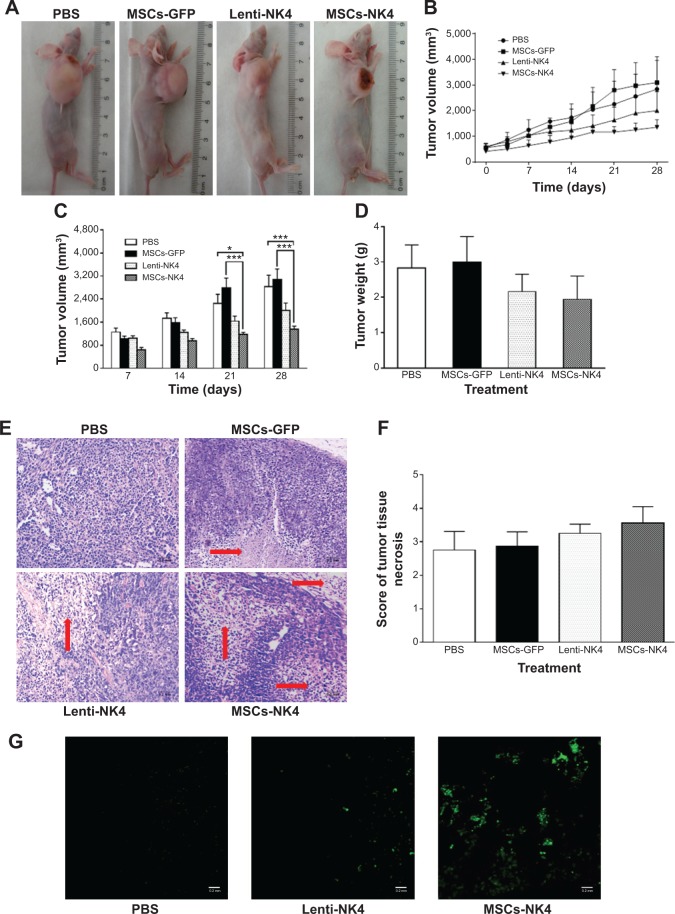
Mesenchymal stem cells (MSCs) have been recognized as promising delivery vehicles for gene therapy of tumors. Gastric cancer is the third leading cause of worldwide cancer mortality, and novel treatment modalities are urgently needed. NK4 is an antagonist of hepatocyte growth factor receptors (Met) which are often aberrantly activated in gastric cancer and thus represent a useful candidate for targeted therapies. This study investigated MSC-delivered NK4 gene therapy in nude mice bearing gastric cancer xenografts. MSCs were transduced with lentiviral vectors carrying NK4 complementary DNA or enhanced green fluorescent protein (GFP). Such transduction did not change the phenotype of MSCs. Gastric cancer xenografts were established in BALB/C nude mice, and the mice were treated with phosphate-buffered saline (PBS), MSCs-GFP, Lenti-NK4, or MSCs-NK4. The tropism of MSCs toward gastric cancer cells was determined by an in vitro migration assay using MKN45 cells, GES-1 cells and human fibroblasts and their presence in tumor xenografts. Tumor growth, tumor cell apoptosis and intratumoral microvessel density of tumor tissue were measured in nude mice bearing gastric cancer xenografts treated with PBS, MSCs-GFP, Lenti-NK4, or MSCs-NK4 via tail vein injection. The results showed that MSCs migrated preferably to gastric cancer cells in vitro. Systemic MSCs-NK4 injection significantly suppressed the growth of gastric cancer xenografts. MSCs-NK4 migrated and accumulated in tumor tissues after systemic injection. The microvessel density of tumor xenografts was decreased, and tumor cellular apoptosis was significantly induced in the mice treated with MSCs-NK4 compared to control mice. These findings demonstrate that MSC-based NK4 gene therapy can obviously inhibit the growth of gastric cancer xenografts, and MSCs are a better vehicle for NK4 gene therapy than lentiviral vectors. Further studies are warranted to explore the efficacy and safety of the MSC-based NK4 gene therapy in animals and cancer patients.
间充质干细胞(MSCs)已被公认为是肿瘤基因治疗中很有前景的递送载体。胃癌是全球癌症死亡的第三大主要原因,因此迫切需要新的治疗方法。NK4是肝细胞生长因子受体(Met)的拮抗剂,Met在胃癌中经常异常激活,因此是靶向治疗的一个有用候选物。本研究调查了在携带胃癌异种移植瘤的裸鼠中,间充质干细胞介导的NK4基因治疗效果。用携带NK4互补DNA或增强型绿色荧光蛋白(GFP)的慢病毒载体转导间充质干细胞。这种转导不会改变间充质干细胞的表型。在BALB/C裸鼠中建立胃癌异种移植瘤,并用磷酸盐缓冲盐水(PBS)、MSCs-GFP、慢病毒-NK4或MSCs-NK4处理小鼠。通过使用MKN45细胞、GES-1细胞和人成纤维细胞的体外迁移试验以及它们在肿瘤异种移植瘤中的存在情况,确定间充质干细胞对胃癌细胞的趋向性。通过尾静脉注射,对接受PBS、MSCs-GFP、慢病毒-NK4或MSCs-NK4处理的携带胃癌异种移植瘤的裸鼠,测量肿瘤组织的肿瘤生长、肿瘤细胞凋亡和瘤内微血管密度。结果表明,间充质干细胞在体外优先迁移至胃癌细胞。全身注射MSCs-NK4可显著抑制胃癌异种移植瘤的生长。全身注射后,MSCs-NK4迁移并聚集在肿瘤组织中。与对照小鼠相比,接受MSCs-NK4处理的小鼠中,肿瘤异种移植瘤的微血管密度降低,肿瘤细胞凋亡明显诱导。这些发现表明,基于间充质干细胞的NK4基因治疗可明显抑制胃癌异种移植瘤的生长,并且与慢病毒载体相比,间充质干细胞是NK4基因治疗的更好载体。有必要进一步研究以探索基于间充质干细胞的NK4基因治疗在动物和癌症患者中的疗效和安全性。