Luong Gloria, Charles Susan T, Rook Karen S, Reynolds Chandra A, Gatz Margaret
Max Planck Research Group "Affect Across the Life span," Max Planck Institute for Human Development.
Department of Psychology and Social Behavior, University of California, Irvine.
Psychol Aging. 2015 Mar;30(1):106-119. doi: 10.1037/a0038502. Epub 2014 Dec 22.
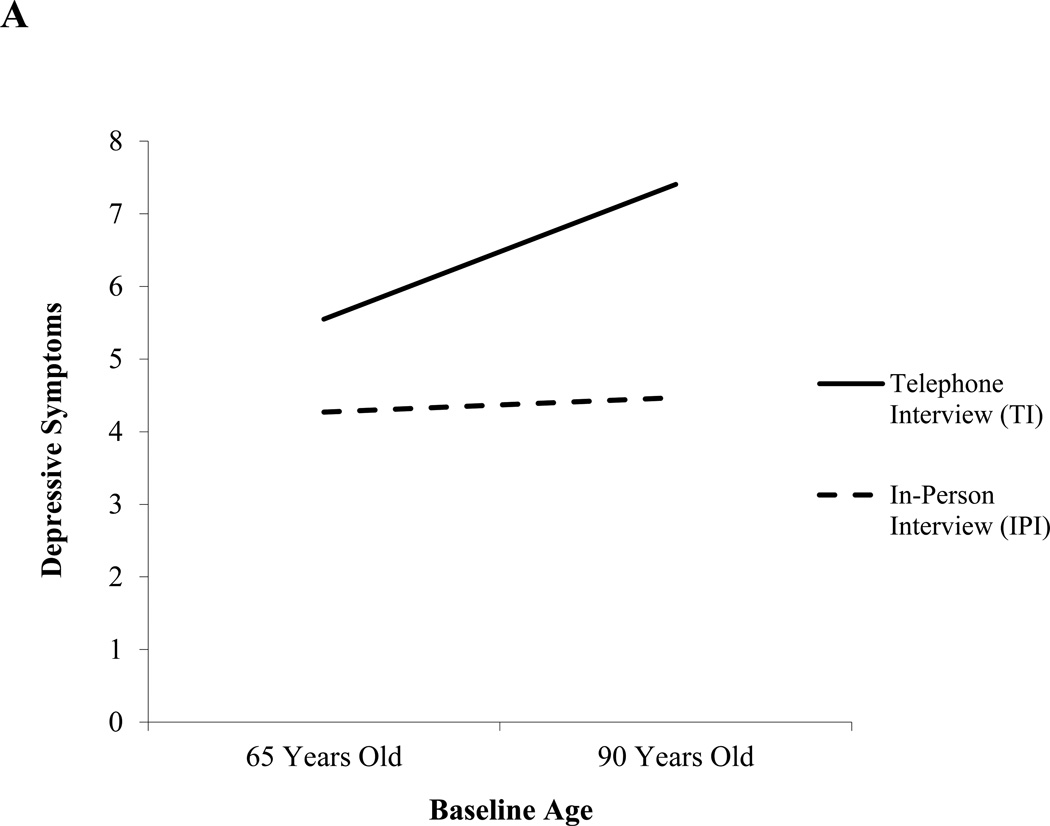
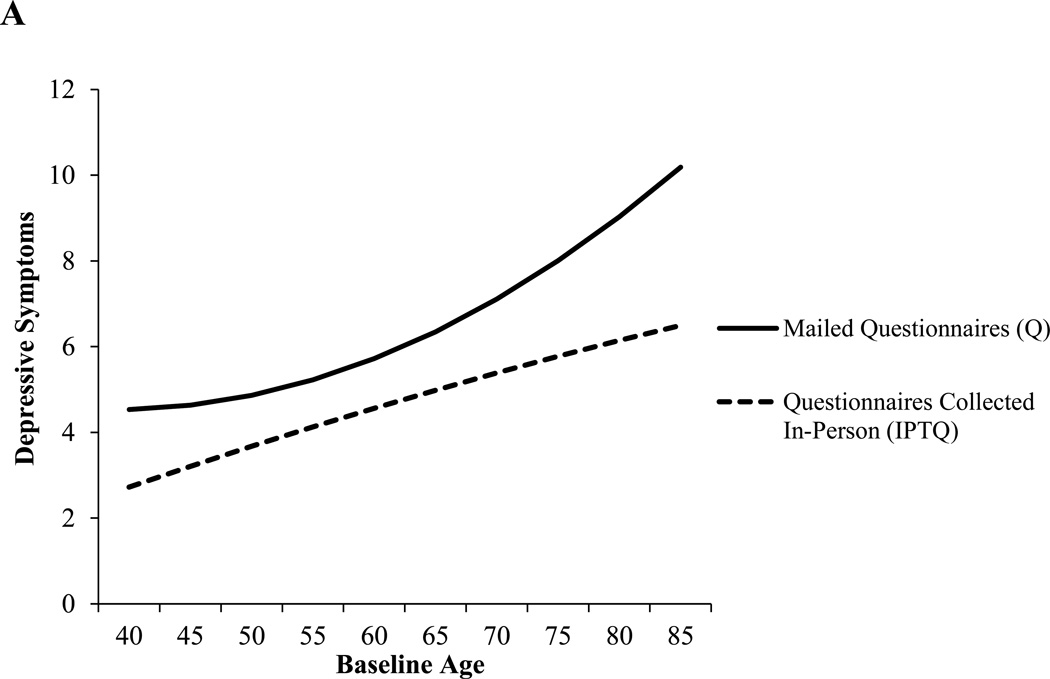
The current study investigated age differences and longitudinal change in mode effects, wherein individuals report less negative and more positive psychosocial functioning with data collection modes that have greater (vs. less) direct contact with interviewers (e.g., in-person interviews vs. telephone interviews). Using 2 longitudinal datasets, the Later Life Study of Social Exchanges (LLSSE) and Swedish Adoption/Twin Study of Aging (SATSA), we tested how mode effects may vary with cohort (baseline age differences) and maturational development (longitudinal change). In Study 1, LLSSE participants (65-90 years old) completed in-person and telephone interviews assessing negative and positive aspects of psychosocial functioning across 2 years. The data collection mode with greater direct contact with interviewers (in-person interviews) was associated with reporting less negative and more positive psychosocial functioning compared to the mode with less direct contact (telephone interviews). These mode effects were more pronounced with older baseline age, but only for the negative psychosocial measures. Mode effects also became stronger over time for reports of negative affect. In Study 2, SATSA participants (38-86 years old) completed mailed questionnaires and questionnaires collected in-person that assessed depressive symptoms and positive affect across 18 years. Consistent with Study 1, participants reported fewer depressive symptoms and more positive affect with greater (vs. less) direct contact with interviewers (questionnaires collected in-person vs. mailed questionnaires). For reports of depressive symptoms, but not positive affect, mode effects were more pronounced with age and time. Together, the results underscore how mode effects may contribute to inconsistent findings in the socioemotional aging literature.
本研究调查了模式效应中的年龄差异和纵向变化,即个体在与访谈者有更多(而非更少)直接接触的数据收集模式下(例如,面对面访谈与电话访谈),报告的负面心理社会功能更少,正面心理社会功能更多。我们使用两个纵向数据集,即社会交流晚年研究(LLSSE)和瑞典收养/双胞胎衰老研究(SATSA),来测试模式效应如何随队列(基线年龄差异)和成熟发展(纵向变化)而变化。在研究1中,LLSSE的参与者(65 - 90岁)完成了面对面访谈和电话访谈,评估了两年间心理社会功能的负面和正面方面。与直接接触较少的模式(电话访谈)相比,与访谈者有更多直接接触的数据收集模式(面对面访谈)与报告更少的负面心理社会功能和更多的正面心理社会功能相关。这些模式效应在基线年龄较大时更为明显,但仅适用于负面心理社会测量指标。随着时间的推移,负面情绪报告的模式效应也变得更强。在研究2中,SATSA的参与者(38 - 86岁)完成了邮寄问卷和面对面收集的问卷,这些问卷评估了18年间的抑郁症状和积极情绪。与研究1一致,参与者在与访谈者有更多(而非更少)直接接触时(面对面收集的问卷与邮寄问卷),报告了更少的抑郁症状和更多的积极情绪。对于抑郁症状的报告,而非积极情绪的报告,模式效应随着年龄和时间更为明显。总之,研究结果强调了模式效应可能如何导致社会情感衰老文献中结果不一致。