Schütze Sandra, Ribes Sandra, Kaufmann Annika, Manig Anja, Scheffel Jörg, Redlich Sandra, Bunkowski Stephanie, Hanisch Uwe-Karsten, Brück Wolfgang, Nau Roland
Institute of Neuropathology, University Medical Center Göttingen, 37075 Göttingen, Germany. Department of Geriatrics, Agaplesion Diakonissen Krankenhaus, 60322 Frankfurt am Main, Germany.
Institute of Neuropathology, University Medical Center Göttingen, 37075 Göttingen, Germany.
Oncotarget. 2014 Dec 30;5(24):12573-92. doi: 10.18632/oncotarget.2709.
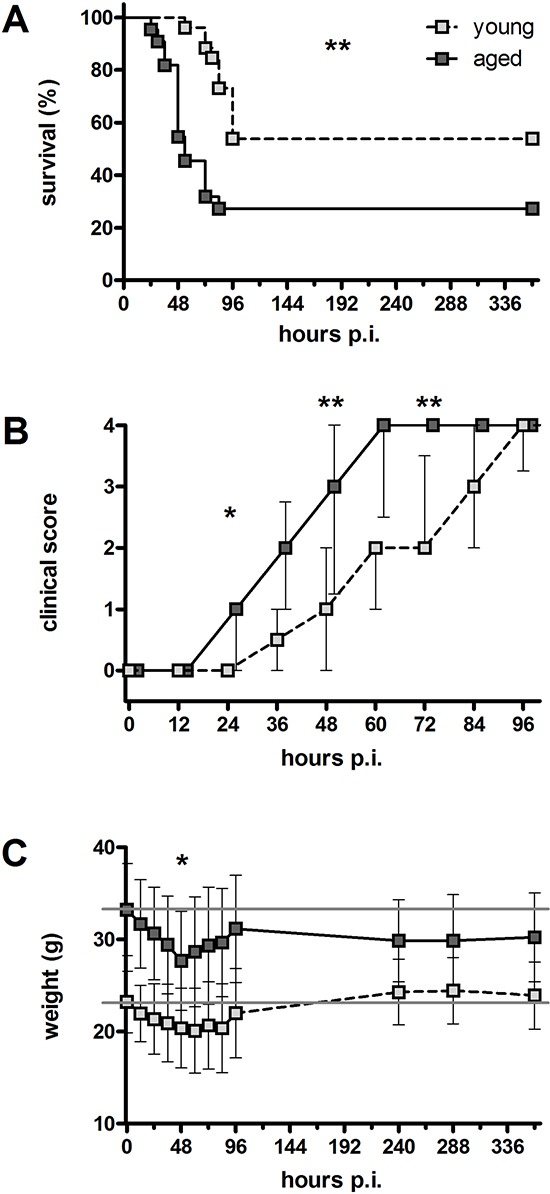
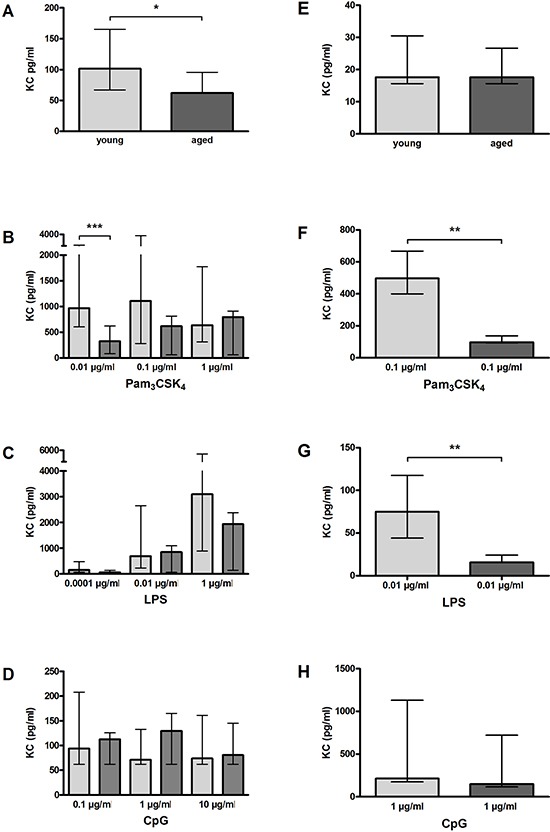
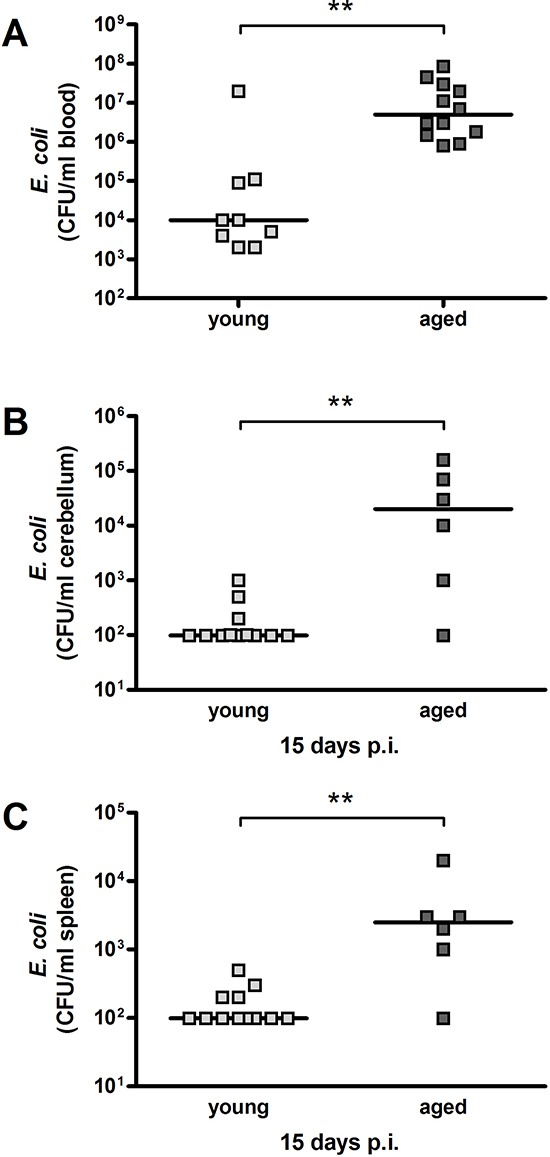
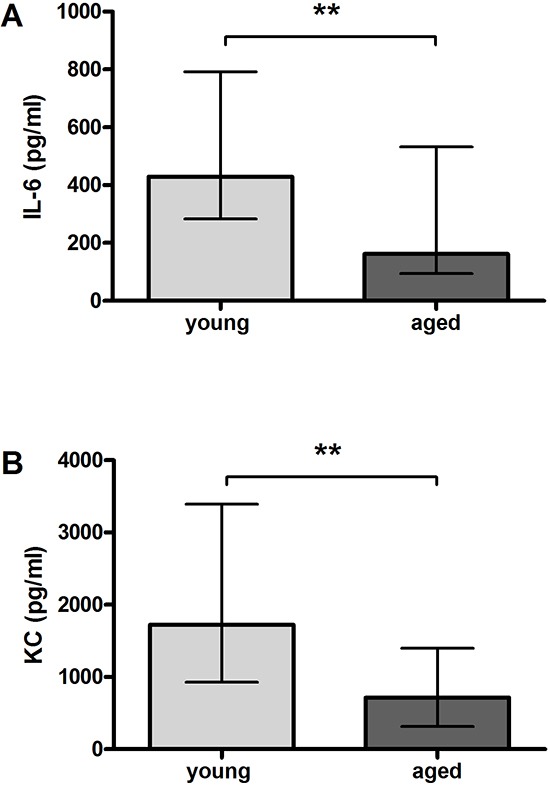
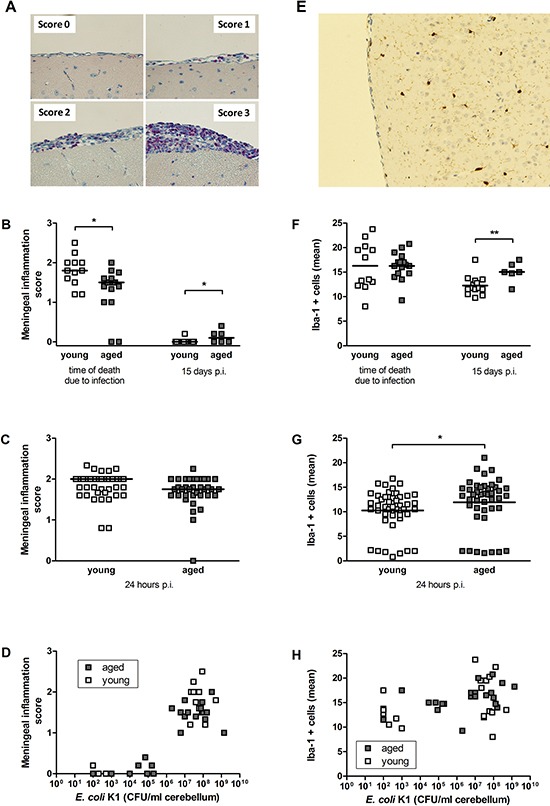
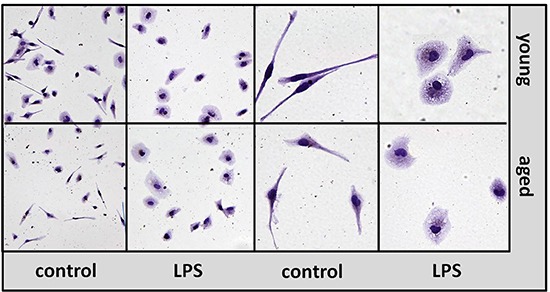
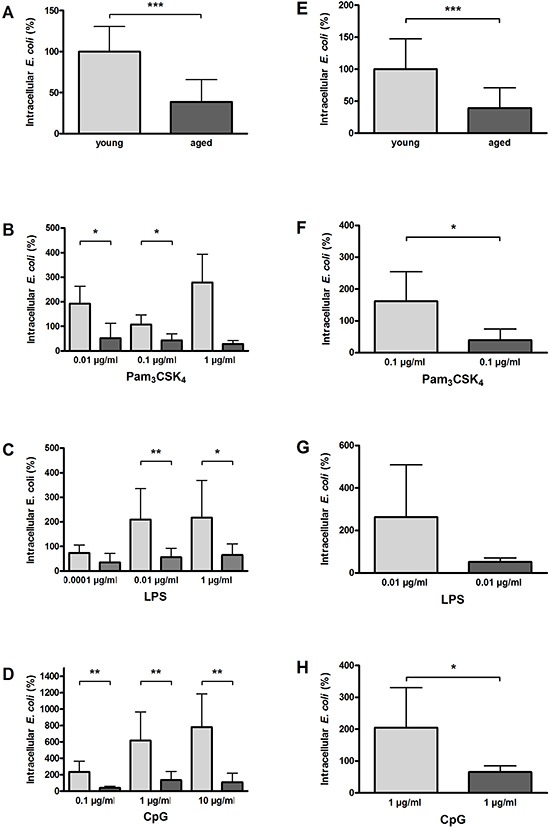
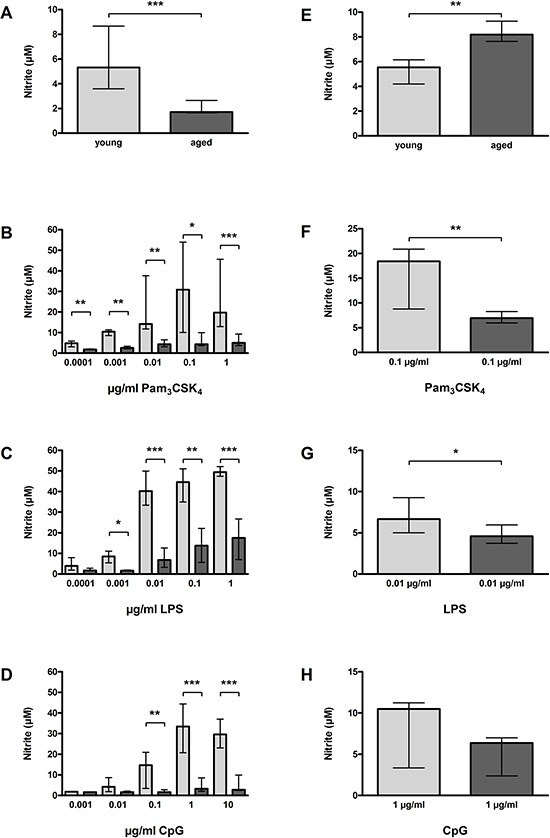
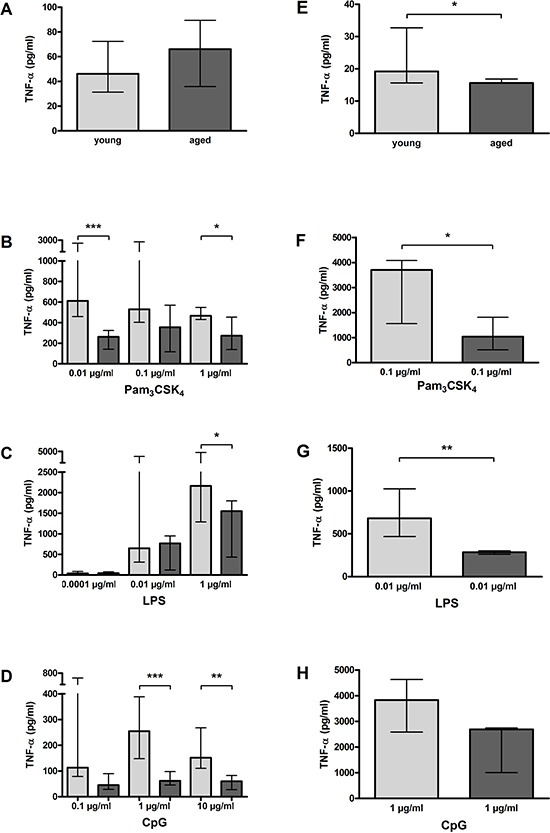
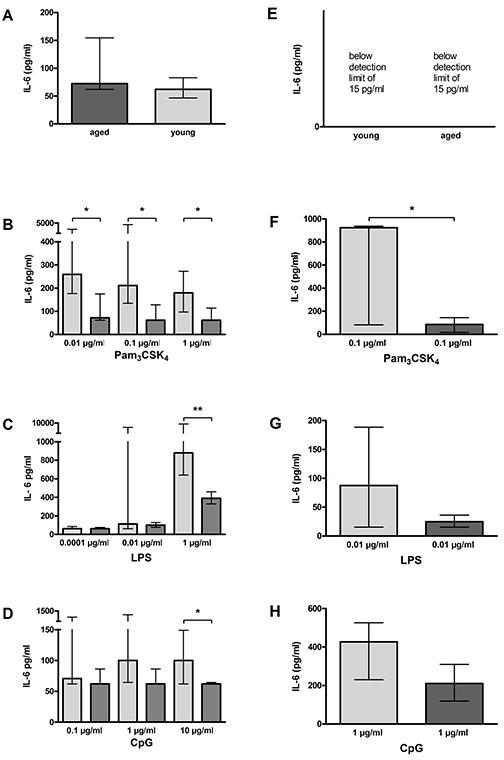
Incidence and mortality of bacterial meningitis are strongly increased in aged compared to younger adults demanding new strategies to improve prevention and therapy of bacterial central nervous system (CNS) infections the elderly. Here, we established a geriatric mouse model for an intracerebral E. coli infection which reflects the clinical situation in aged patients: After intracerebral challenge with E. coli K1, aged mice showed a higher mortality, a faster development of clinical symptoms, and a more pronounced weight loss. Elimination of bacteria and systemic inflammatory response were impaired in aged mice, however, the number of infiltrating leukocytes and microglial cells in the CNS of aged and young mice did not differ substantially. In vitro, primary microglial cells and peritoneal macrophages from aged mice phagocytosed less E. coli and released less NO and cyto-/chemokines compared to cells from young mice both without activation and after stimulation by agonists of TLR 2, 4, and 9. Our results suggest that the age-related decline of microglia and macrophage functions plays an essential role for the higher susceptibility of aged mice to intracerebral infections. Strategies to improve the phagocytic potential of aged microglial cells and macrophages appear promising for prevention and treatment of CNS infections in elderly patients.
与年轻成年人相比,老年人细菌性脑膜炎的发病率和死亡率显著增加,这就需要新的策略来改善老年人细菌性中枢神经系统(CNS)感染的预防和治疗。在此,我们建立了一种用于脑内大肠杆菌感染的老年小鼠模型,该模型反映了老年患者的临床情况:在用大肠杆菌K1进行脑内攻击后,老年小鼠表现出更高的死亡率、更快出现临床症状以及更明显的体重减轻。老年小鼠清除细菌和全身炎症反应受损,然而,老年和年轻小鼠中枢神经系统中浸润的白细胞和小胶质细胞数量没有显著差异。在体外,与年轻小鼠的细胞相比,无论是未激活时还是在受到TLR 2、4和9激动剂刺激后,老年小鼠的原代小胶质细胞和腹腔巨噬细胞吞噬的大肠杆菌更少,释放的一氧化氮(NO)和细胞因子/趋化因子也更少。我们的结果表明,小胶质细胞和巨噬细胞功能随年龄的下降在老年小鼠对脑内感染的更高易感性中起重要作用。提高老年小胶质细胞和巨噬细胞吞噬能力的策略对于预防和治疗老年患者的中枢神经系统感染似乎很有前景。