Quwaider Muhannad, Biswas Subir
Electrical and Computer Engineering, Michigan State University, East Lansing, MI, United States.
Ad Hoc Netw. 2010 Nov;8(8):824-841. doi: 10.1016/j.adhoc.2010.03.002.
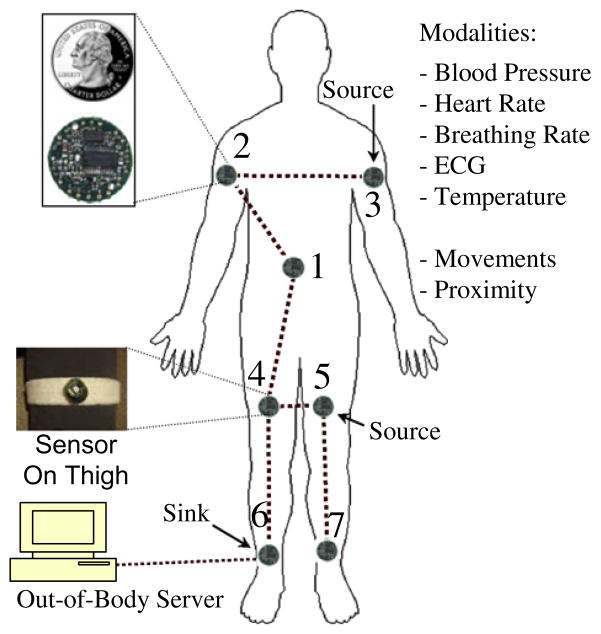
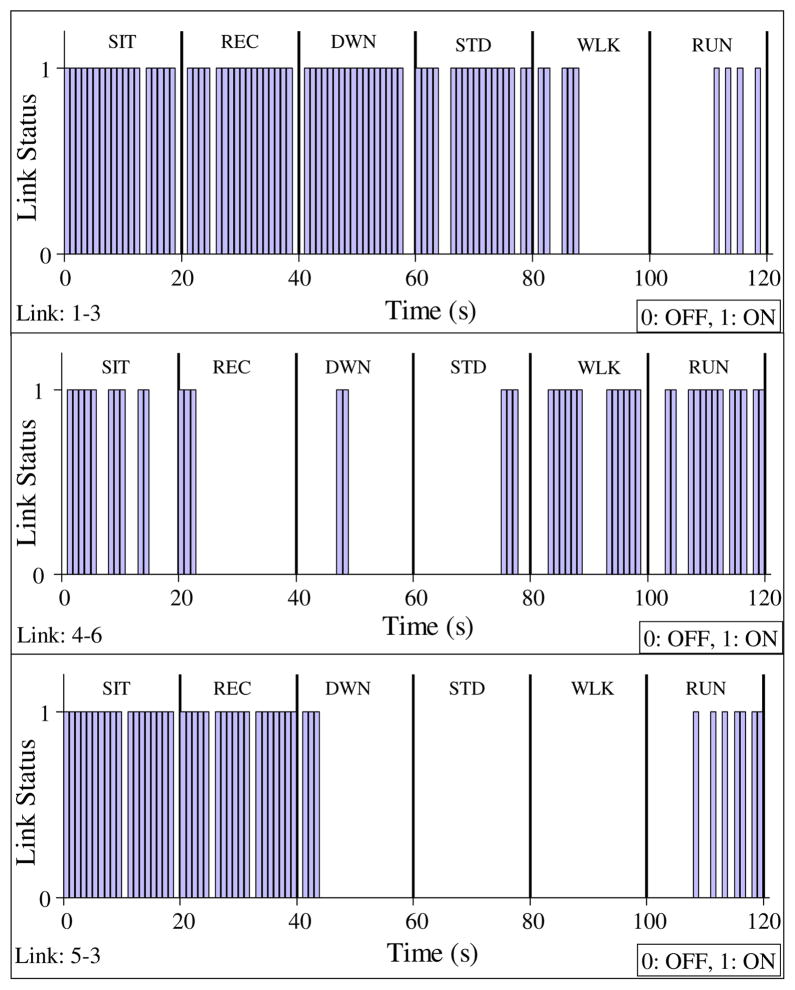
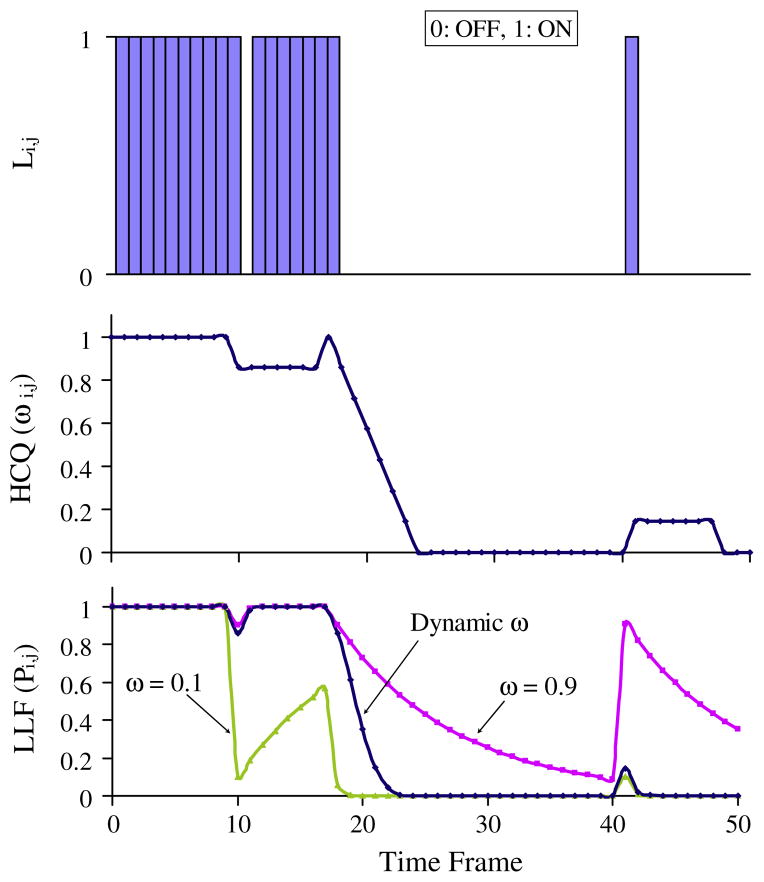
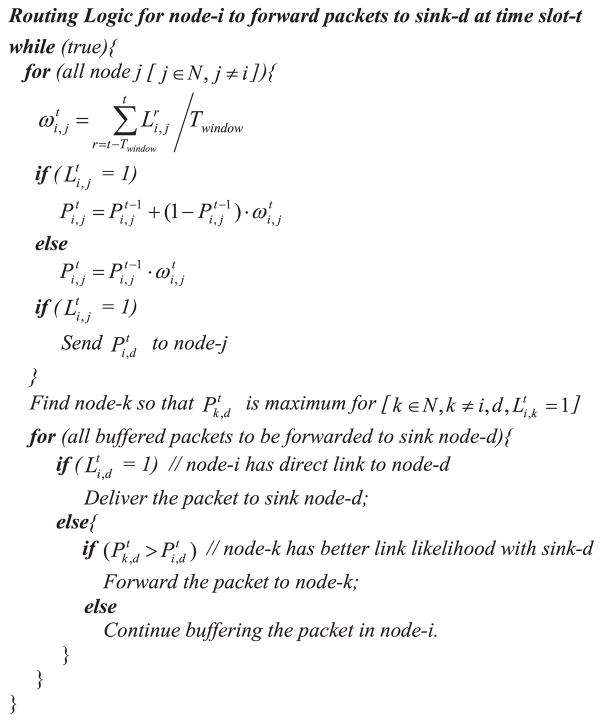
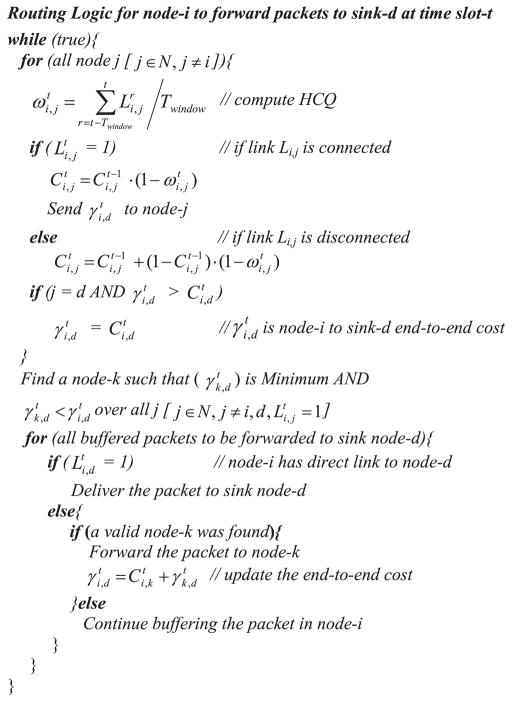
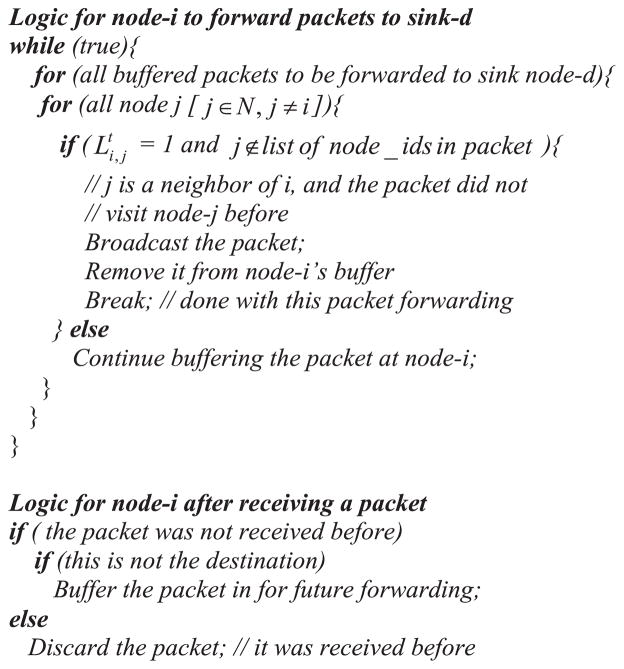
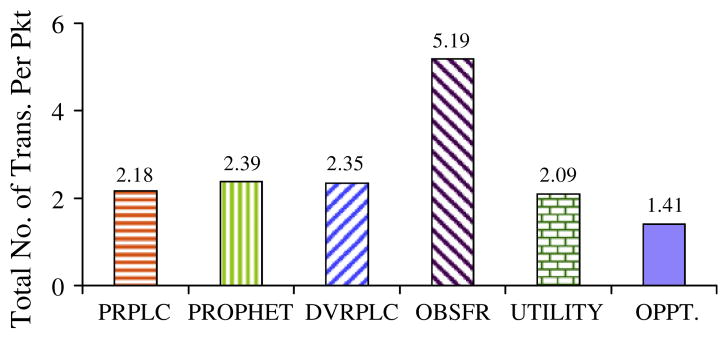
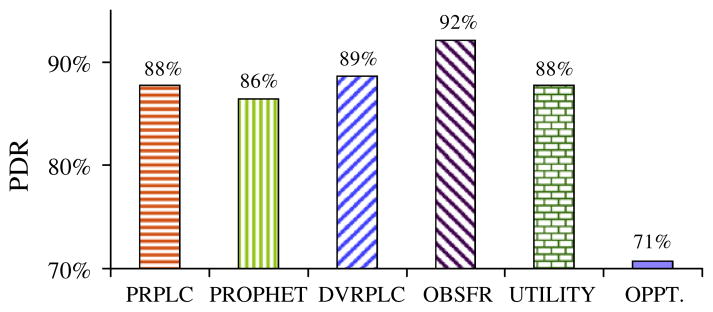
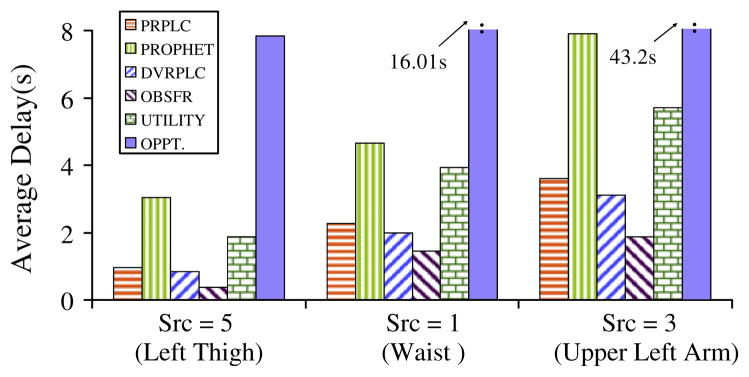
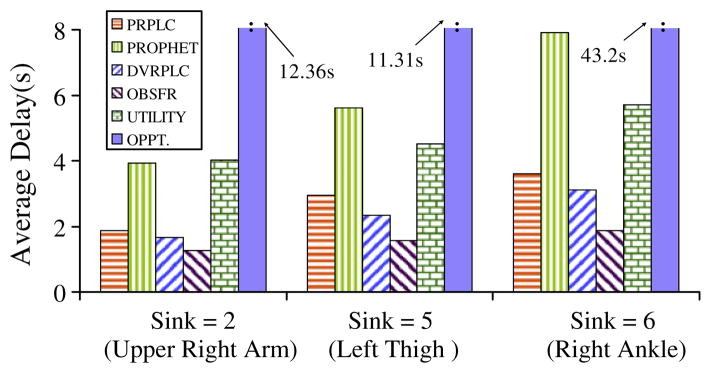
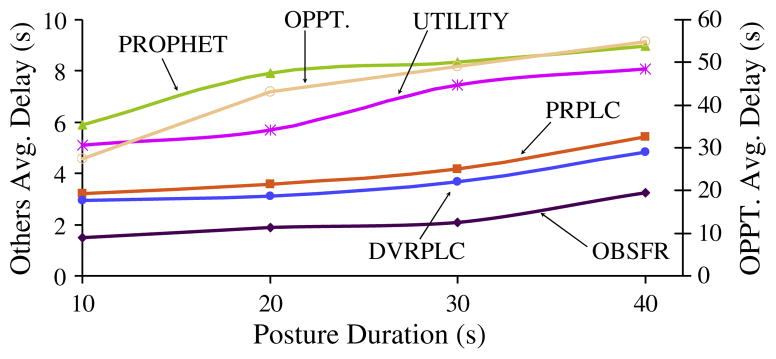
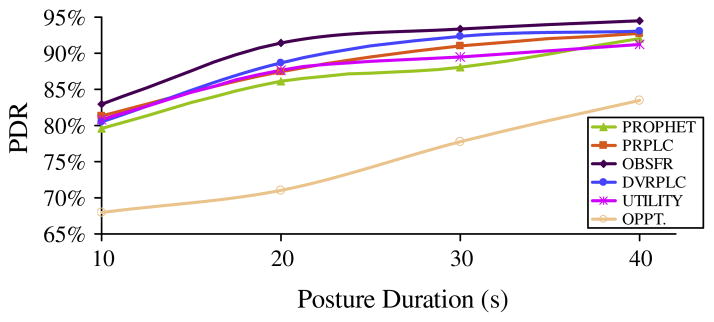
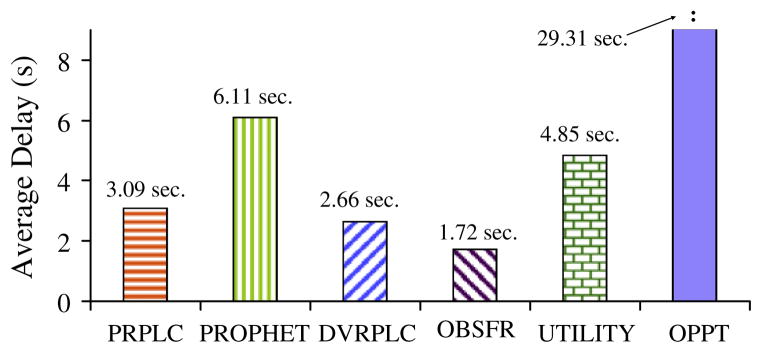
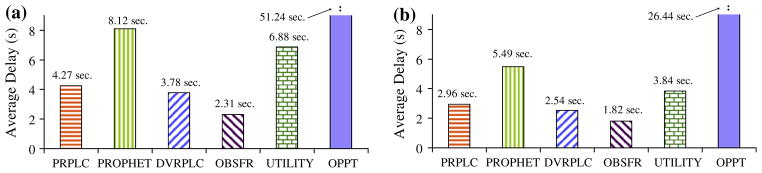
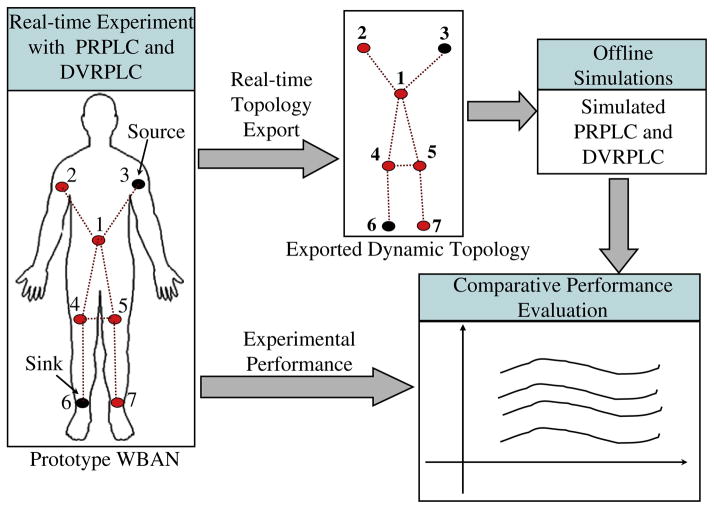
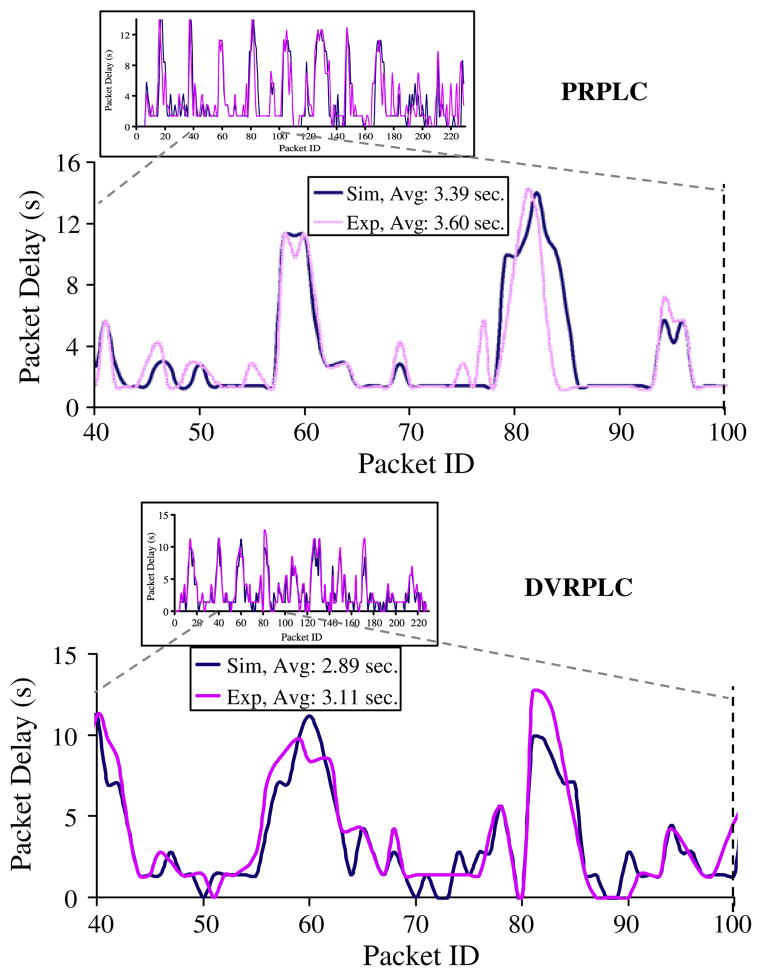
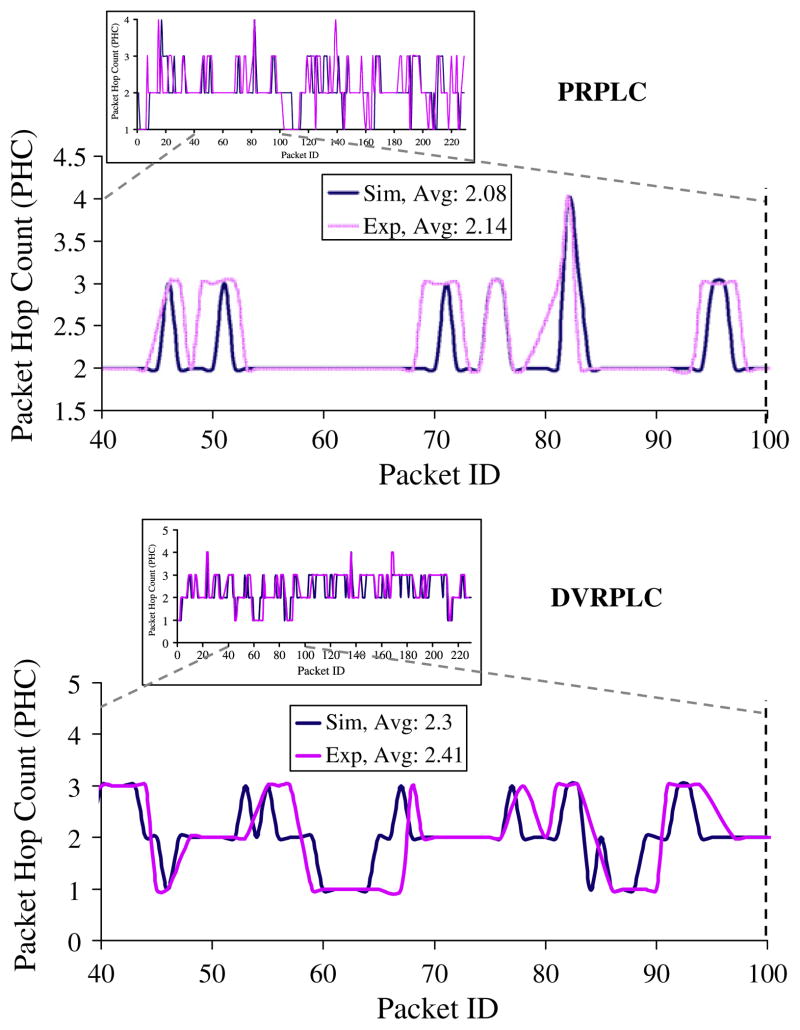
This paper presents novel store-and-forward packet routing algorithms for Wireless Body Area Networks () with frequent postural partitioning. A prototype has been constructed for experimentally characterizing on-body topology disconnections in the presence of ultra short range radio links, unpredictable RF attenuation, and human postural mobility. On-body DTN routing protocols are then developed using a stochastic link cost formulation, capturing multi-scale topological localities in human postural movements. Performance of the proposed protocols are evaluated experimentally and via simulation, and are compared with a number of existing single-copy DTN routing protocols and an on-body packet flooding mechanism that serves as a performance benchmark with delay lower-bound. It is shown that via multi-scale modeling of the spatio-temporal locality of on-body link disconnection patterns, the proposed algorithms can provide better routing performance compared to a number of existing probabilistic, opportunistic, and utility-based DTN routing protocols in the literature.
本文提出了适用于具有频繁姿势划分的无线体域网(WBAN)的新型存储转发分组路由算法。已构建了一个原型,用于在存在超短程无线链路、不可预测的射频衰减和人体姿势移动性的情况下,通过实验表征人体拓扑断开情况。然后使用随机链路成本公式开发人体延迟容忍网络(DTN)路由协议,以捕捉人体姿势运动中的多尺度拓扑局部性。通过实验和仿真对所提协议的性能进行评估,并与一些现有的单副本DTN路由协议以及一种人体分组泛洪机制进行比较,该泛洪机制作为具有延迟下限的性能基准。结果表明,通过对人体链路断开模式的时空局部性进行多尺度建模,与文献中一些现有的概率性、机会性和基于效用的DTN路由协议相比,所提算法能够提供更好的路由性能。