Jo Hyun Hwa, Edupuganti Ramakrishna, You Lei, Dalby Kevin N, Anslyn Eric V
Department of Chemistry, The University of Texas at Austin, Austin, Texas, 78712, USA.
Department of Chemistry, The University of Texas at Austin, Austin, Texas, 78712, USA. ; Division of Medicinal Chemistry, The University of Texas at Austin, Austin, Texas, 78712, USA.
Chem Sci. 2015 Jan 1;6(1):158-164. doi: 10.1039/C4SC02495H.
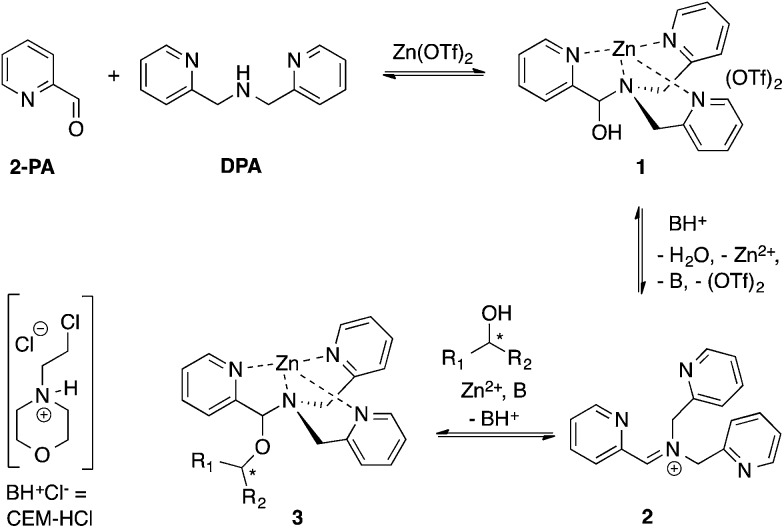
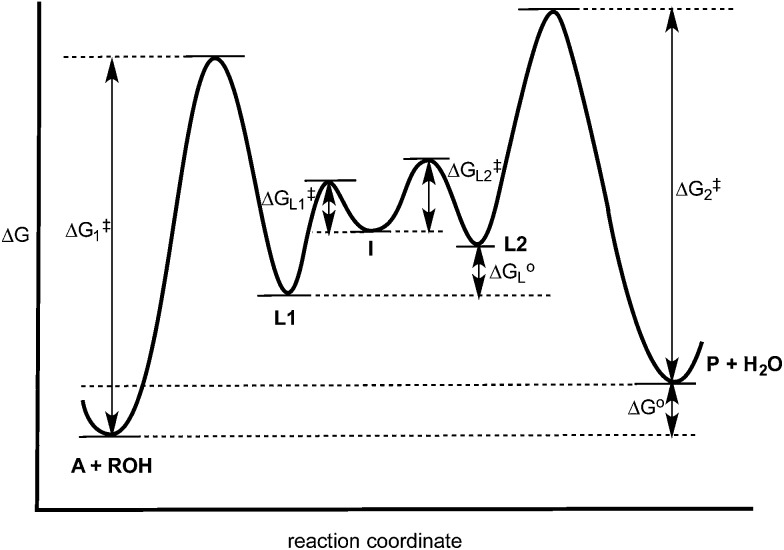
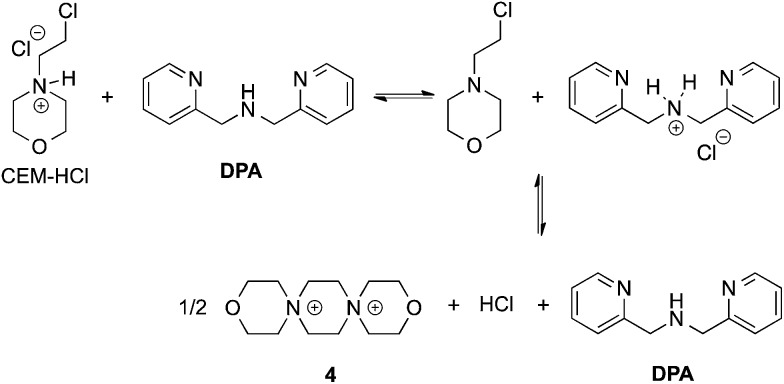
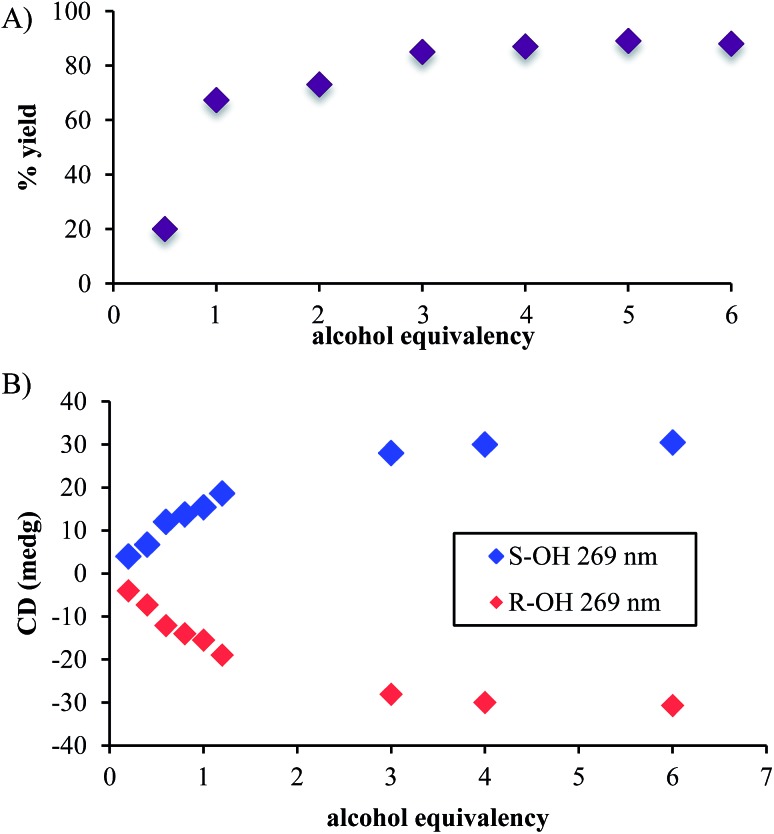
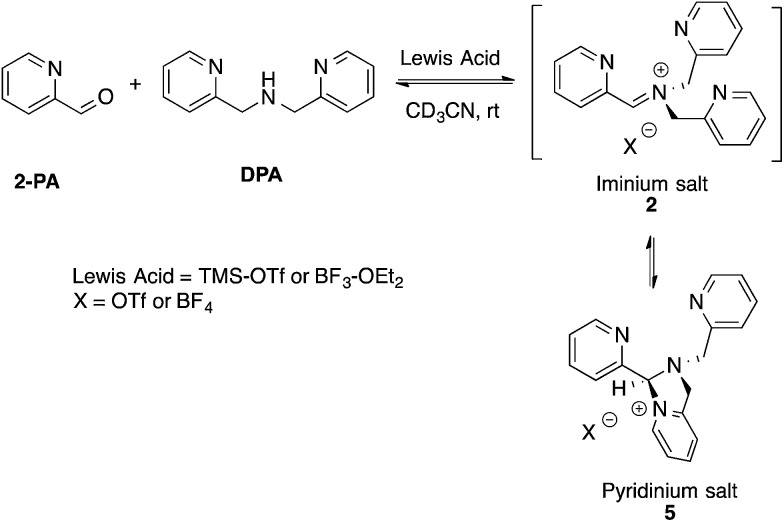
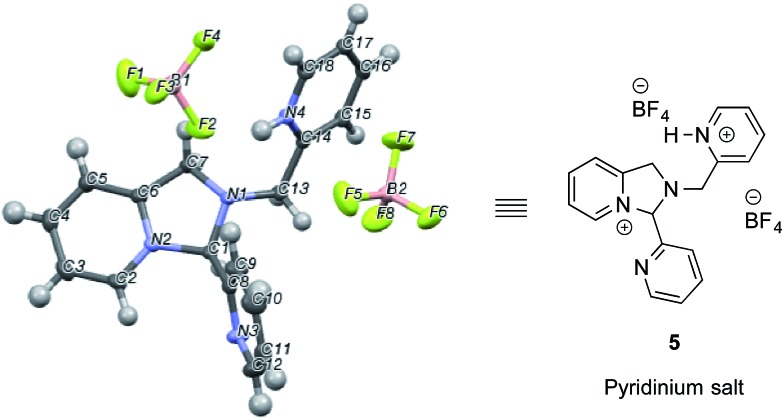
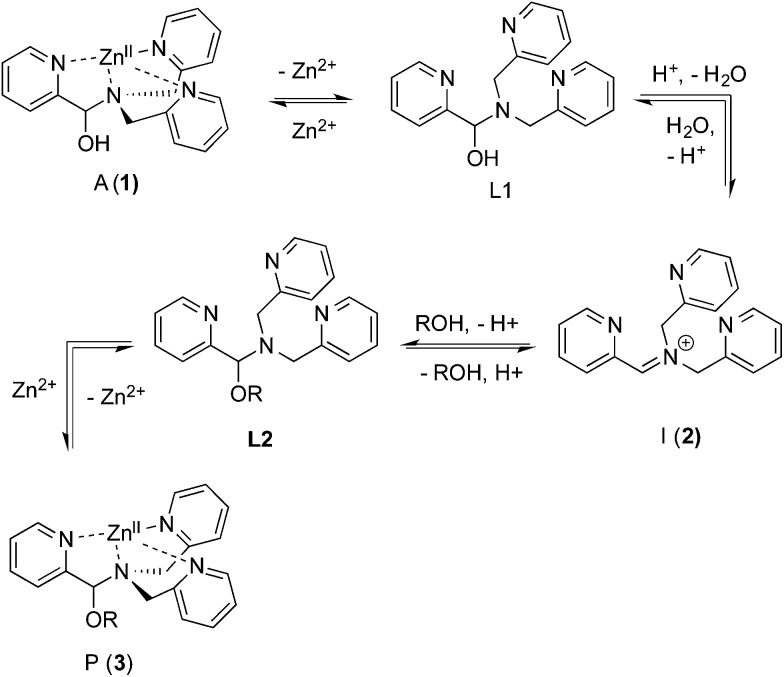
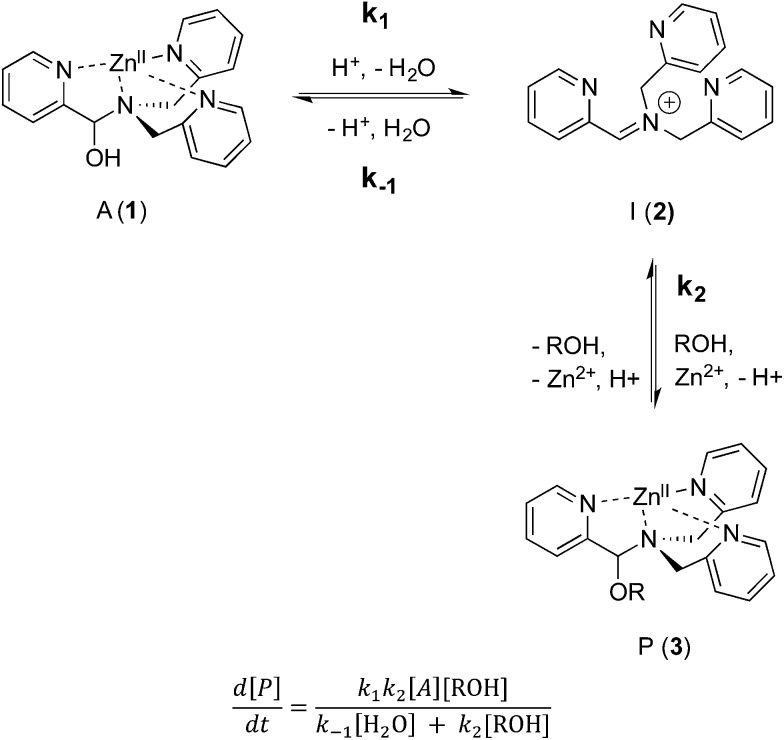
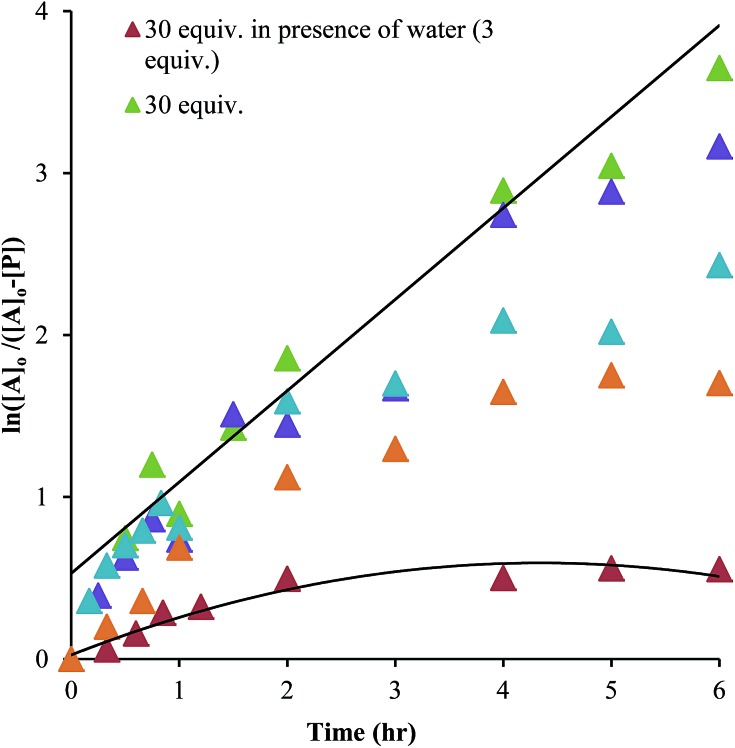
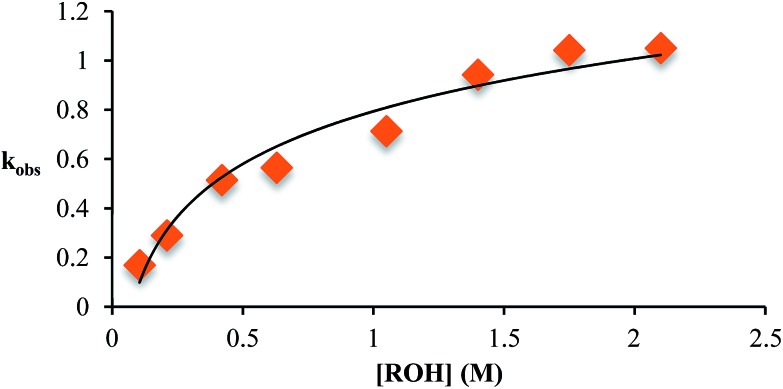
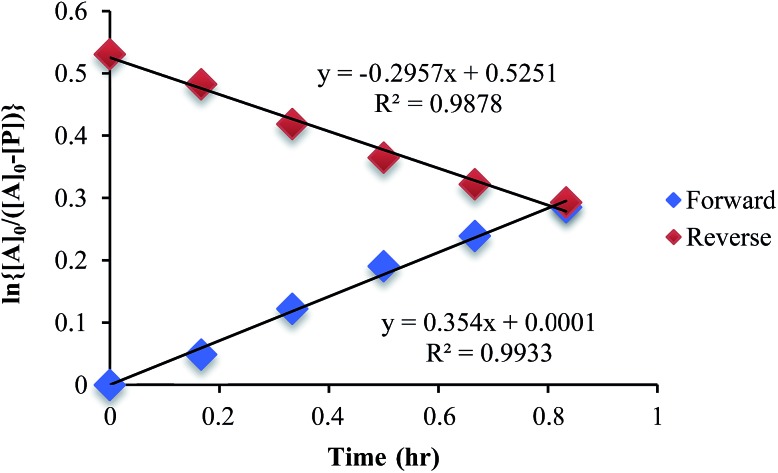
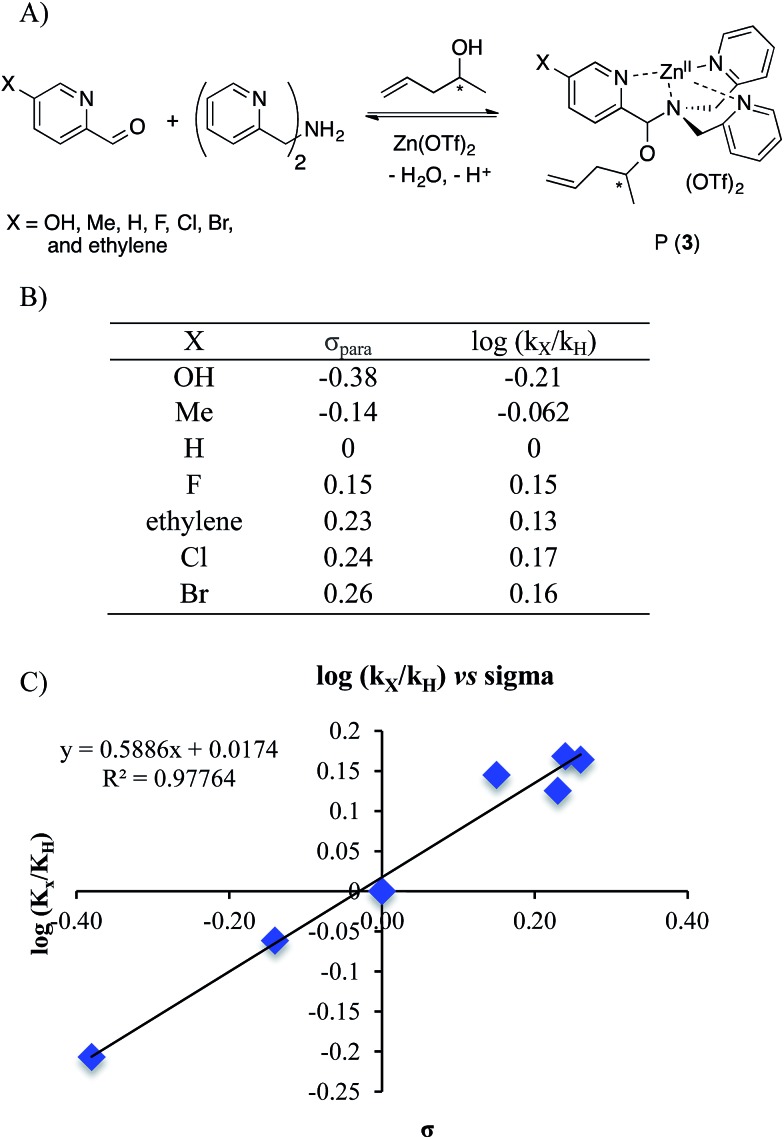
The use of reversible covalent-bonding in a four-component assembly incorporating chiral alcohols was recently reported to give a method for determining the enantiomeric excess of the alcohols via CD spectroscopy. Experiments that probe the mechanism of this assembly, which consists of 2-formylpyridine (), dipicolylamine (), Zn(II), and alcohols, to yield zinc-complexes of tren-like ligands, are presented. The studies focus upon the mechanism of conversion of a hemi-aminal () to a hemi-aminal ether (), thereby incorporating the fourth component. It was found that molecular sieves along with 3 to 4 equivalents of alcohol are required to drive the conversion of to . Attempts to isolate an intermediate in this reaction via addition of strong Lewis-acids led to the discovery of a five-membered ring pyridinium salt (), but upon exposure to Zn(II) and alcohols gave different products than the assembly. This was interpreted to support the intermediacy of an iminium species. Kinetic studies reveal that the conversion of to is zero-order in alcohol in large excesses of alcohol, supporting rate-determining formation of an intermediate prior to reaction with alcohol. Further, the magnitude of the rate constant for interconversion of and are similar, supporting the notion that there are similar rate-determining steps (rds's) for the forward and reverse reactions. Hammett plots show that the rds involves creation of a negative charge (interpreted as the loss of positive charge), supporting the notion that decomplexation of Zn(II) from the assemblies to generate apo-forms of and is rate-determining. The individual mechanistic conclusions are combined to create a qualitative reaction coordinate diagram for the interconversion of and .
最近有报道称,在包含手性醇的四组分组装体中使用可逆共价键,可提供一种通过圆二色光谱法测定醇对映体过量的方法。本文介绍了一些实验,这些实验探究了该组装体的机制,该组装体由2-甲酰基吡啶、二甲基吡啶胺、锌(II)和醇组成,以生成类tren配体的锌配合物。研究重点在于半缩醛胺转化为半缩醛醚的机制,从而纳入第四种组分。结果发现,需要分子筛以及3至4当量的醇来驱动转化为。通过添加强路易斯酸试图分离该反应中的中间体,导致发现了一种五元环吡啶盐,但在暴露于锌(II)和醇时,得到的产物与组装体不同。这被解释为支持亚胺鎓物种的中间体性质。动力学研究表明,在大量过量的醇中,转化为的反应对醇为零级,支持在与醇反应之前中间体形成的速率决定步骤。此外,和相互转化的速率常数大小相似,支持正向和反向反应存在相似速率决定步骤的观点。哈米特图表明,速率决定步骤涉及负电荷的产生(解释为正电荷的损失),支持锌(II)从组装体中解络合以生成和的脱辅基形式是速率决定步骤的观点。将各个机理结论结合起来,创建了和相互转化的定性反应坐标图。