Fujita Naoto, Ono Miharu, Tomioka Tomoka, Deie Masataka
Graduate School of Biomedicine and Health Sciences, Hiroshima University, Hiroshima City, Hiroshima, Japan; Faculty of Medicine, Hiroshima University, Hiroshima City, Hiroshima, Japan.
Graduate School of Biomedicine and Health Sciences, Hiroshima University, Hiroshima City, Hiroshima, Japan.
PLoS One. 2014 Dec 22;9(12):e115685. doi: 10.1371/journal.pone.0115685. eCollection 2014.
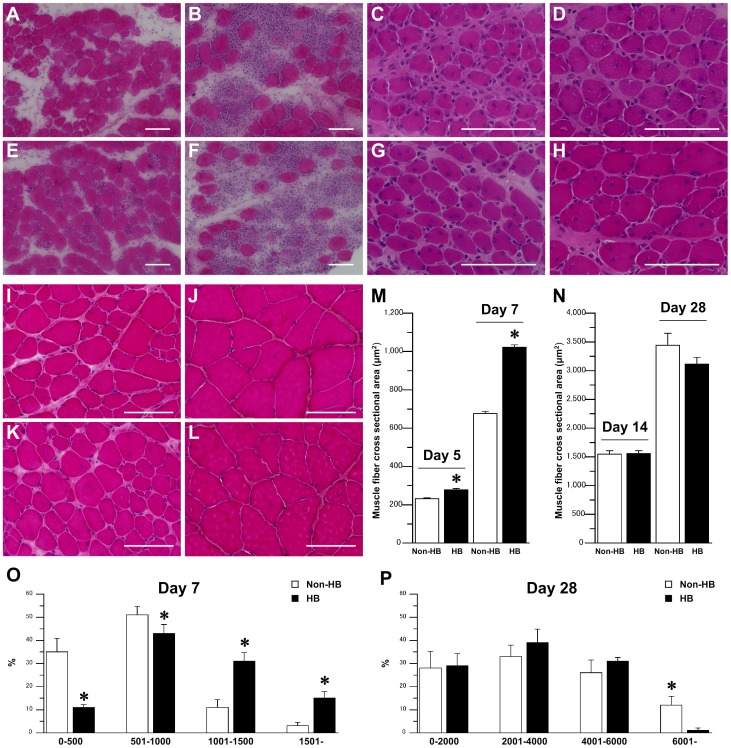
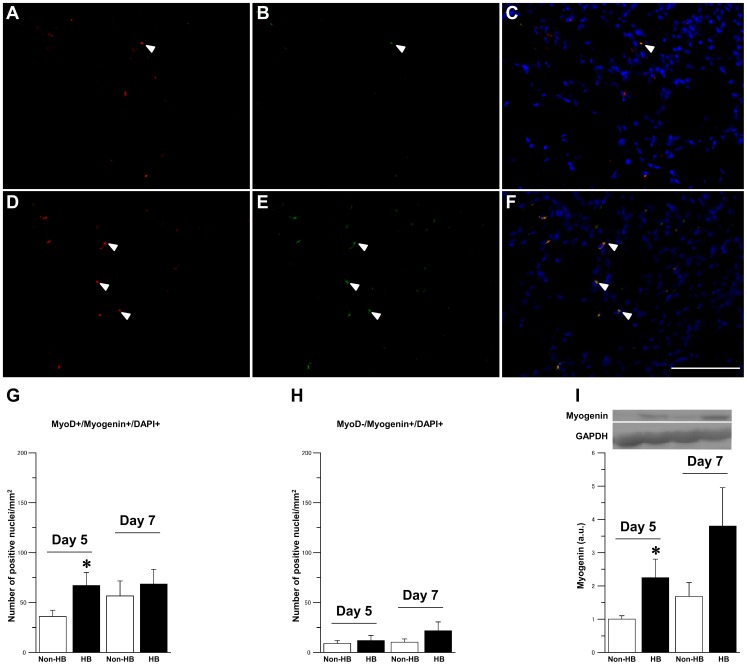
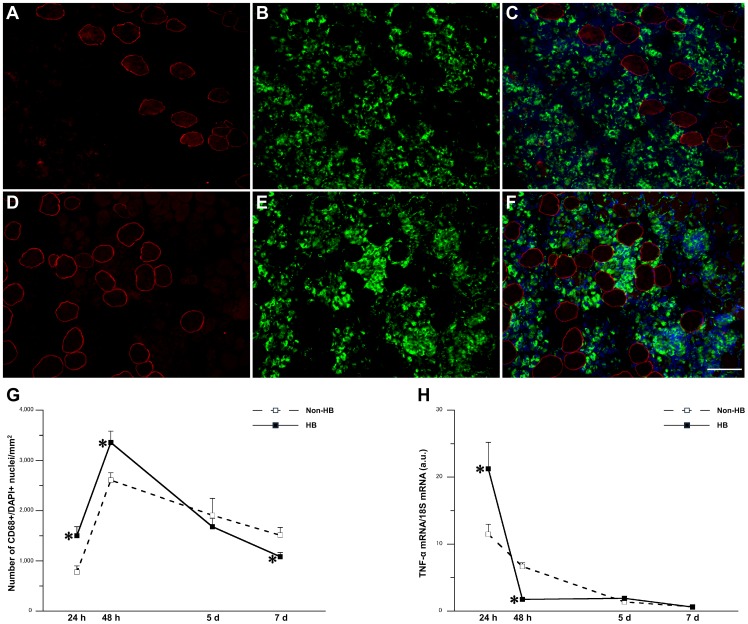
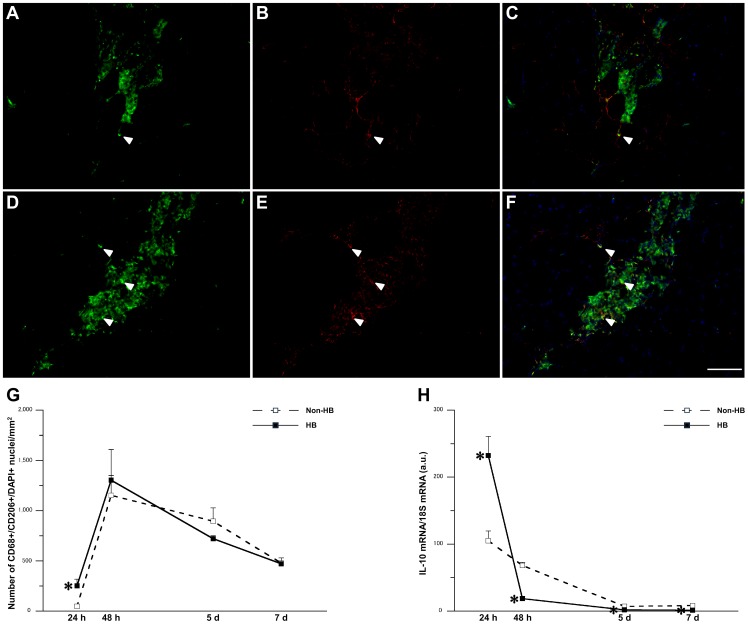
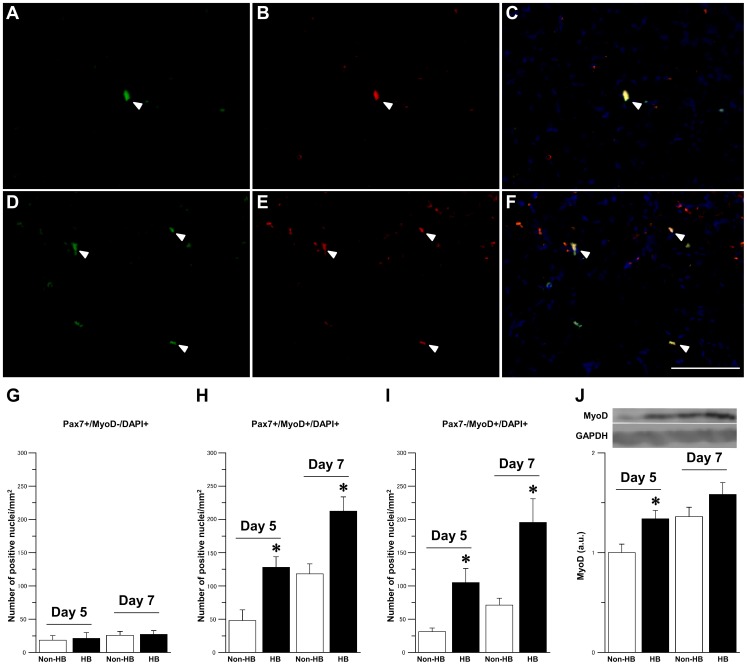
Use of mild hyperbaric oxygen less than 2 atmospheres absolute (2026.54 hPa) with normal air is emerging as a common complementary treatment for severe muscle injury. Although hyperbaric oxygen at over 2 atmospheres absolute with 100% O2 promotes healing of skeletal muscle injury, it is not clear whether mild hyperbaric oxygen is equally effective. The purpose of the present study was to investigate the impact of hyperbaric oxygen at 1.25 atmospheres absolute (1266.59 hPa) with normal air on muscle regeneration. The tibialis anterior muscle of male Wistar rats was injured by injection of bupivacaine hydrochloride, and rats were randomly assigned to a hyperbaric oxygen experimental group or to a non-hyperbaric oxygen control group. Immediately after the injection, rats were exposed to hyperbaric oxygen, and the treatment was continued for 28 days. The cross-sectional area of centrally nucleated muscle fibers was significantly larger in rats exposed to hyperbaric oxygen than in controls 5 and 7 days after injury. The number of CD68- or CD68- and CD206-positive cells was significantly higher in rats exposed to hyperbaric oxygen than in controls 24 h after injury. Additionally, tumor necrosis factor-α and interleukin-10 mRNA expression levels were significantly higher in rats exposed to hyperbaric oxygen than in controls 24 h after injury. The number of Pax7- and MyoD- or MyoD- and myogenin-positive nuclei per mm2 and the expression levels of these proteins were significantly higher in rats exposed to hyperbaric oxygen than in controls 5 days after injury. These results suggest that mild hyperbaric oxygen promotes skeletal muscle regeneration in the early phase after injury, possibly due to reduced hypoxic conditions leading to accelerated macrophage infiltration and phenotype transition. In conclusion, mild hyperbaric oxygen less than 2 atmospheres absolute with normal air is an appropriate support therapy for severe muscle injuries.
使用低于2个绝对大气压(2026.54 hPa)的轻度高压氧结合正常空气,正逐渐成为严重肌肉损伤的一种常见辅助治疗方法。尽管2个绝对大气压以上的高压氧结合100%氧气可促进骨骼肌损伤的愈合,但尚不清楚轻度高压氧是否同样有效。本研究的目的是探讨1.25个绝对大气压(1266.59 hPa)的高压氧结合正常空气对肌肉再生的影响。通过注射盐酸布比卡因损伤雄性Wistar大鼠的胫前肌,并将大鼠随机分为高压氧实验组或非高压氧对照组。注射后立即让大鼠接受高压氧治疗,并持续治疗28天。在损伤后5天和7天,接受高压氧治疗的大鼠中中央有核肌纤维的横截面积显著大于对照组。在损伤后24小时,接受高压氧治疗的大鼠中CD68或CD68和CD206阳性细胞的数量显著高于对照组。此外,在损伤后24小时,接受高压氧治疗的大鼠中肿瘤坏死因子-α和白细胞介素-10 mRNA表达水平显著高于对照组。在损伤后5天,接受高压氧治疗的大鼠中每平方毫米Pax7和MyoD或MyoD和生肌调节因子阳性核的数量以及这些蛋白的表达水平显著高于对照组。这些结果表明,轻度高压氧可促进损伤后早期骨骼肌再生,可能是由于低氧状况减轻导致巨噬细胞浸润加速和表型转变。总之,低于2个绝对大气压的轻度高压氧结合正常空气是严重肌肉损伤的一种合适的支持治疗方法。