Andorko James I, Hess Krystina L, Jewell Christopher M
Fischell Department of Bioengineering, University of Maryland, 2212 Jeong H. Kim Engineering Building, College Park, Maryland, 20742, USA.
AAPS J. 2015 Mar;17(2):323-38. doi: 10.1208/s12248-014-9708-2. Epub 2014 Dec 23.
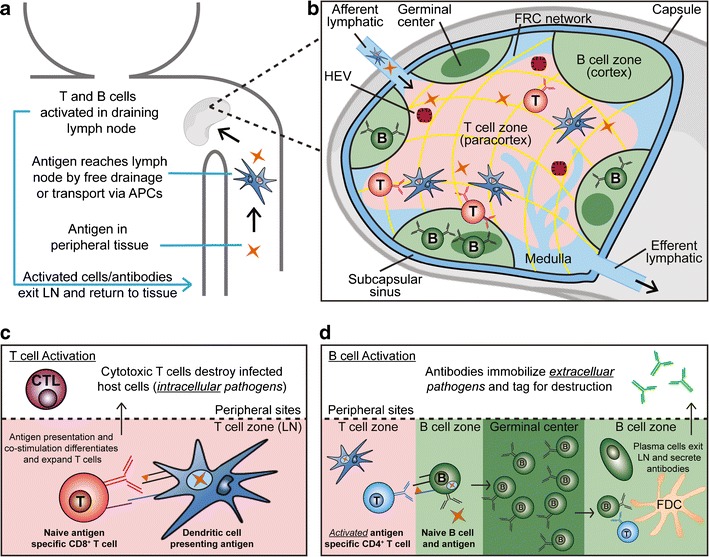
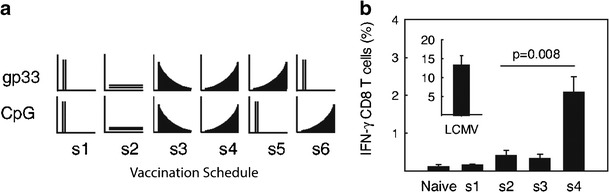
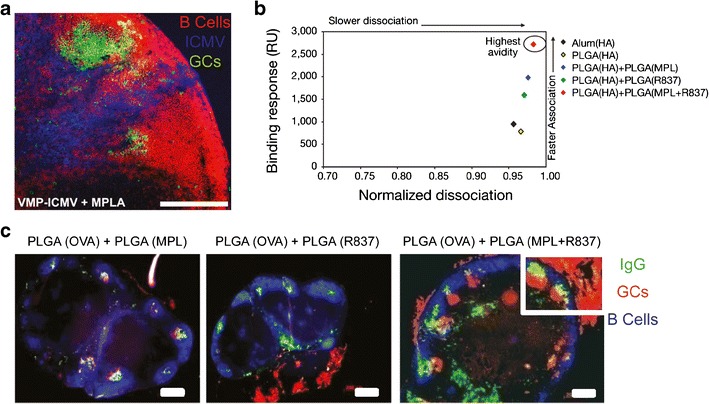
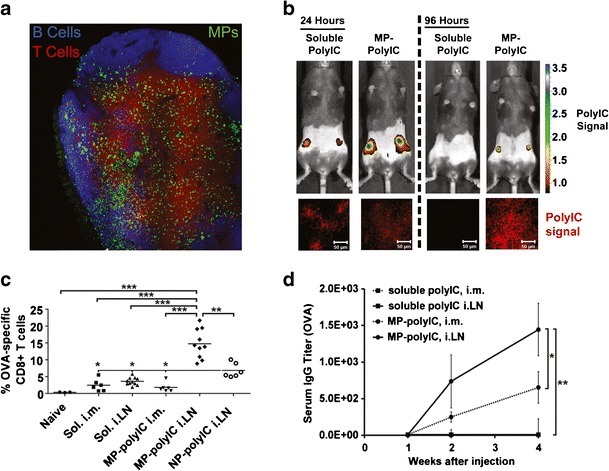
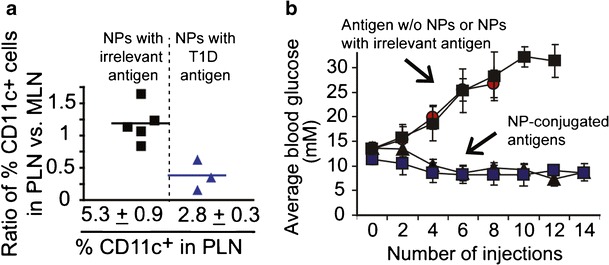
Nanoparticles, microparticles, and other biomaterials are advantageous in vaccination because these materials provide opportunities to modulate specific characteristics of immune responses. This idea of "tuning" immune responses has recently been used to combat infectious diseases and cancer, and to induce tolerance during organ transplants or autoimmune disease. Lymph nodes and other secondary lymphoid organs such as the spleen play crucial roles in determining if and how these responses develop following vaccination or immunotherapy. Thus, by manipulating the local microenvironments within these immunological command centers, the nature of systemic immune response can be controlled. This review provides recent examples that harness the interactions between biomaterials and lymph nodes or other secondary lymphoid organs to generate immunity or promote tolerance. These strategies draw on mechanical properties, surface chemistry, stability, and targeting to alter the interactions of cells, signals, and vaccine components in lymph nodes. While there are still many unanswered questions surrounding how best to design biomaterial-based vaccines to promote specific structures or functions in lymph nodes, features such as controlled release and targeting will help pave the way for the next generation of vaccines and immunotherapies that generate immune responses tuned for specific applications.
纳米颗粒、微粒及其他生物材料在疫苗接种中具有优势,因为这些材料为调节免疫反应的特定特性提供了机会。这种“调节”免疫反应的理念最近已被用于对抗传染病和癌症,以及在器官移植或自身免疫性疾病期间诱导免疫耐受。淋巴结及其他二级淋巴器官(如脾脏)在决定接种疫苗或进行免疫治疗后这些反应是否以及如何发展方面起着关键作用。因此,通过操纵这些免疫指挥中心内的局部微环境,可以控制全身免疫反应的性质。本综述提供了近期的实例,这些实例利用生物材料与淋巴结或其他二级淋巴器官之间的相互作用来产生免疫或促进免疫耐受。这些策略利用机械性能、表面化学、稳定性和靶向性来改变淋巴结中细胞、信号和疫苗成分之间的相互作用。虽然围绕如何最佳设计基于生物材料的疫苗以促进淋巴结中的特定结构或功能仍有许多未解答的问题,但诸如控释和靶向等特性将有助于为下一代能产生针对特定应用进行调节的免疫反应的疫苗和免疫疗法铺平道路。