Walton Katherine, Gantar Miroslav, Gibbs Patrick D L, Schmale Michael C, Berry John P
Department of Chemistry and Biochemistry, Florida International University, 3000 NE 151st Street, North Miami, FL 33181, USA.
Department of Biological Sciences, Florida International University, 11200 SW 8th Street, Miami, FL 33199, USA.
Toxins (Basel). 2014 Dec 22;6(12):3568-81. doi: 10.3390/toxins6123568.
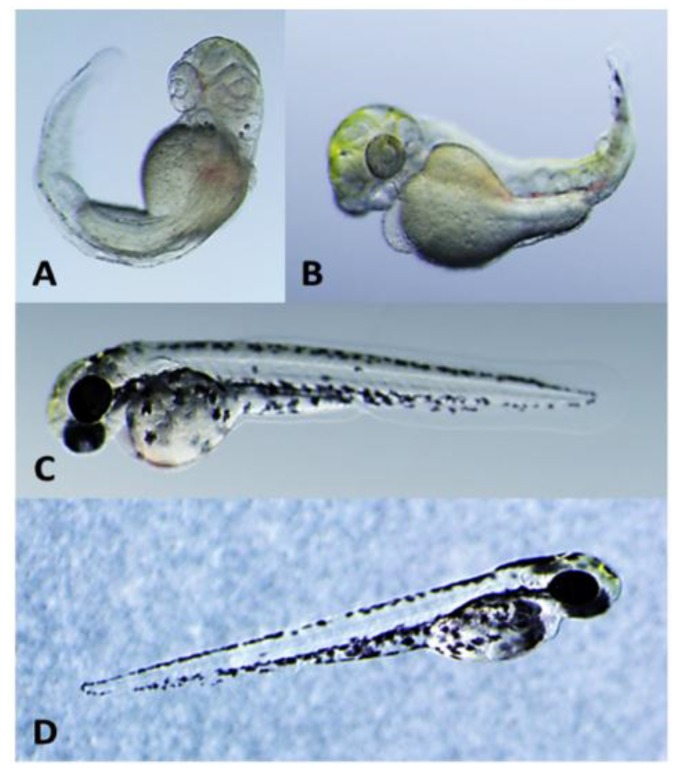
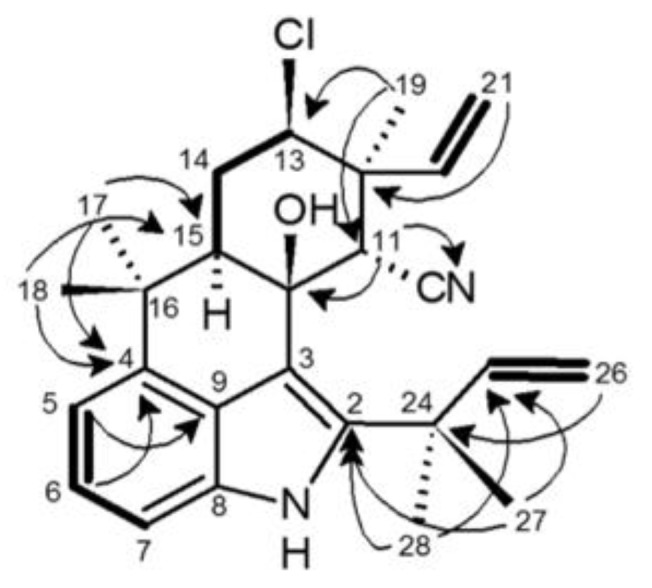
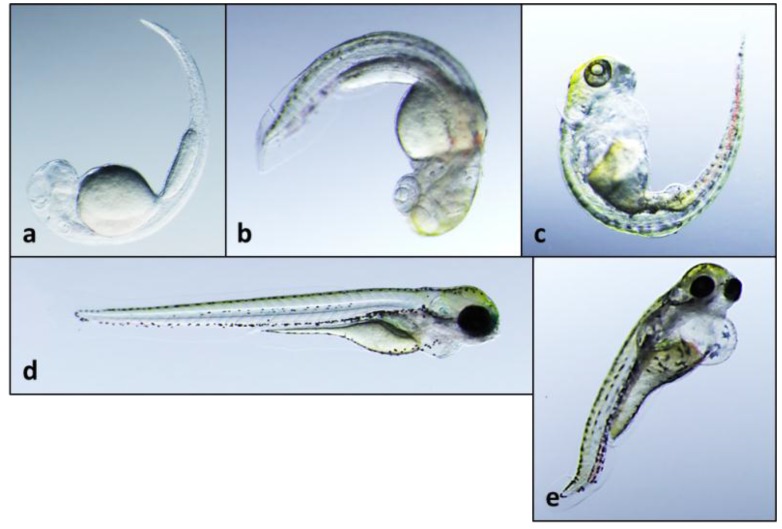
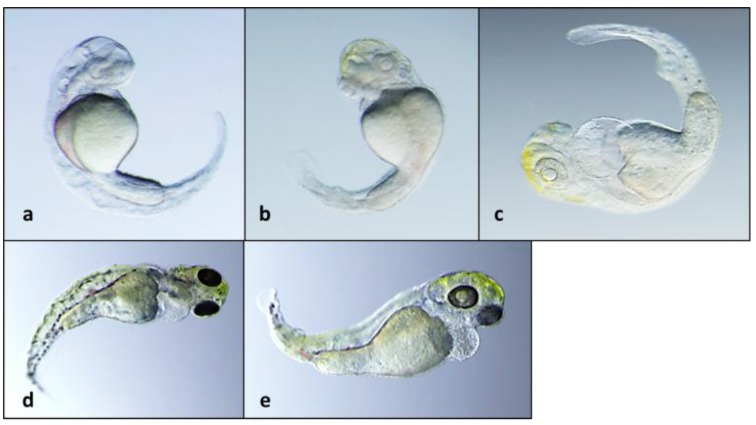
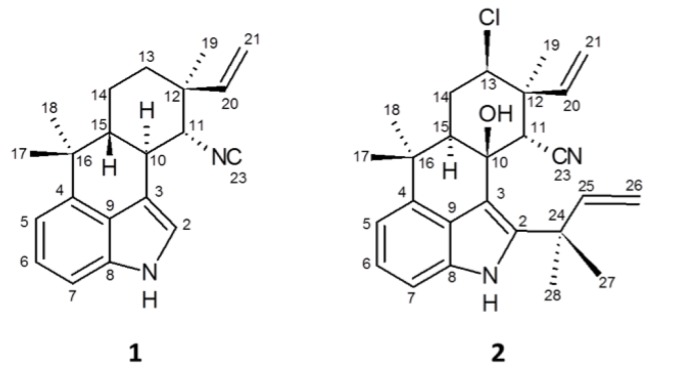
Cyanobacteria are recognized producers of toxic or otherwise bioactive metabolite associated, in particular, with so-called "harmful algal blooms" (HABs) and eutrophication of freshwater systems. In the present study, two apparently teratogenic indole alkaloids from a freshwater strain of the widespread cyanobacterial genus, Fischerella (Stigonemataceae), were isolated by bioassay-guided fractionation, specifically using the zebrafish (Danio rerio) embryo, as a model of vertebrate development. The two alkaloids include the previously known 12-epi-hapalindole H isonitrile (1), and a new nitrile-containing variant, 12-epi-ambiguine B nitrile (2). Although both compounds were toxic to developing embryos, the former compound was shown to be relatively more potent, and to correlate best with the observed embryo toxicity. Related indole alkaloids from Fischerella, and other genera in the Stigonemataceae, have been widely reported as antimicrobial compounds, specifically in association with apparent allelopathy. However, this is the first report of their vertebrate toxicity, and the observed teratogenicity of these alkaloids supports a possible contribution to the toxicity of this widespread cyanobacterial family, particularly in relation to freshwater HABs and eutrophication.
蓝藻细菌是已知的有毒或具有其他生物活性代谢物的生产者,尤其与所谓的“有害藻华”(HABs)以及淡水系统的富营养化有关。在本研究中,通过生物测定引导的分级分离,特别是使用斑马鱼(Danio rerio)胚胎作为脊椎动物发育模型,从广泛分布的蓝藻细菌属费氏藻属(Stigonemataceae)的一个淡水菌株中分离出两种明显具有致畸性的吲哚生物碱。这两种生物碱包括先前已知的12-表-哈帕林多碱H异腈(1)和一种新的含腈变体,12-表-模棱两可碱B腈(2)。尽管这两种化合物对发育中的胚胎都有毒性,但前一种化合物显示出相对更强的毒性,并且与观察到的胚胎毒性相关性最佳。来自费氏藻属以及颤藻科其他属的相关吲哚生物碱已被广泛报道为抗菌化合物,特别是与明显的化感作用有关。然而,这是它们对脊椎动物毒性的首次报道,并且观察到的这些生物碱的致畸性支持了它们可能对这个广泛分布的蓝藻细菌家族的毒性有贡献,特别是与淡水有害藻华和富营养化有关。