Wilkins Heather M, Carl Steven M, Weber Sam G, Ramanujan Suruchi A, Festoff Barry W, Linseman Daniel A, Swerdlow Russell H
Department of Neurology, University of Kansas Medical Center, Kansas City, KS, USA University of Kansas Alzheimer's Disease Center, University of Kansas Medical Center, Kansas City, KS, USA.
University of Kansas Alzheimer's Disease Center, University of Kansas Medical Center, Kansas City, KS, USA.
J Alzheimers Dis. 2015;45(1):305-18. doi: 10.3233/JAD-142334.
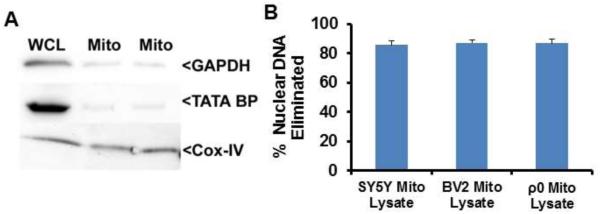
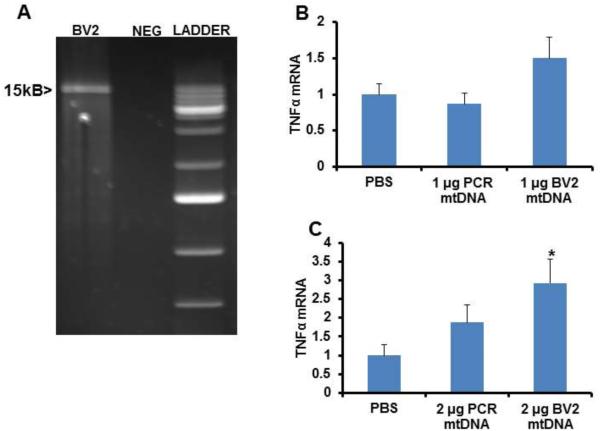
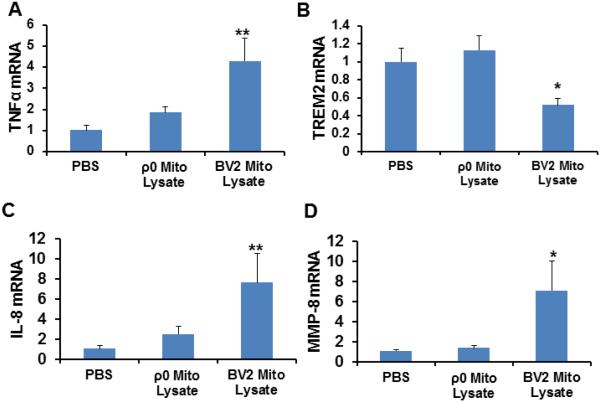
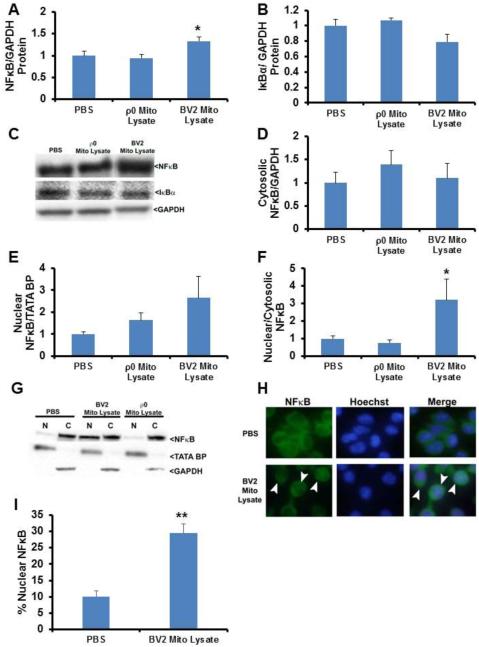
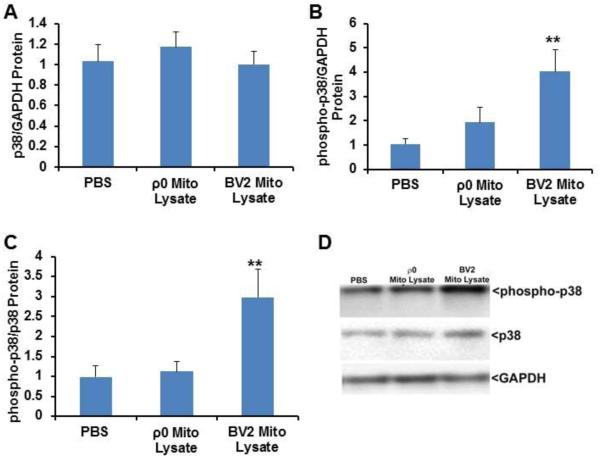
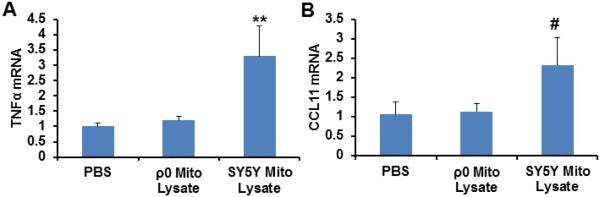
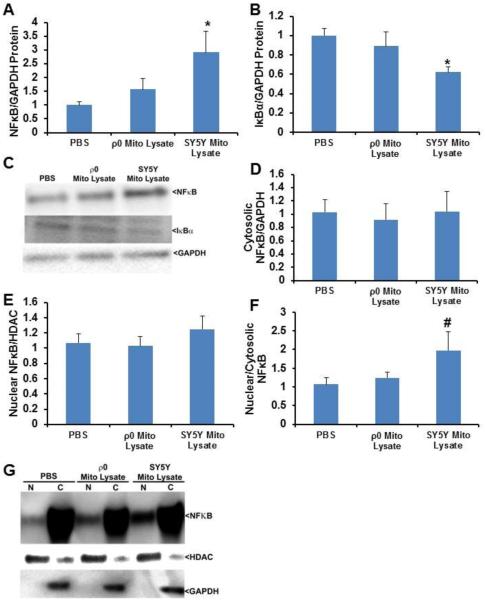
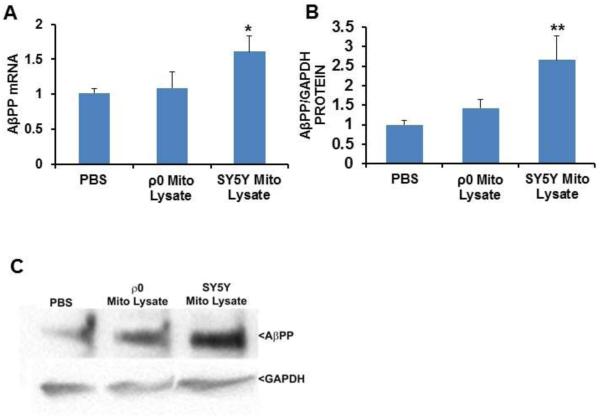
Neuroinflammation occurs in Alzheimer's disease (AD). While AD genetic studies implicate inflammation-relevant genes and fibrillar amyloid-β protein promotes inflammation, our understanding of AD neuroinflammation nevertheless remains incomplete. In this study we hypothesized damage-associated molecular pattern (DAMP) molecules arising from mitochondria, intracellular organelles that resemble bacteria, could contribute to AD neuroinflammation. To preliminarily test this possibility, we exposed neuronal and microglial cell lines to enriched mitochondrial lysates. BV2 microglial cells treated with mitochondrial lysates showed decreased TREM2 mRNA, increased TNFα mRNA, increased MMP-8 mRNA, increased IL-8 mRNA, redistribution of NFκB to the nucleus, and increased p38 MAPK phosphorylation. SH-SY5Y neuronal cells treated with mitochondrial lysates showed increased TNFα mRNA, increased NFκB protein, decreased IκBα protein, increased AβPP mRNA, and increased AβPP protein. Enriched mitochondrial lysates from SH-SY5Y cells lacking detectable mitochondrial DNA (ρ0 cells) failed to induce any of these changes, while mtDNA obtained directly from mitochondria (but not PCR-amplified mtDNA) increased BV2 cell TNFα mRNA. These results indicate at least one mitochondrial-derived DAMP molecule, mtDNA, can induce inflammatory changes in microglial and neuronal cell lines. Our data are consistent with the hypothesis that a mitochondrial-derived DAMP molecule or molecules could contribute to AD neuroinflammation.
神经炎症在阿尔茨海默病(AD)中会发生。虽然AD遗传学研究表明与炎症相关的基因以及纤维状淀粉样β蛋白会促进炎症,但我们对AD神经炎症的理解仍然不完整。在本研究中,我们假设源自线粒体(类似于细菌的细胞内细胞器)的损伤相关分子模式(DAMP)分子可能促成AD神经炎症。为了初步检验这种可能性,我们将神经元和小胶质细胞系暴露于富集的线粒体裂解物中。用线粒体裂解物处理的BV2小胶质细胞显示TREM2 mRNA减少、TNFα mRNA增加、MMP - 8 mRNA增加、IL - 8 mRNA增加、NFκB重新分布至细胞核以及p38 MAPK磷酸化增加。用线粒体裂解物处理的SH - SY5Y神经元细胞显示TNFα mRNA增加、NFκB蛋白增加、IκBα蛋白减少、AβPP mRNA增加以及AβPP蛋白增加。来自缺乏可检测线粒体DNA的SH - SY5Y细胞(ρ0细胞)的富集线粒体裂解物未能诱导任何这些变化,而直接从线粒体获得的mtDNA(而非PCR扩增的mtDNA)增加了BV2细胞TNFα mRNA。这些结果表明至少一种源自线粒体的DAMP分子,即mtDNA,可诱导小胶质细胞和神经元细胞系中的炎症变化。我们的数据与一种或多种源自线粒体的DAMP分子可能促成AD神经炎症的假设一致。