Taepavarapruk Pornnarin, Butts Kelly A, Phillips Anthony G
Department of Physiology, Naresuan University, Phitsanulok, Thailand (Dr Taepavarapruk); Department of Psychiatry, University of British Columbia, Vancouver, Canada (Drs Butts and Phillips).
Int J Neuropsychopharmacol. 2014 Oct 31;18(1):pyu008. doi: 10.1093/ijnp/pyu008.
Drug addiction is a chronic brain disease characterized by recurrent episodes of relapse to drug-seeking/-taking behaviors. The ventral subiculum, the primary output of the hippocampus, plays a critical role in mediating drug-seeking behavior.
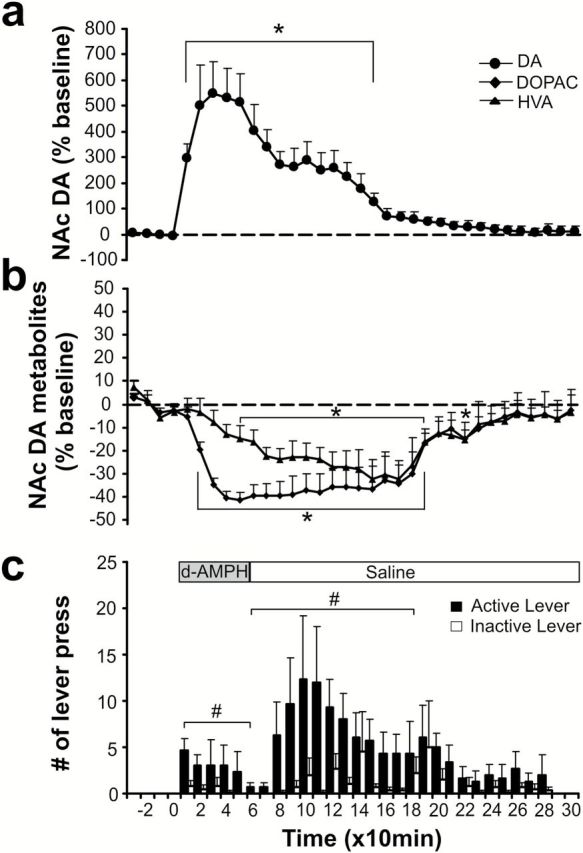
A d-amphetamine intravenous self-administration rat model was employed along with focal electrical stimulation of the ventral subiculum (20 Hz/200 pulses) to examine its role in reinstatement of drug-seeking behavior. Dopamine efflux in the nucleus accumbens was measured by in vivo microdialysis and subsequent HPLC-ED analyses. Pharmacological antagonism of dopamine and ionotropic glutamate receptors locally within the nucleus accumbens was employed to assess the role of glutamate and dopamine in reinstatement of drug-seeking behavior induced by stimulation of the ventral subiculum.
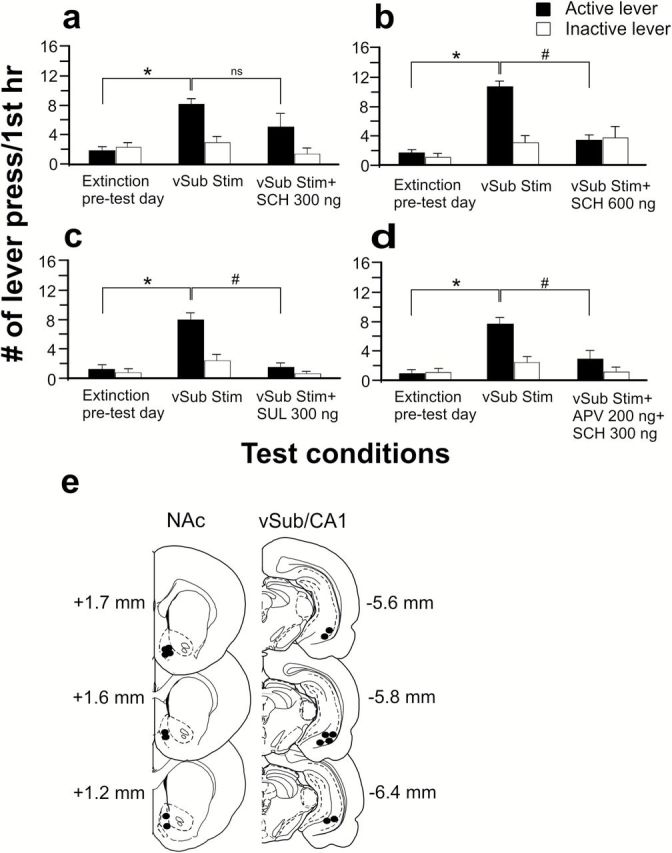
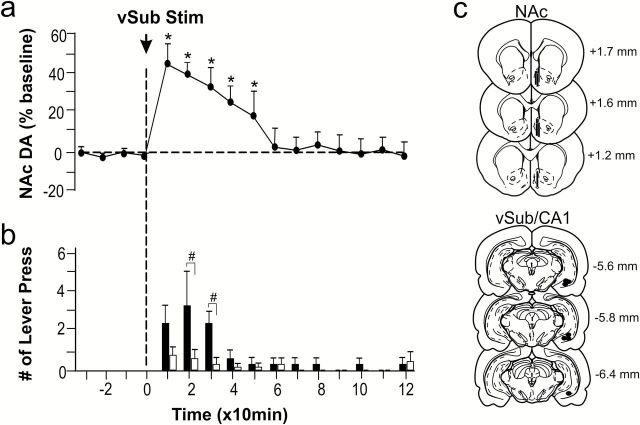
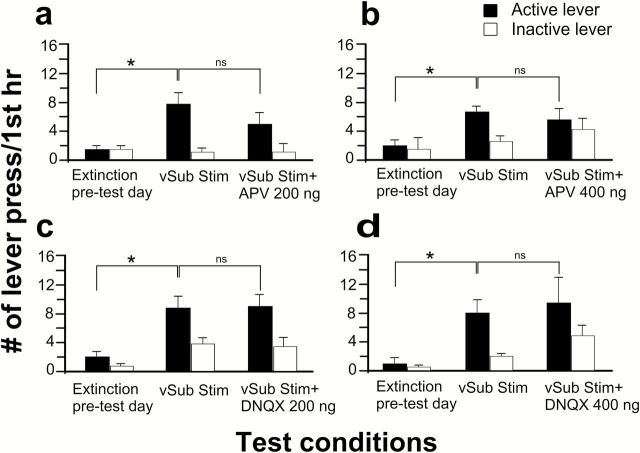
Here, we demonstrate that reinstatement of drug-seeking behavior following extinction of d-amphetamine self-administration by rats was induced by electrical stimulation in the ventral subiculum but not the cortex. This reinstatement was accompanied by a significant increase in dopamine efflux in the nucleus accumbens and was disrupted by microinfusion of a dopamine D1 or D2 antagonist into the nucleus accumbens. Inhibition of N-methyl-D-aspartate or non- N-methyl-D-aspartate receptors had no effect on the reinstatement induced by ventral subiculum stimulation, whereas co-infusion of D1 and N-methyl-D-aspartate antagonists at formerly ineffective doses prevented drug-seeking behavior.
These data support the hypothesis that dopamine/glutamate interactions within the ventral striatum related to memory processes are involved in relapse to addictive behavior.
药物成瘾是一种慢性脑部疾病,其特征为反复出现复吸寻求/服用药物行为。腹侧下托作为海马体的主要输出结构,在介导药物寻求行为中起关键作用。
采用右旋苯丙胺静脉自我给药大鼠模型,并对腹侧下托进行局部电刺激(20赫兹/200脉冲),以研究其在药物寻求行为恢复中的作用。通过体内微透析及随后的高效液相色谱 - 电化学检测分析来测量伏隔核中的多巴胺外流。采用伏隔核内局部多巴胺和离子型谷氨酸受体的药理学拮抗作用,来评估谷氨酸和多巴胺在腹侧下托刺激诱导的药物寻求行为恢复中的作用。
在此,我们证明大鼠对右旋苯丙胺自我给药行为消退后的药物寻求行为恢复是由腹侧下托而非皮层的电刺激所诱导的。这种行为恢复伴随着伏隔核中多巴胺外流的显著增加,并且通过向伏隔核微量注射多巴胺D1或D2拮抗剂而被破坏。抑制N - 甲基 - D - 天冬氨酸或非N - 甲基 - D - 天冬氨酸受体对腹侧下托刺激诱导的行为恢复没有影响,而以先前无效剂量共同注射D1和N - 甲基 - D - 天冬氨酸拮抗剂可防止药物寻求行为。
这些数据支持这样的假说,即与记忆过程相关的腹侧纹状体内多巴胺/谷氨酸相互作用参与成瘾行为的复发。