Soleimani-Ahmadi Mussa, Vatandoost Hassan, Zare Mehdi, Alizadeh Ali, Salehi Mehrdad
Infectious and Tropical Diseases Research Center, Hormozgan University of Medical Sciences, Bandar Abbas, Iran.
Malar J. 2014 Dec 24;13:511. doi: 10.1186/1475-2875-13-511.
Since malaria is one of the foremost public health problems in Iran, a malaria elimination phase has been initiated and application of long-lasting insecticidal nets (LLINs) is an important strategy for control. Success and effectiveness of this community based strategy largely dependent on proper use of LLINs. In this context, to determine the community's knowledge and practices about malaria and LLINs, a study was conducted in Rudan County, one of the important malaria endemic areas in southeast of Iran.
In this cross-sectional study, 400 households in four villages were selected by cluster randomly sampling method. Community knowledge and practices about malaria and LLINs including symptoms and transmission of malaria and washing, drying and using of bed nets were investigated using pre-tested structured questionnaires. The data were analysed using SPSS.16 software.
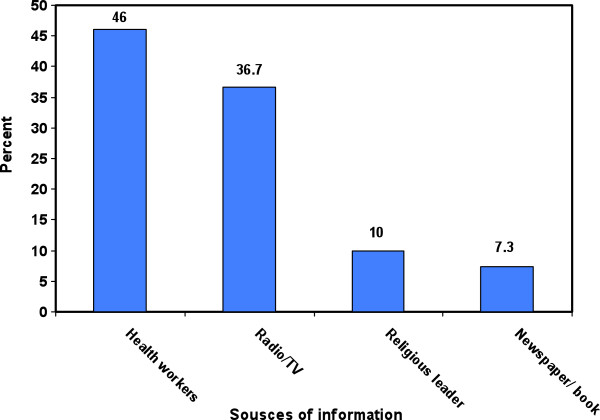
In this study nearly 89% of the respondents knew at least one symptom of malaria and 86.8% considered malaria as an important disease. The majority of respondents (77.8%) believed that malaria transmits through mosquito bite and 72.5% mentioned stagnated water as a potential mosquito breeding place. About 46% of respondents mentioned the community health worker as the main source of their information about malaria. Approximately 44.8% of studied population washed the LLINs once in six months and 92% of them mentioned that they dry the bed nets in direct sunlight. While 94% of households reported they received one or more LLINs by government and 60.8% of respondents mentioned that LLINs were the main protective measure against malaria, only 18.5% of households slept under bed nets the night before the survey, this use rate is lower than the targeted coverage (80%) which is recommended by World Health Organization.
Although, majority of studied population were aware of the symptoms and cause of malaria, a majority had misconceptions about LLINs. Therefore, appropriate educational intervention by trained health workers should be developed for a behaviour change and motivating people to use LLINs which would improve malaria elimination programme.
由于疟疾是伊朗最重要的公共卫生问题之一,该国已启动疟疾消除阶段,而使用长效驱虫蚊帐是一项重要的防控策略。这一基于社区的策略的成功与成效在很大程度上取决于长效驱虫蚊帐的正确使用。在此背景下,为确定社区对疟疾和长效驱虫蚊帐的认知及做法,在伊朗东南部重要疟疾流行区之一的鲁丹县开展了一项研究。
在这项横断面研究中,采用整群随机抽样法从四个村庄选取了400户家庭。使用预先测试的结构化问卷,调查了社区对疟疾和长效驱虫蚊帐的认知及做法,包括疟疾的症状和传播方式以及蚊帐的清洗、晾晒和使用情况。数据使用SPSS.16软件进行分析。
在本研究中,近89%的受访者知晓至少一种疟疾症状,86.8%的受访者认为疟疾是一种重要疾病。大多数受访者(77.8%)认为疟疾通过蚊虫叮咬传播,72.5%的受访者提到积水是潜在的蚊虫滋生地。约46%的受访者提到社区卫生工作者是他们获取疟疾信息的主要来源。约44.8%的研究人群每六个月清洗一次长效驱虫蚊帐,92%的受访者提到他们在阳光下直接晾晒蚊帐。虽然94%的家庭报告称他们从政府那里领取了一顶或多顶长效驱虫蚊帐,60.8%的受访者提到长效驱虫蚊帐是预防疟疾的主要保护措施,但在调查前一晚只有18.5%的家庭睡在蚊帐下,这一使用率低于世界卫生组织建议的目标覆盖率(80%)。
尽管大多数研究人群知晓疟疾的症状和病因,但大多数人对长效驱虫蚊帐存在误解。因此,应由训练有素的卫生工作者开展适当的教育干预,以改变行为并激励人们使用长效驱虫蚊帐,这将改善疟疾消除计划。