Tilaye Tesfaye, Tessema Belay, Alemu Kassahun
Institute of Public Health, College of Medicine and Health Sciences, University of Gondar, Gondar, Ethiopia.
Department of Medical Microbiology, School of Biomedical and Medical Laboratory, College of Medicine and Health Sciences, University of Gondar, Gondar, Ethiopia.
Res Rep Trop Med. 2021 May 26;12:107-121. doi: 10.2147/RRTM.S306001. eCollection 2021.
Malaria is a leading public health problem in Ethiopia. Every year, thousands of seasonal farm workers travel to farm corridors in Northwest Ethiopia and fall at risk of malaria infection. However, the magnitude of malaria infection and risk factors during harvest time were not well identified. This study aimed at estimating the prevalence and risk factors of malaria infection among seasonal migrant workers in Northwest Ethiopia.
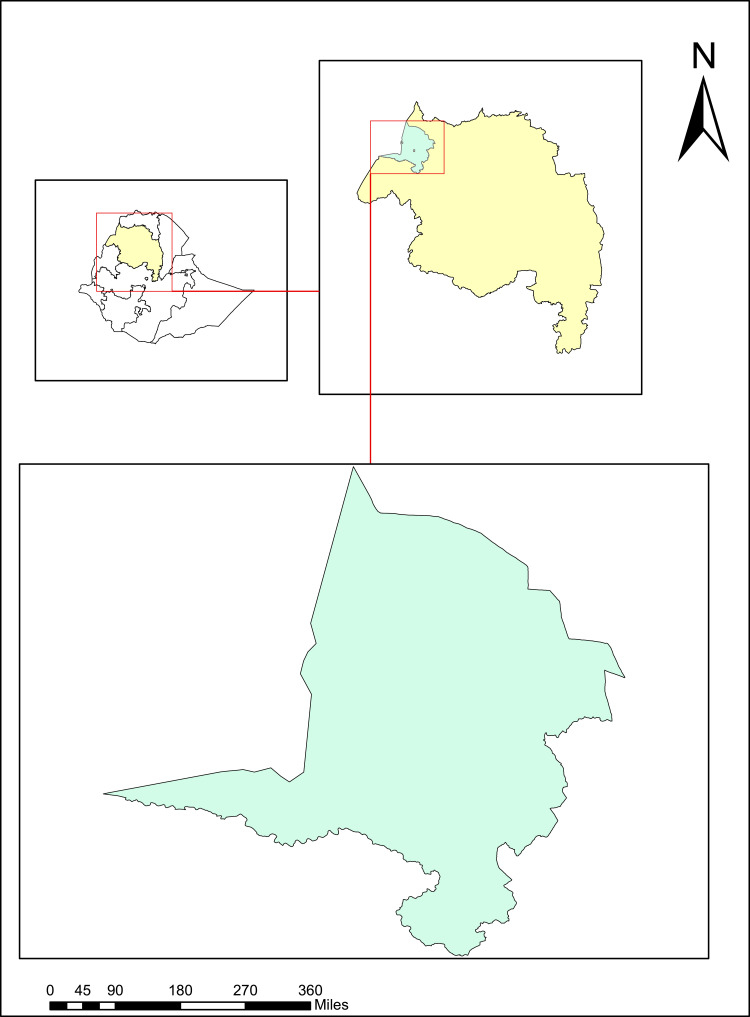
A repeated cross-sectional study was conducted at transit and destination phases in Metema district from September 15, 2018 to October 30, 2019. Data were collected using a structured questionnaire. A capillary blood sample was collected to examine infection with malaria parasite using a microscope. A multivariate logistic regression technique was used to determine risk factors.
The malaria prevalence at transit and destination phases among migrant workers was 13.5% (95% CI: 12.07-14.93%) and 18.7% (95% CI: 16.40-21.02%), respectively. The combined prevalence was 16.1% (95% CI: 14.67-17.63%). The odds of malaria infection among migrant workers at the destination phase was 1.5 (OR=1.5, 95% CI 1.167-1.846) times higher compared to the transit phase. Education (AOR=8.198; 95% CI: 4.318-15.564), knowledge of antimalarial drugs (AOR=2.4; 95% CI: 1.43-3.95), and use of long-lasting insecticidal nets (AOR=5.0; 95% CI: 3.34-4.43) were significantly associated with malaria infection at migration phases.
This study showed that the burden of malaria among seasonal migrant workers was high at transit and destination phases. Malaria prevalence was higher at the destination phase compared to the transit phase. A tailored malaria prevention intervention is needed including awareness creation, screening, treatment, repellent, and prophylaxis at both phases to reduce malaria infections.
疟疾是埃塞俄比亚一个主要的公共卫生问题。每年,数千名季节性农场工人前往埃塞俄比亚西北部的农场走廊,面临疟疾感染风险。然而,收获季节疟疾感染的程度和危险因素尚未得到很好的识别。本研究旨在估计埃塞俄比亚西北部季节性流动工人中疟疾感染的患病率和危险因素。
2018年9月15日至2019年10月30日在梅特马区的中转阶段和目的地阶段进行了一项重复横断面研究。使用结构化问卷收集数据。采集毛细血管血样,用显微镜检查疟原虫感染情况。采用多因素logistic回归技术确定危险因素。
流动工人在中转阶段和目的地阶段的疟疾患病率分别为13.5%(95%CI:12.07 - 14.93%)和18.7%(95%CI:16.40 - 21.02%)。合并患病率为16.1%(95%CI:14.67 - 17.63%)。目的地阶段流动工人的疟疾感染几率比中转阶段高1.5倍(OR = 1.5,95%CI 1.167 - 1.846)。教育程度(调整后OR = 8.198;95%CI:4.318 - 15.564)、抗疟药物知识(调整后OR = 2.4;95%CI:1.43 - 3.95)以及使用长效驱虫蚊帐(调整后OR = 5.0;95%CI:3.34 - 4.43)与迁移阶段的疟疾感染显著相关。
本研究表明,季节性流动工人在中转阶段和目的地阶段的疟疾负担较高。目的地阶段的疟疾患病率高于中转阶段。需要制定针对性的疟疾预防干预措施,包括在两个阶段开展提高认识、筛查检查、治疗、使用驱虫剂和预防措施,以减少疟疾感染。