Al-Eryani Samira M A, Mahdy Mohammed A K, Al-Mekhlafi Abdulsalam M, Abdul-Ghani Rashad
Department of Parasitology, Faculty of Medicine & Health Sciences, Sana'a University, Sana'a, Yemen.
Tropical Disease Research Center, Faculty of Medicine and Health Sciences, University of Science and Technology, Sana'a, Yemen.
Malar J. 2017 Jun 9;16(1):244. doi: 10.1186/s12936-017-1894-9.
Universal coverage of the targeted malaria-endemic areas with long-lasting insecticidal nets (LLINs) is implemented as one of the key interventions for malaria control and elimination in Yemen. In 2013, through a mass campaign, LLINs were distributed to the targeted communities in Al Hudaydah governorate. This study aimed to assess the ownership of, access to, and use of LLINs. It also aimed to identify factors associated with not using LLINs in malaria-endemic areas of Al Hudaydah in the Tihama region, west of Yemen.
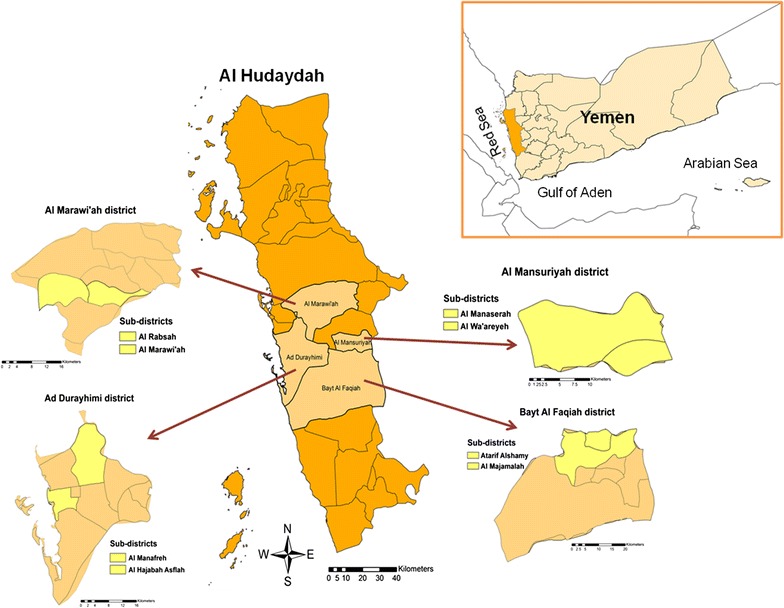
A cross-sectional survey was conducted in four districts (Ad Durayhimi, Al Marawi'ah, Al Mansuriyah and Bayt Al Faqiah) in Al Hudaydah during February 2016. A total of 701 households were included in this study. Data on socio-demographic characteristics and availability of LLINs were collected by interview and observation. Four indicators for malaria prevention using LLINs; proportion of households with at least one LLIN, proportion of households with at least one LLIN for every two people, proportion of population with access to LLINs in the surveyed households and proportion of population who slept under LLINs the previous night of the survey were calculated as indicated by Roll Back Malaria Monitoring and Evaluation Reference Group. Use to access ratio was assessed. Factors associated with not using LLINs among people with access were also investigated.
Of 701 households with 4900 de facto population, ownership of at least one LLIN was 90.6%, while 24.1% owned at least one for every two people during the survey in 2016. The overall proportion of people with access to LLINs was 51.5% (95% CI 50.1-52.9). Only 19.0% (95% CI 17.9-20.1) slept under LLINs the night before the survey and the overall use to access ratio was 0.37. The proportions of children under 5 years of age with access to and use of LLINs were 13.7 and 42.5%, respectively. On the other hand, the proportions of pregnant women with access to and use of LLINs were 16.4 and 20.0%, respectively. Multivariable analysis identified that people living in Al Mansuriyah district [adjusted odds ratio (AOR) = 3.29, 95% confidence interval (CI) 1.35-8.01; P = 0.009)], having three or more damaged LLINs in the house (AOR = 2.76, 95% CI 1.79-4.25; P < 0.001), aged between 16 and 45 years old (AOR = 2.17, 95% CI 1.26-3.75; P = 0.005) or older (AOR = 2.17, 95% CI 1.09-4.29; P = 0.026) and living in huts (AOR = 1.59, 95% CI 1.09-2.32; P = 0.015) were significantly less likely to use LLINs.
This study shows a low LLIN access rate among local communities targeted for universal LLIN coverage in Al Hudaydah, a malaria-endemic area of high transmission. This finding necessitates additional distribution channels following mass campaigns to maintain the universal coverage. Reduced use of LLINs among people with access in these communities together with the identified risks of non-use highlight the importance of conducting behaviour change communication campaigns to enhance using LLINs in areas with universal coverage.
在也门,对疟疾流行地区全面覆盖长效驱虫蚊帐(LLINs)是疟疾控制和消除的关键干预措施之一。2013年,通过一场大规模运动,LLINs被分发给荷台达省的目标社区。本研究旨在评估LLINs的拥有情况、获取情况和使用情况。它还旨在确定也门西部提哈马地区荷台达疟疾流行地区不使用LLINs的相关因素。
2016年2月在荷台达的四个区(杜拉希米、马拉维亚、曼苏里亚和拜特法基耶)进行了一项横断面调查。本研究共纳入701户家庭。通过访谈和观察收集社会人口学特征和LLINs可得性的数据。按照减少疟疾监测与评价参考小组的指示,计算了使用LLINs预防疟疾的四个指标:至少拥有一顶LLINs的家庭比例、每两人至少拥有一顶LLINs的家庭比例、被调查家庭中能够获取LLINs的人口比例以及调查前一晚睡在LLINs下的人口比例。评估了使用与获取比率。还调查了有获取途径的人群中不使用LLINs的相关因素。
在701户家庭、4900名实际人口中,2016年调查期间至少拥有一顶LLINs的比例为90.6%,而每两人至少拥有一顶的比例为24.1%。能够获取LLINs的人口总体比例为51.5%(95%置信区间50.1 - 52.9)。调查前一晚只有19.0%(95%置信区间17.9 - 20.1)的人睡在LLINs下,总体使用与获取比率为0.37。5岁以下儿童能够获取和使用LLINs的比例分别为13.7%和42.5%。另一方面,孕妇能够获取和使用LLINs的比例分别为16.4%和20.0%。多变量分析确定,居住在曼苏里亚区的人[调整后的优势比(AOR)= 3.29,95%置信区间(CI)1.35 - 8.01;P = 0.009]、家中有三顶或更多损坏的LLINs(AOR = 2.76,95% CI 1.79 - 继续阅读4.25;P < 0.001)、年龄在16至45岁之间(AOR = 2.17,95% CI 1.26 - 3.75;P = 0.005)或更大(AOR = 2.1继续阅读7,95% CI 1.09 - 4.29;P = 0.026)以及居住在棚屋中的人(AOR = 1.59,95% CI 1.09 - 2.32;P = 0.015)使用LLINs的可能性显著降低。
本研究表明,在疟疾高传播流行地区荷台达,目标是全面覆盖LLINs的当地社区中,LLINs的获取率较低。这一发现使得在大规模运动后需要额外的分发渠道来维持全面覆盖。这些社区中有获取途径的人群中LLINs使用减少以及确定的不使用风险凸显了开展行为改变宣传活动以提高全面覆盖地区LLINs使用的重要性。
