Zhitomirsky Benny, Assaraf Yehuda G
The Fred Wyszkowski Cancer Research Laboratory, Dept. of Biology, Technion-Israel Institute of Technology, Haifa 32000, Israel.
Oncotarget. 2015 Jan 20;6(2):1143-56. doi: 10.18632/oncotarget.2732.
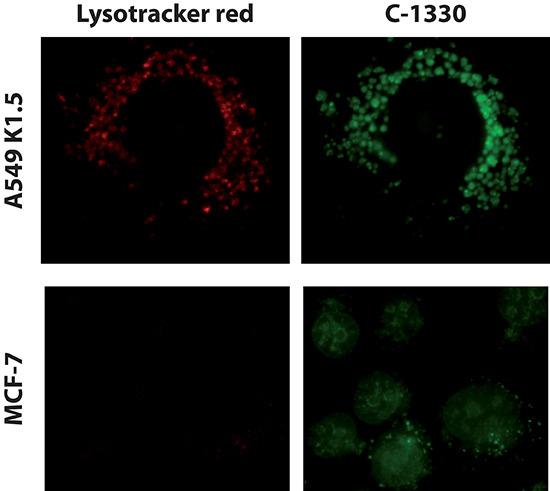
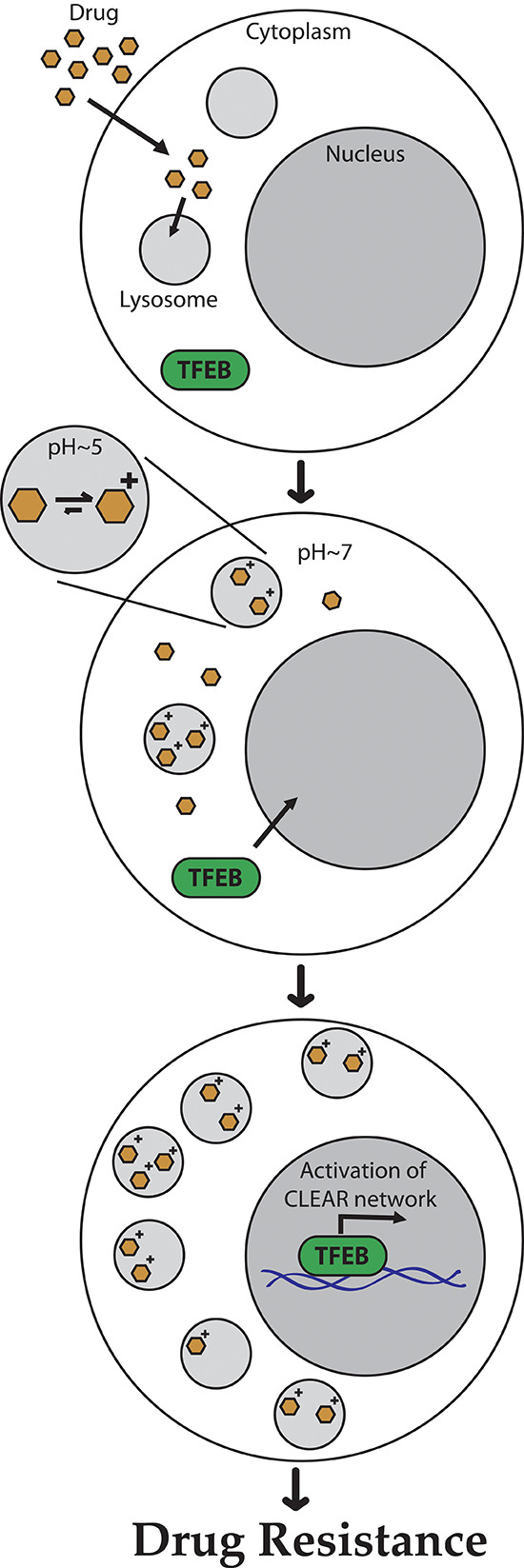
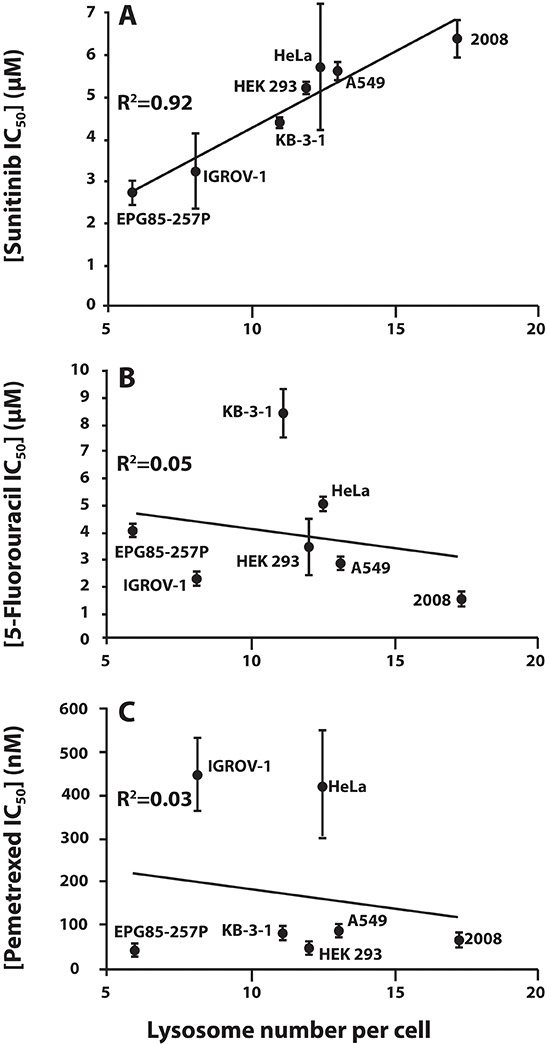
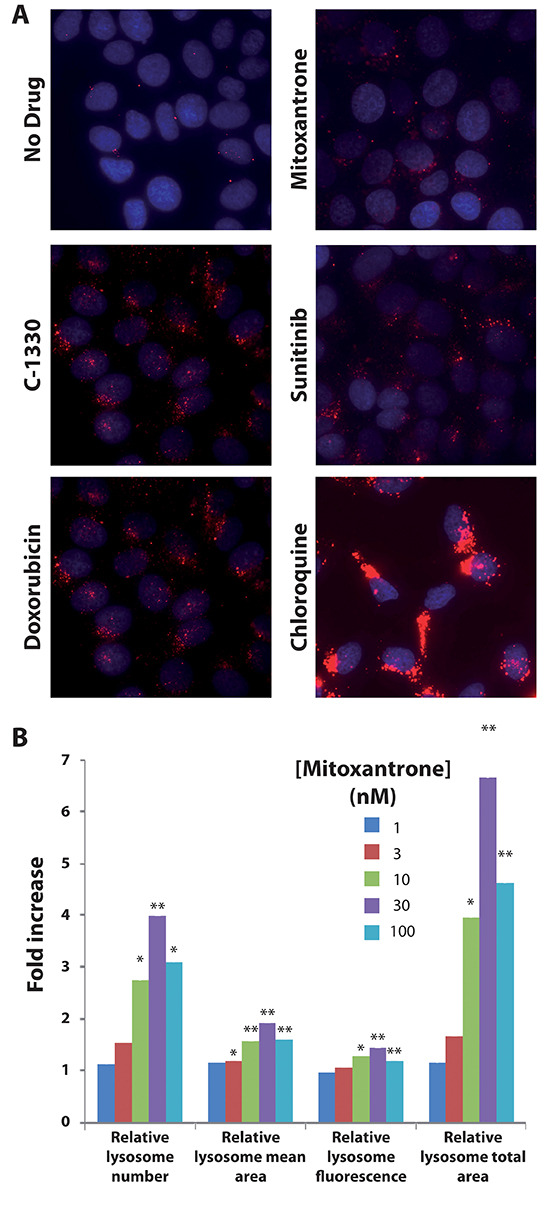
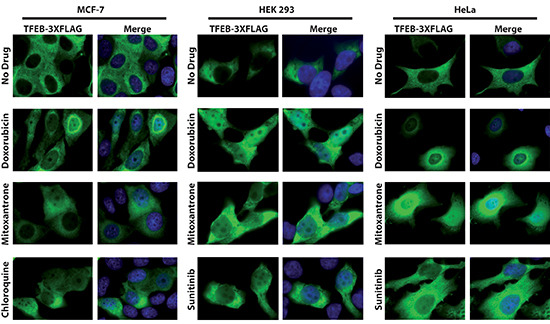
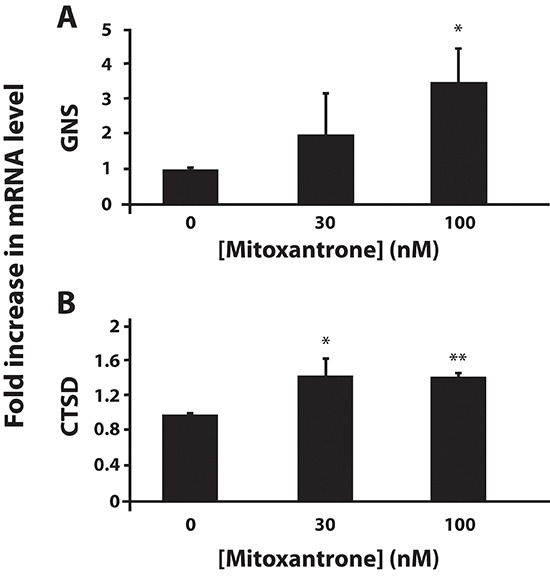
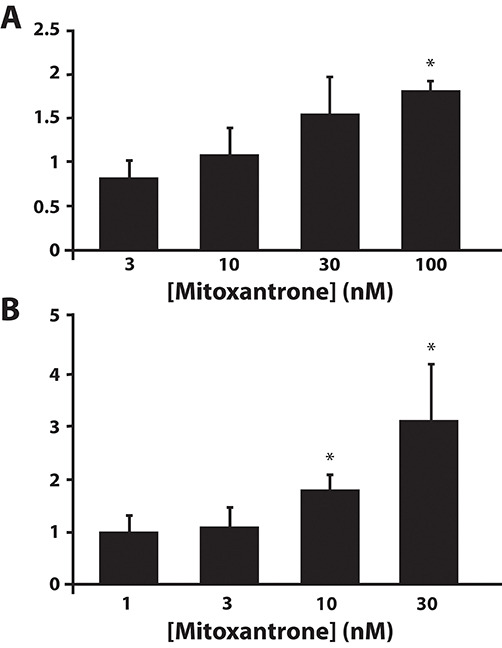
Multidrug resistance (MDR) is a primary hindrance to curative cancer chemotherapy. In this respect, lysosomes were suggested to play a role in intrinsic MDR by sequestering protonated hydrophobic weak base chemotherapeutics away from their intracellular target sites. Here we show that intrinsic resistance to sunitinib, a hydrophobic weak base tyrosine kinase inhibitor known to accumulate in lysosomes, tightly correlates with the number of lysosomes accumulating high levels of sunitinib in multiple human carcinoma cells. Furthermore, exposure of cancer cells to hydrophobic weak base drugs leads to a marked increase in the number of lysosomes per cell. Non-cytotoxic, nanomolar concentrations, of the hydrophobic weak base chemotherapeutics doxorubicin and mitoxantrone triggered rapid lysosomal biogenesis that was associated with nuclear translocation of TFEB, the dominant transcription factor regulating lysosomal biogenesis. This resulted in increased lysosomal gene expression and lysosomal enzyme activity. Thus, treatment of cancer cells with hydrophobic weak base chemotherapeutics and their consequent sequestration in lysosomes triggers lysosomal biogenesis, thereby further enhancing lysosomal drug entrapment and MDR. The current study provides the first evidence that drug-induced TFEB-associated lysosomal biogenesis is an emerging determinant of MDR and suggests that circumvention of lysosomal drug sequestration is a novel strategy to overcome this chemoresistance.
多药耐药(MDR)是癌症化疗治愈的主要障碍。在这方面,有研究表明溶酶体通过将质子化的疏水性弱碱化疗药物隔离在细胞内靶点之外,从而在内在性MDR中发挥作用。在此,我们发现对舒尼替尼(一种已知会在溶酶体中积累的疏水性弱碱酪氨酸激酶抑制剂)的内在抗性与多种人类癌细胞中积累高水平舒尼替尼的溶酶体数量密切相关。此外,将癌细胞暴露于疏水性弱碱药物会导致每个细胞的溶酶体数量显著增加。疏水性弱碱化疗药物阿霉素和米托蒽醌的非细胞毒性纳摩尔浓度引发了快速的溶酶体生物发生,这与溶酶体生物发生的主要转录因子TFEB的核转位有关。这导致溶酶体基因表达增加和溶酶体酶活性增强。因此,用疏水性弱碱化疗药物处理癌细胞并使其随后被隔离在溶酶体中会触发溶酶体生物发生,从而进一步增强溶酶体对药物的截留和MDR。本研究首次证明药物诱导的与TFEB相关的溶酶体生物发生是MDR的一个新的决定因素,并表明规避溶酶体对药物的隔离是克服这种化疗耐药性的一种新策略。