Maier Eva, Anderson Rachel C, Roy Nicole C
Food Nutrition & Health Team, Food & Bio-based Products Group, AgResearch Grasslands, Palmerston North 4442, New Zealand.
Nutrients. 2014 Dec 24;7(1):45-73. doi: 10.3390/nu7010045.
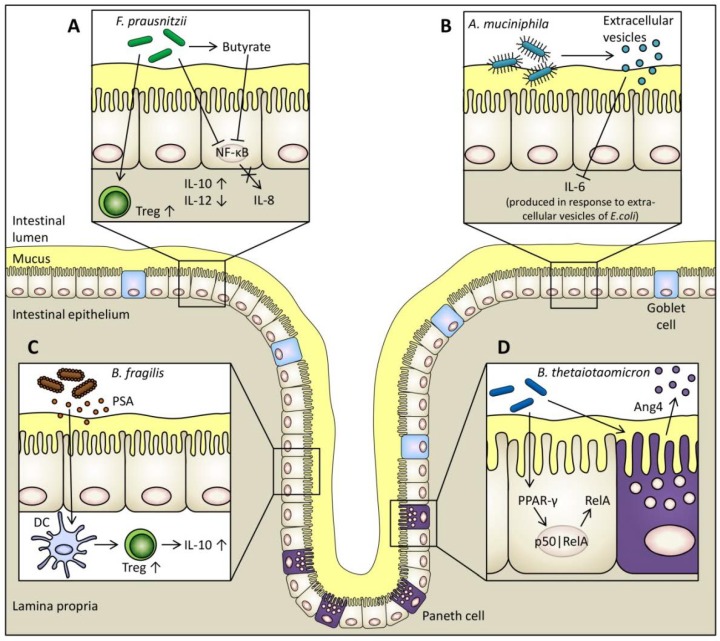
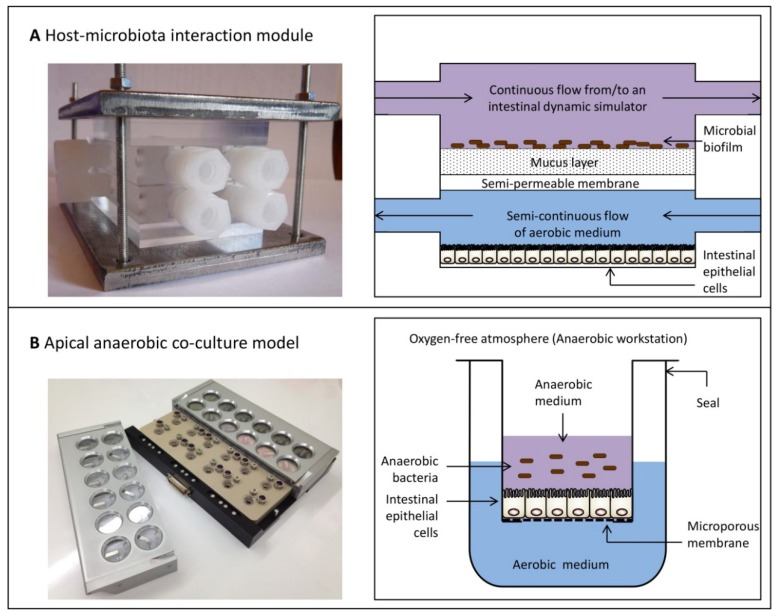
The human gastrointestinal tract is colonised by trillions of commensal bacteria, most of which are obligate anaerobes residing in the large intestine. Appropriate bacterial colonisation is generally known to be critical for human health. In particular, the development and function of the immune system depends on microbial colonisation, and a regulated cross-talk between commensal bacteria, intestinal epithelial cells and immune cells is required to maintain mucosal immune homeostasis. This homeostasis is disturbed in various inflammatory disorders, such as inflammatory bowel diseases. Several in vitro and in vivo studies indicate a role for Faecalibacterium prausnitzii, Bacteroides thetaiotaomicron, Bacteroides fragilis, Akkermansia muciniphila and segmented filamentous bacteria in maintaining intestinal immune homeostasis. These obligate anaerobes are abundant in the healthy intestine but reduced in several inflammatory diseases, suggesting an association with protective effects on human health. However, knowledge of the mechanisms underlying the effects of obligate anaerobic intestinal bacteria remains limited, in part due to the difficulty of co-culturing obligate anaerobes together with oxygen-requiring human epithelial cells. By using novel dual-environment co-culture models, it will be possible to investigate the effects of the unstudied majority of intestinal microorganisms on the human epithelia. This knowledge will provide opportunities for improving human health and reducing the risk of inflammatory diseases.
人类胃肠道中栖息着数万亿的共生细菌,其中大多数是存在于大肠中的专性厌氧菌。一般认为,适当的细菌定植对人类健康至关重要。特别是,免疫系统的发育和功能取决于微生物定植,共生细菌、肠道上皮细胞和免疫细胞之间需要有规律的相互作用来维持黏膜免疫稳态。在各种炎症性疾病(如炎症性肠病)中,这种稳态会受到干扰。多项体外和体内研究表明,普拉梭菌、多形拟杆菌、脆弱拟杆菌、嗜黏蛋白阿克曼氏菌和分节丝状菌在维持肠道免疫稳态中发挥作用。这些专性厌氧菌在健康肠道中含量丰富,但在几种炎症性疾病中数量减少,这表明它们与对人类健康的保护作用有关。然而,关于专性厌氧肠道细菌作用机制的了解仍然有限,部分原因是难以将专性厌氧菌与需要氧气的人类上皮细胞共同培养。通过使用新型双环境共培养模型,将有可能研究大多数尚未研究的肠道微生物对人类上皮细胞的影响。这些知识将为改善人类健康和降低炎症性疾病风险提供机会。