Sullivan Sarah, Eucker Stephanie A, Gabrieli David, Bradfield Connor, Coats Brittany, Maltese Matthew R, Lee Jongho, Smith Colin, Margulies Susan S
Department of Bioengineering, University of Pennsylvania, Philadelphia, PA, USA.
Biomech Model Mechanobiol. 2015 Aug;14(4):877-96. doi: 10.1007/s10237-014-0643-z. Epub 2014 Dec 30.
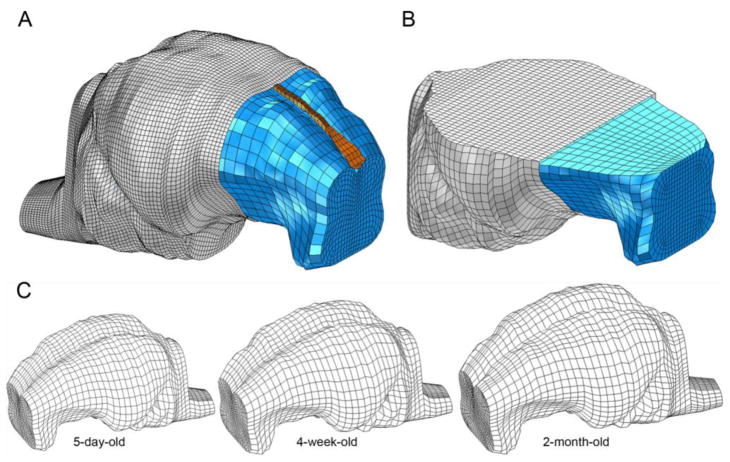
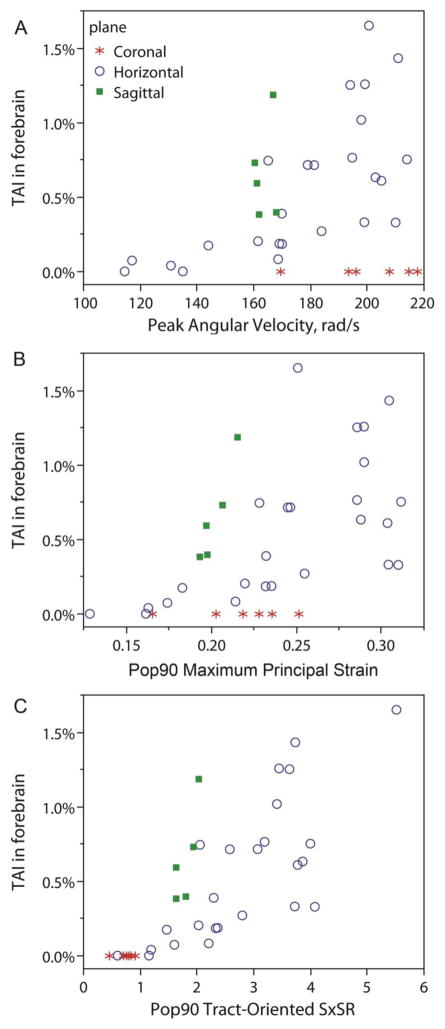
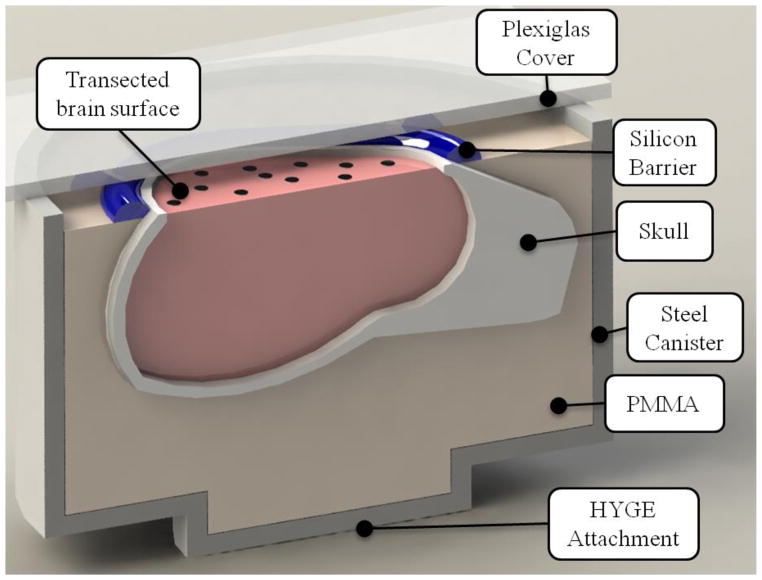
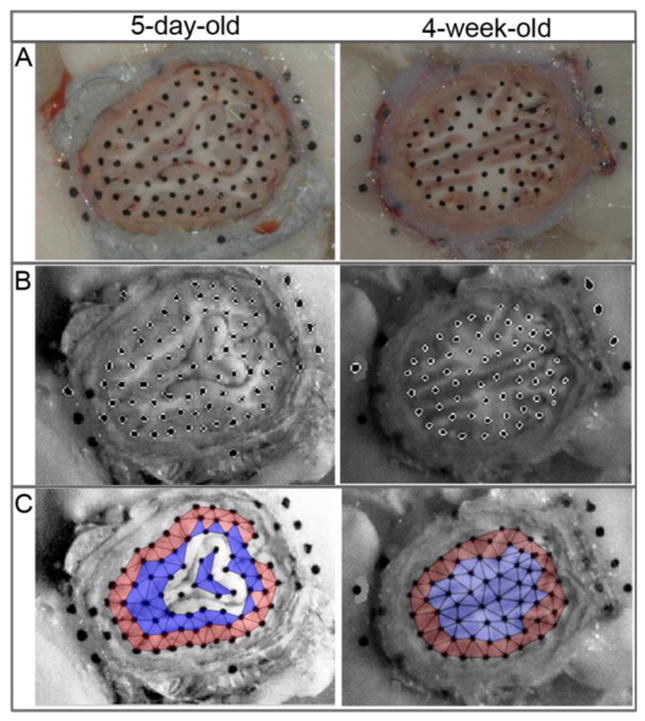
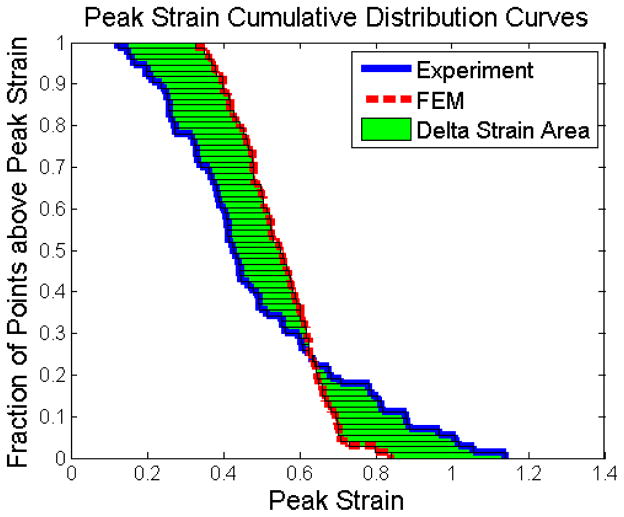
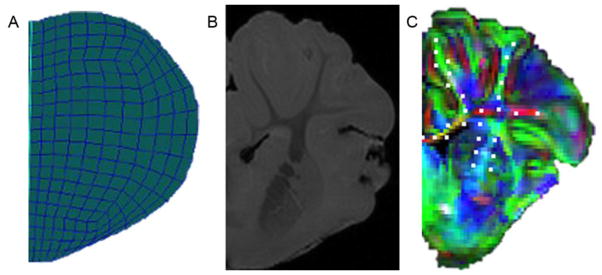
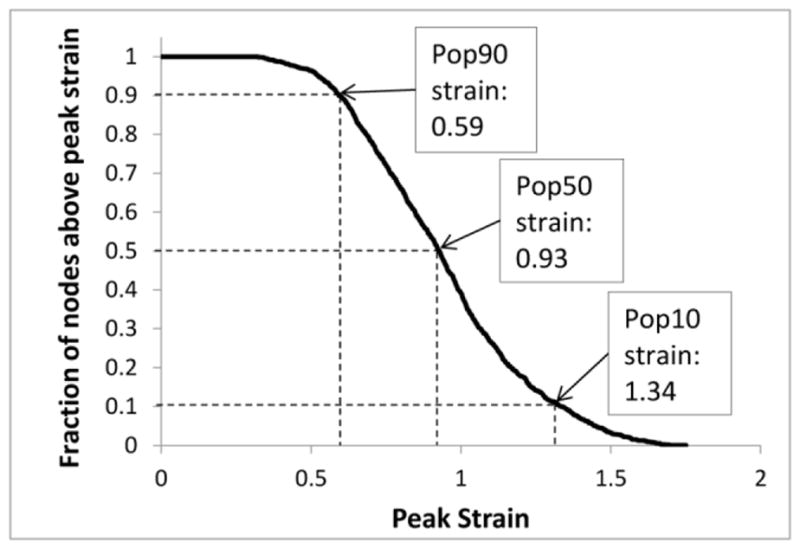
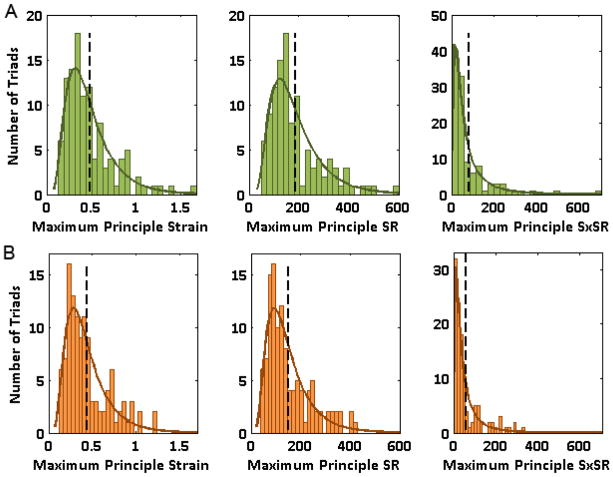
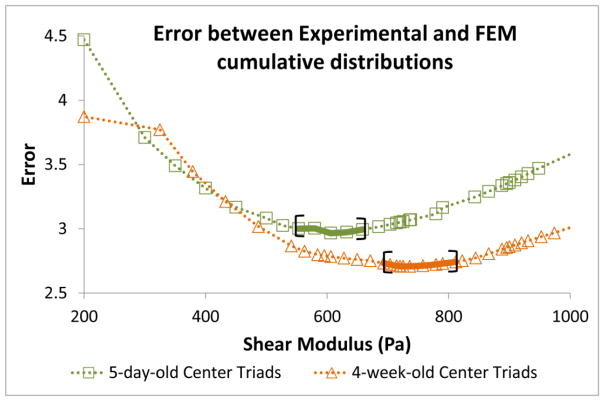
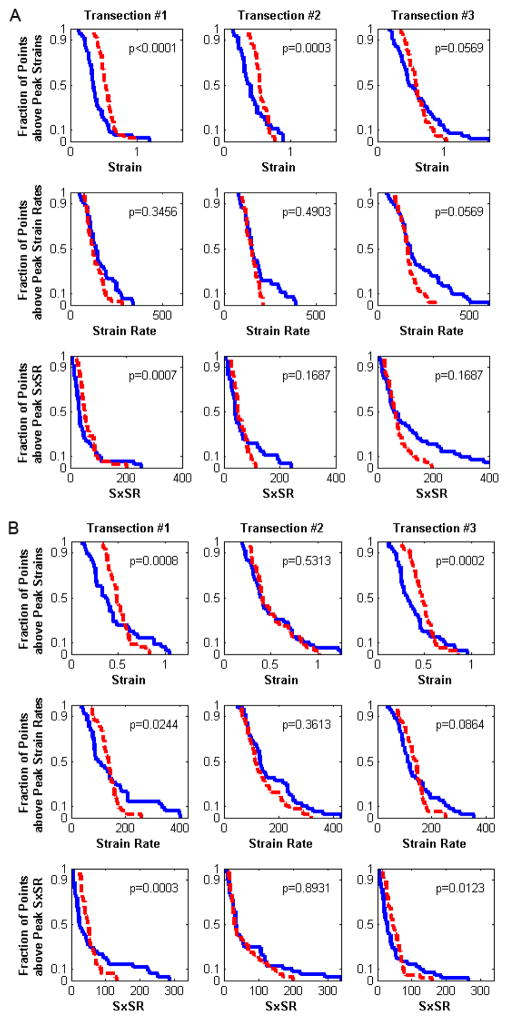
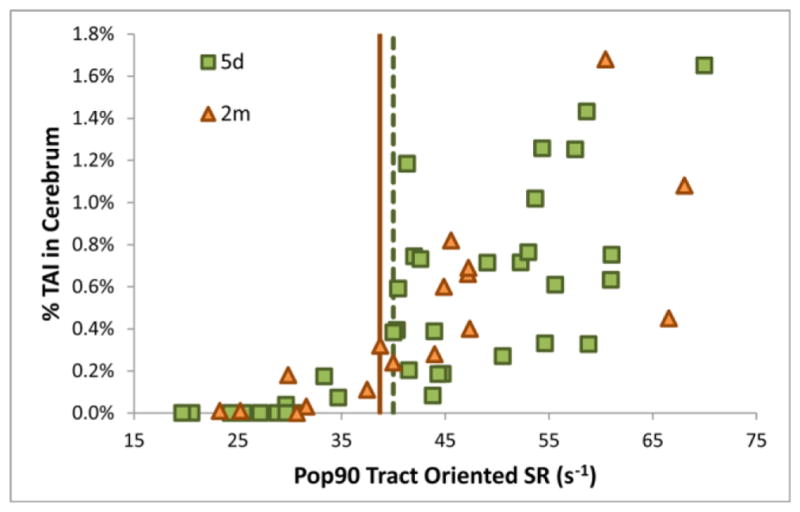
A systematic correlation between finite element models (FEMs) and histopathology is needed to define deformation thresholds associated with traumatic brain injury (TBI). In this study, a FEM of a transected piglet brain was used to reverse engineer the range of optimal shear moduli for infant (5 days old, 553-658 Pa) and 4-week-old toddler piglet brain (692-811 Pa) from comparisons with measured in situ tissue strains. The more mature brain modulus was found to have significant strain and strain rate dependencies not observed with the infant brain. Age-appropriate FEMs were then used to simulate experimental TBI in infant (n=36) and preadolescent (n=17) piglets undergoing a range of rotational head loads. The experimental animals were evaluated for the presence of clinically significant traumatic axonal injury (TAI), which was then correlated with FEM-calculated measures of overall and white matter tract-oriented tissue deformations, and used to identify the metric with the highest sensitivity and specificity for detecting TAI. The best predictors of TAI were the tract-oriented strain (6-7%), strain rate (38-40 s(-1), and strain times strain rate (1.3-1.8 s(-1) values exceeded by 90% of the brain. These tract-oriented strain and strain rate thresholds for TAI were comparable to those found in isolated axonal stretch studies. Furthermore, we proposed that the higher degree of agreement between tissue distortion aligned with white matter tracts and TAI may be the underlying mechanism responsible for more severe TAI after horizontal and sagittal head rotations in our porcine model of nonimpact TAI than coronal plane rotations.
需要在有限元模型(FEM)和组织病理学之间建立系统的相关性,以确定与创伤性脑损伤(TBI)相关的变形阈值。在本研究中,通过将横断仔猪脑的有限元模型与原位测量的组织应变进行比较,逆向工程得出婴儿(5日龄,553 - 658帕斯卡)和4周龄幼龄仔猪脑(692 - 811帕斯卡)的最佳剪切模量范围。研究发现,更成熟的脑模量具有婴儿脑未观察到的显著应变和应变率依赖性。然后,使用适合年龄的有限元模型模拟了接受一系列旋转头部负荷的婴儿(n = 36)和青春期前(n = 17)仔猪的实验性TBI。对实验动物进行临床显著创伤性轴索损伤(TAI)的评估,并将其与有限元模型计算的整体和白质束定向组织变形测量值相关联,以确定检测TAI灵敏度和特异性最高的指标。TAI的最佳预测指标是束定向应变(6 - 7%)、应变率(38 - 40秒⁻¹)以及应变与应变率的乘积(1.3 - 1.8秒⁻¹),超过90%的脑组织达到这些值。这些TAI的束定向应变和应变率阈值与孤立轴索拉伸研究中的结果相当。此外,我们提出,在我们的非撞击性TAI猪模型中,与白质束对齐的组织变形与TAI之间更高程度的一致性,可能是水平和矢状面头部旋转后比冠状面旋转后TAI更严重的潜在机制。