Holroyd Kathryn B, Adrover Martin F, Fuino Robert L, Bock Roland, Kaplan Alanna R, Gremel Christina M, Rubinstein Marcelo, Alvarez Veronica A
Section on Neuronal Structure, National Institute on Alcohol Abuse and Alcoholism, National Institute of Health, Bethesda, MD, USA.
Laboratory for Integrative Neuroscience, National Institute on Alcohol Abuse and Alcoholism, National Institute of Health, Bethesda, MD, USA.
Neuropsychopharmacology. 2015 May;40(6):1495-509. doi: 10.1038/npp.2014.336. Epub 2014 Dec 30.
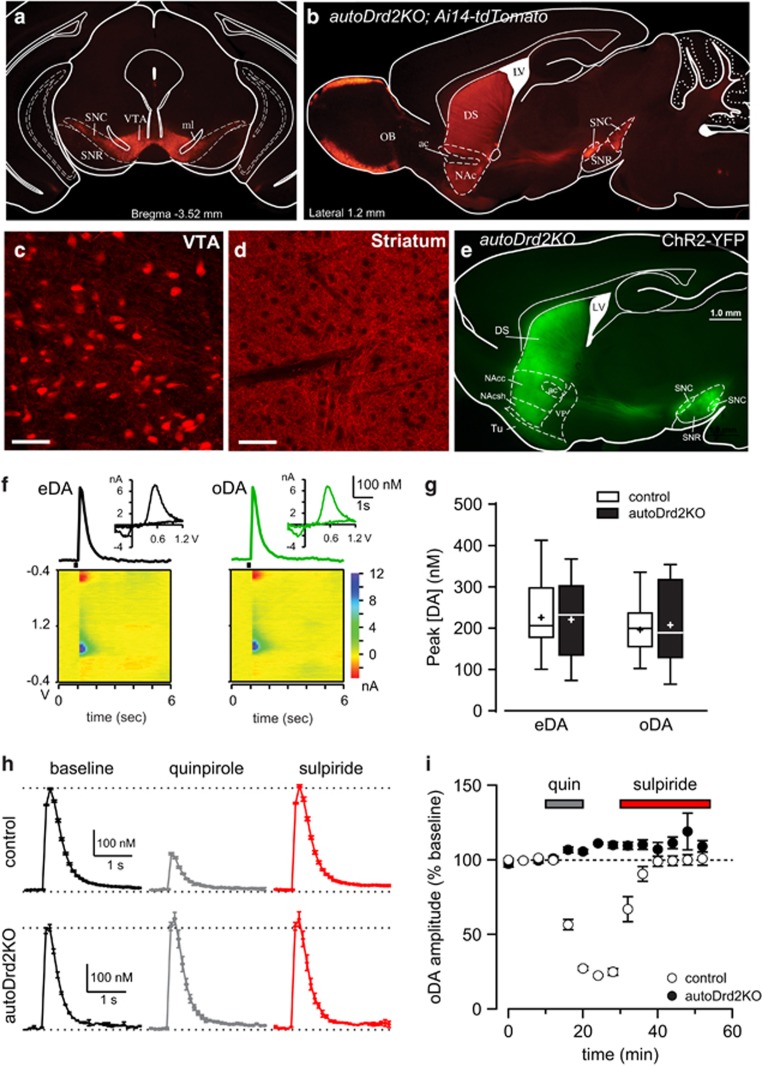
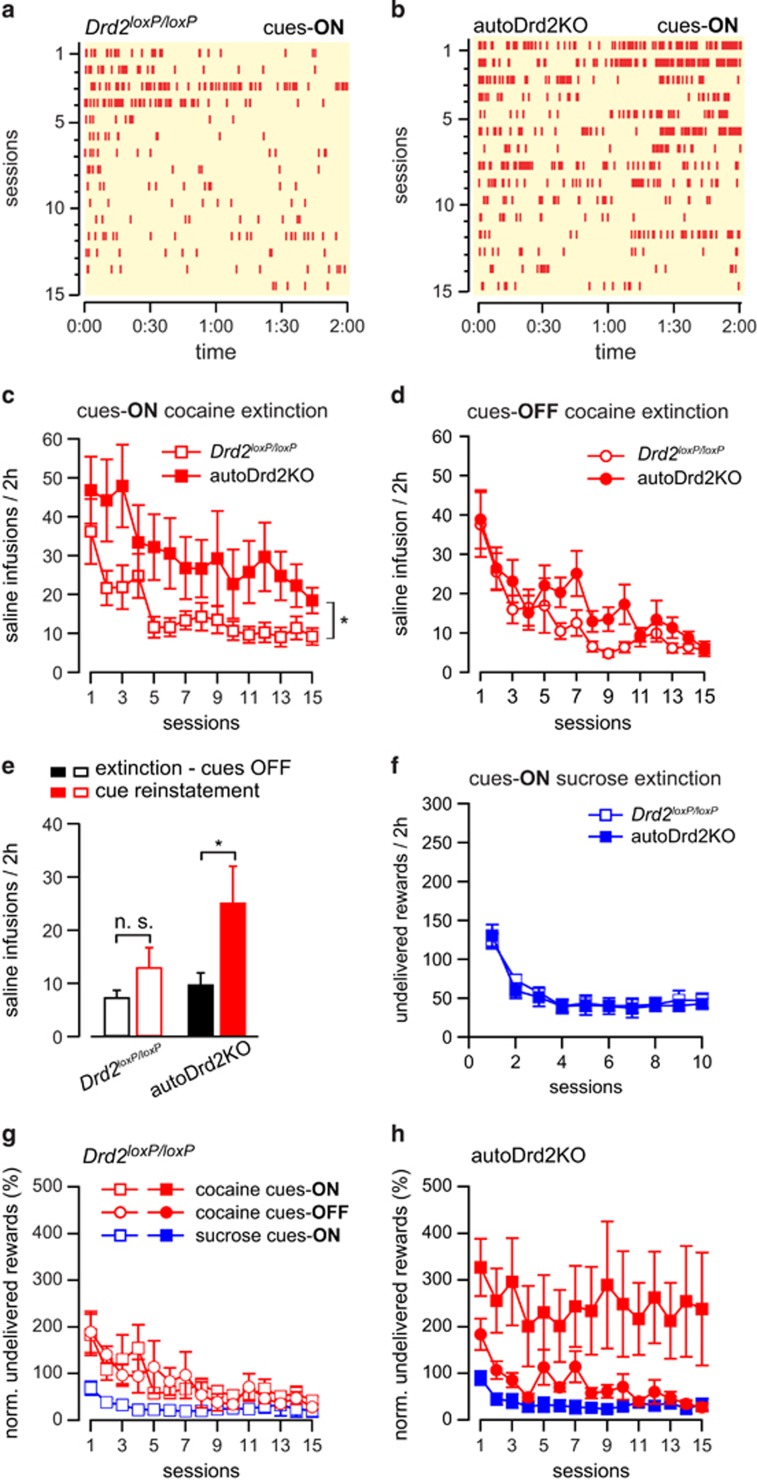
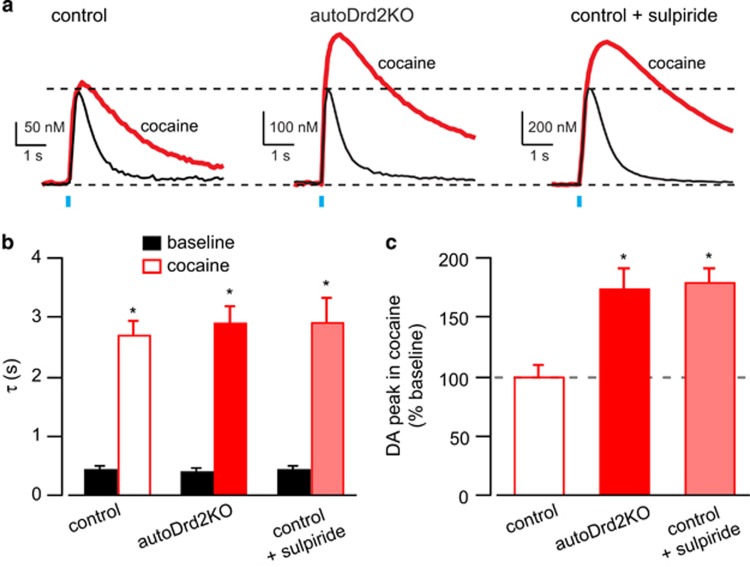
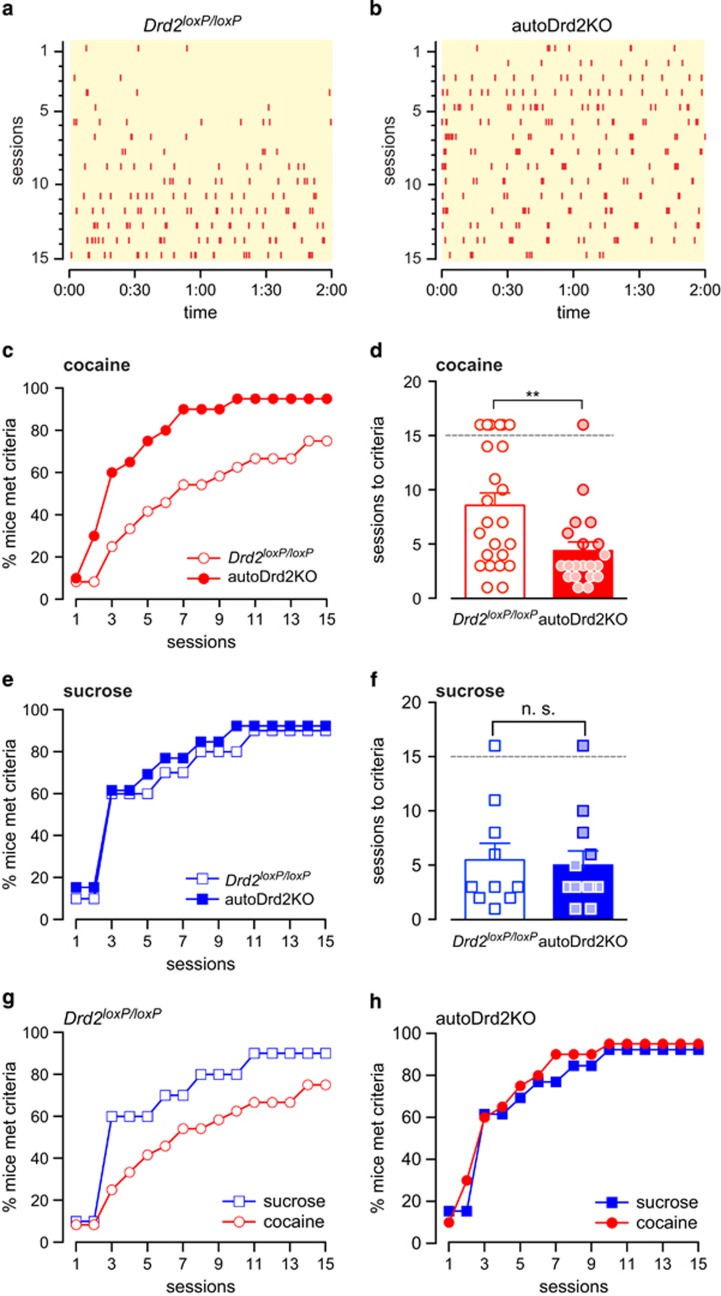
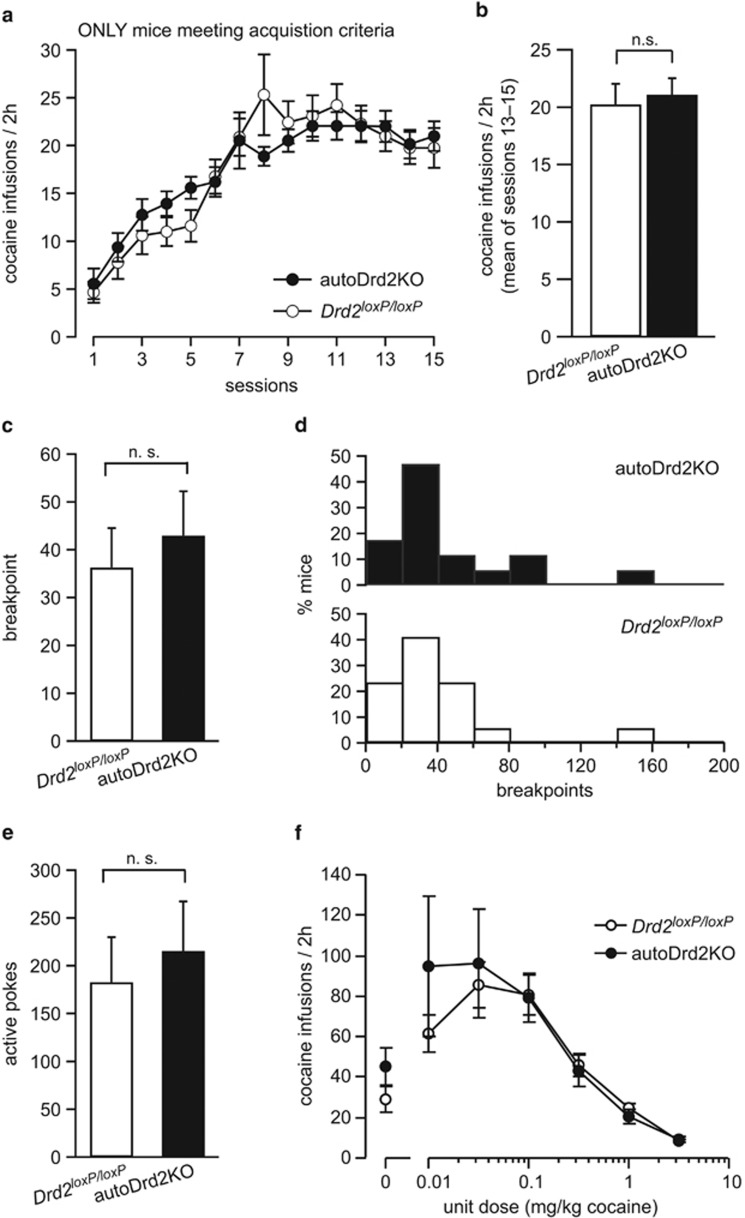
A prominent aspect of drug addiction is the ability of drug-associated cues to elicit craving and facilitate relapse. Understanding the factors that regulate cue reactivity will be vital for improving treatment of addictive disorders. Low availability of dopamine (DA) D2 receptors (D2Rs) in the striatum is associated with high cocaine intake and compulsive use. However, the role of D2Rs of nonstriatal origin in cocaine seeking and taking behavior and cue reactivity is less understood and possibly underestimated. D2Rs expressed by midbrain DA neurons function as autoreceptors, exerting inhibitory feedback on DA synthesis and release. Here, we show that selective loss of D2 autoreceptors impairs the feedback inhibition of DA release and amplifies the effect of cocaine on DA transmission in the nucleus accumbens (NAc) in vitro. Mice lacking D2 autoreceptors acquire a cued-operant self-administration task for cocaine faster than littermate control mice but acquire similarly for a natural reward. Furthermore, although mice lacking D2 autoreceptors were able to extinguish self-administration behavior in the absence of cocaine and paired cues, they exhibited perseverative responding when cocaine-paired cues were present. This enhanced cue reactivity was selective for cocaine and was not seen during extinction of sucrose self-administration. We conclude that low levels of D2 autoreceptors enhance the salience of cocaine-paired cues and can contribute to the vulnerability for cocaine use and relapse.
药物成瘾的一个突出方面是与药物相关的线索引发渴望并促进复发的能力。了解调节线索反应性的因素对于改善成瘾性疾病的治疗至关重要。纹状体中多巴胺(DA)D2受体(D2R)的低可用性与高可卡因摄入量和强迫性使用有关。然而,非纹状体来源的D2R在可卡因寻求和摄取行为以及线索反应性中的作用了解较少,可能被低估了。中脑DA神经元表达的D2R作为自身受体,对DA的合成和释放发挥抑制性反馈作用。在这里,我们表明D2自身受体的选择性缺失会损害DA释放的反馈抑制,并在体外放大可卡因对伏隔核(NAc)中DA传递的影响。缺乏D2自身受体的小鼠比同窝对照小鼠更快地学会了可卡因的线索操作性自我给药任务,但对自然奖励的学习情况相似。此外,虽然缺乏D2自身受体的小鼠能够在没有可卡因和配对线索的情况下消除自我给药行为,但当出现与可卡因配对的线索时,它们会表现出持续性反应。这种增强的线索反应性对可卡因具有选择性,在蔗糖自我给药的消退过程中未观察到。我们得出结论,低水平的D2自身受体会增强与可卡因配对线索的显著性,并可能导致可卡因使用和复发的易感性。