Wu Aiguo, Noble Emily E, Tyagi Ethika, Ying Zhe, Zhuang Yumei, Gomez-Pinilla Fernando
Department of Integrative Biology and Physiology, University of California at Los Angeles, 621 Charles E. Young Drive Los Angeles, CA 90095, USA.
Department of Integrative Biology and Physiology, University of California at Los Angeles, 621 Charles E. Young Drive Los Angeles, CA 90095, USA; Department of Neurosurgery, UCLA Brain Injury Research Center, David Geffen School of medicine at UCLA, Los Angeles, CA 90095, USA.
Biochim Biophys Acta. 2015 May;1852(5):951-61. doi: 10.1016/j.bbadis.2014.12.005. Epub 2014 Dec 27.
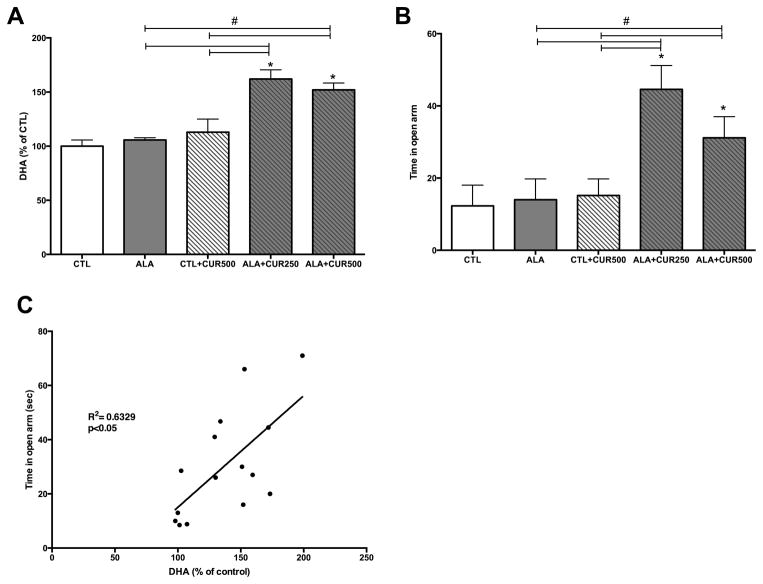
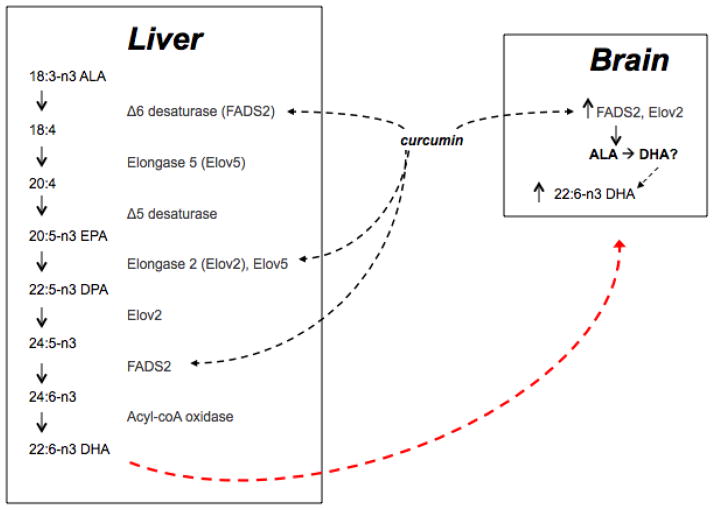
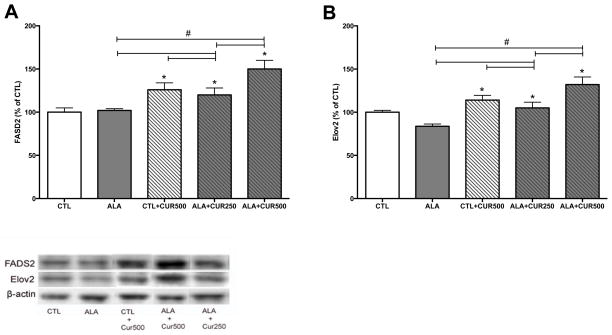
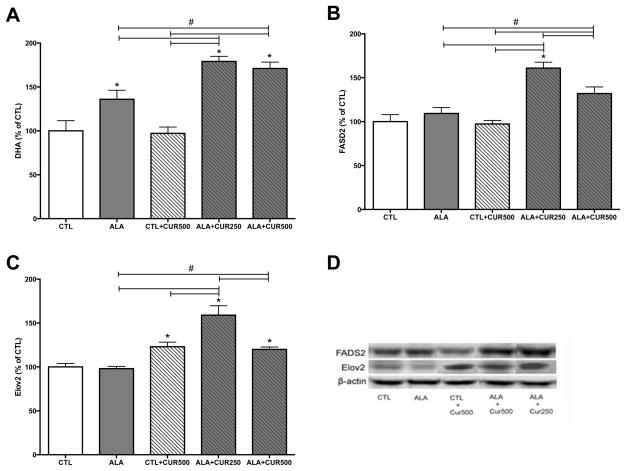
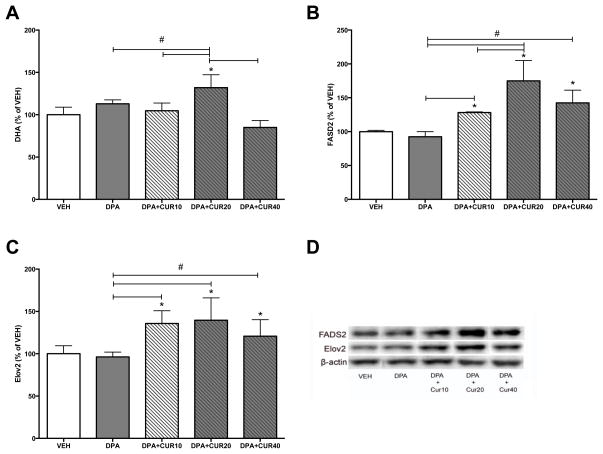
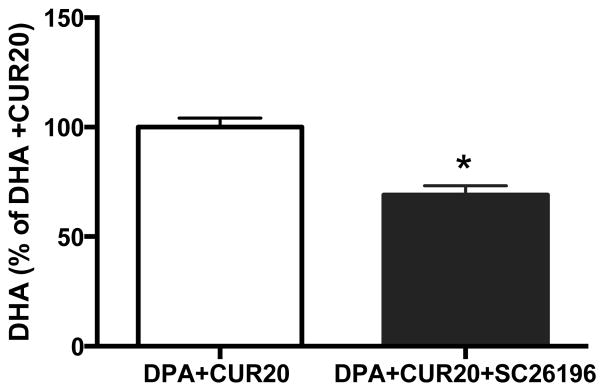
Dietary deficiency of docosahexaenoic acid (C22:6 n-3; DHA) is linked to the neuropathology of several cognitive disorders, including anxiety. DHA, which is essential for brain development and protection, is primarily obtained through the diet or synthesized from dietary precursors, however the conversion efficiency is low. Curcumin (diferuloylmethane), which is a principal component of the spice turmeric, complements the action of DHA in the brain, and this study was performed to determine molecular mechanisms involved. We report that curcumin enhances the synthesis of DHA from its precursor, α-linolenic acid (C18:3 n-3; ALA) and elevates levels of enzymes involved in the synthesis of DHA such as FADS2 and elongase 2 in both liver and brain tissues. Furthermore, in vivo treatment with curcumin and ALA reduced anxiety-like behavior in rodents. Taken together, these data suggest that curcumin enhances DHA synthesis, resulting in elevated brain DHA content. These findings have important implications for human health and the prevention of cognitive disease, particularly for populations eating a plant-based diet or who do not consume fish, a primary source of DHA, since DHA is essential for brain function and its deficiency is implicated in many types of neurological disorders.
二十二碳六烯酸(C22:6 n-3;DHA)的膳食缺乏与包括焦虑症在内的几种认知障碍的神经病理学有关。DHA对大脑发育和保护至关重要,主要通过饮食获取或由膳食前体合成,但其转化效率较低。姜黄素(二阿魏酰甲烷)是香料姜黄的主要成分,可补充DHA在大脑中的作用,本研究旨在确定其中涉及的分子机制。我们报告称,姜黄素可增强其前体α-亚麻酸(C18:3 n-3;ALA)合成DHA的能力,并提高肝脏和脑组织中参与DHA合成的酶如FADS2和延长酶2的水平。此外,用姜黄素和ALA进行体内治疗可减少啮齿动物的焦虑样行为。综上所述,这些数据表明姜黄素可增强DHA合成,从而提高大脑中的DHA含量。这些发现对人类健康和认知疾病的预防具有重要意义,特别是对于食用植物性饮食或不食用鱼类(DHA的主要来源)的人群,因为DHA对大脑功能至关重要,其缺乏与多种神经系统疾病有关。