Ma Shizhan, Jing Fei, Xu Chao, Zhou Lingyan, Song Yongfeng, Yu Chunxiao, Jiang Dongqing, Gao Ling, Li Yujie, Guan Qingbo, Zhao Jiajun
1] Department of Endocrinology and Metabolism, Shandong Provincial Hospital affiliated to Shandong University, Jinan, Shandong, 250021, China [2] Institute of Endocrinology, Shandong Academy of Clinical Medicine, Jinan, Shandong, 250021, China.
1] Institute of Endocrinology, Shandong Academy of Clinical Medicine, Jinan, Shandong, 250021, China [2] Scientific Center, Shandong Provincial Hospital affiliated to Shandong University, Jinan, Shandong, 250021, China.
Sci Rep. 2015 Jan 6;5:7633. doi: 10.1038/srep07633.
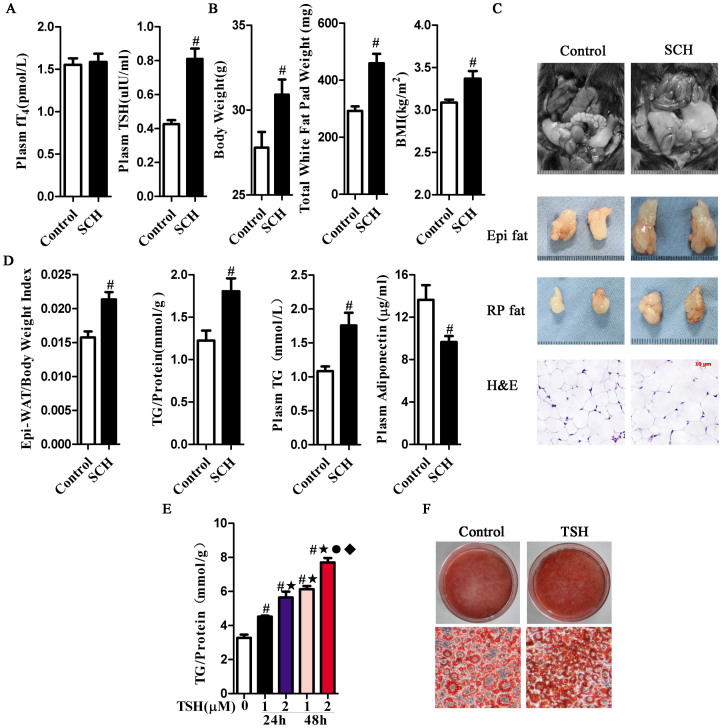
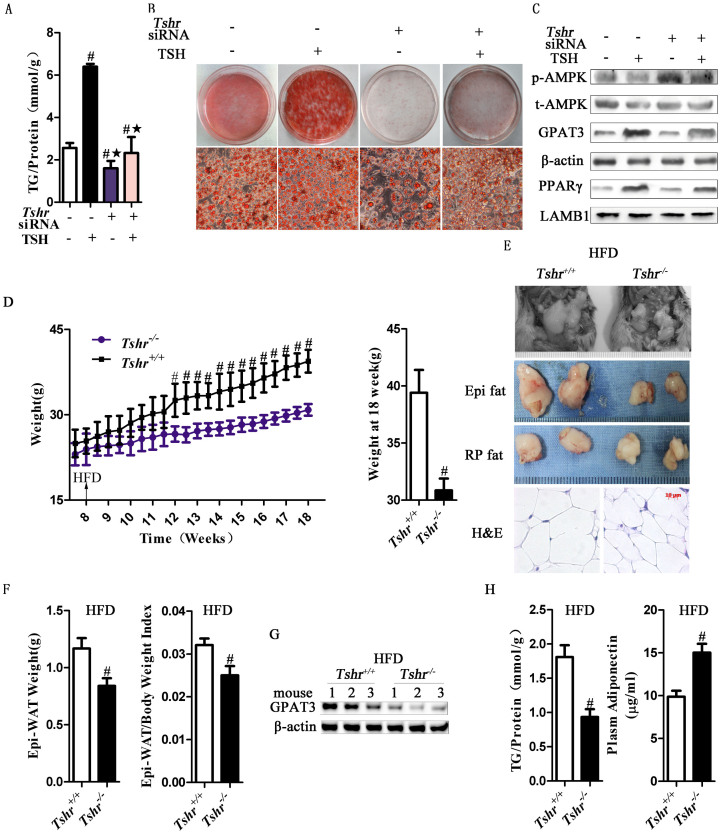
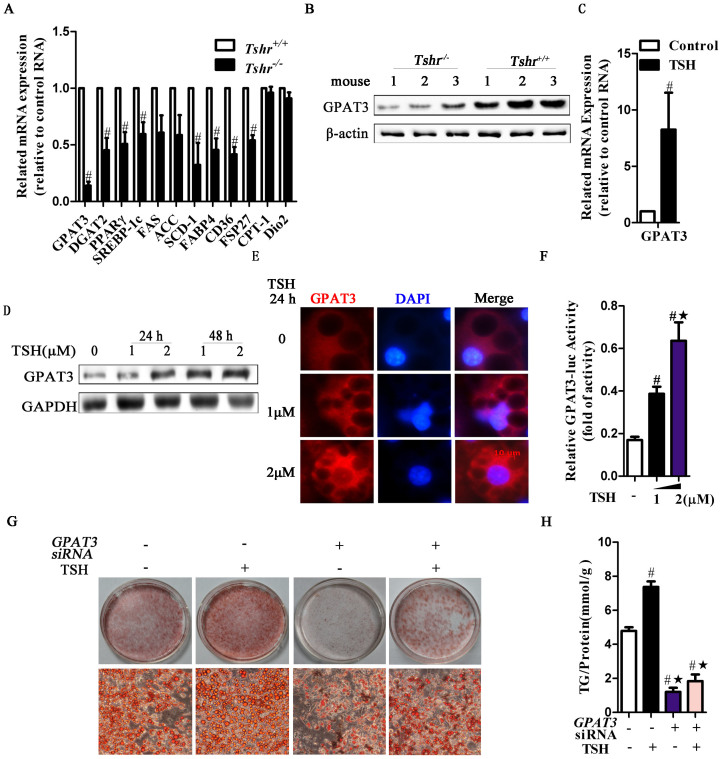
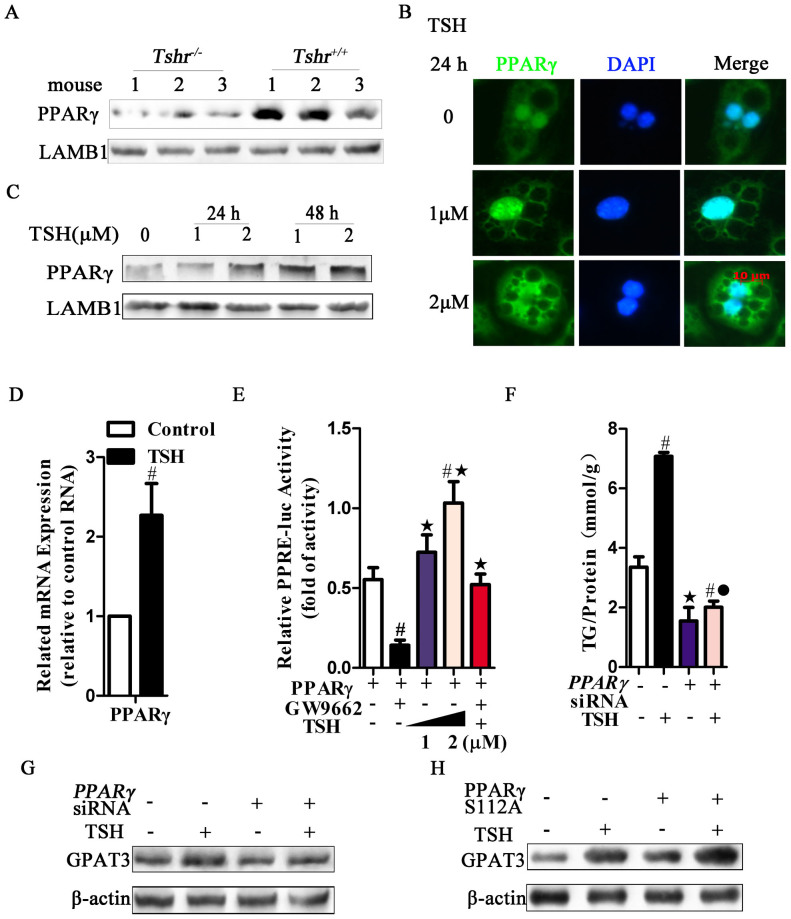
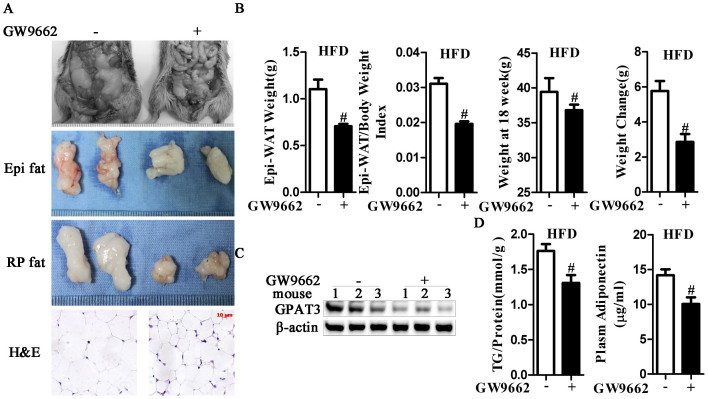
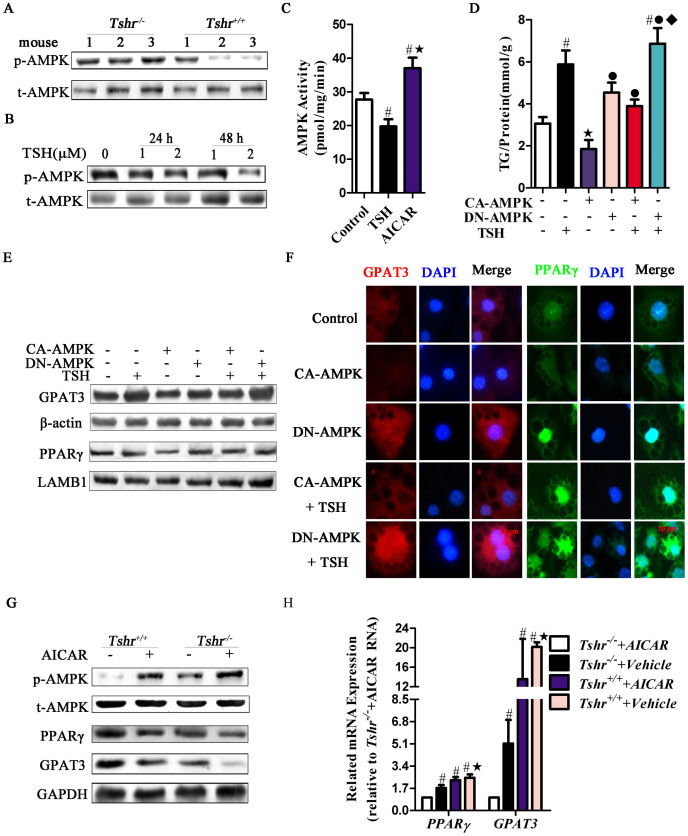
Epidemiological evidence indicates that thyrotropin (TSH) is positively correlated with the severity of obesity. However, the mechanism remains unclear. Here, we show that TSH promoted triglyceride (TG) synthesis in differentiated adipocytes in a thyroid hormone-independent manner. Mice with subclinical hypothyroidism, which is characterized by elevated serum TSH but not thyroid hormone levels, demonstrated a 35% increase in the total white adipose mass compared with their wild-type littermates. Interestingly, Tshr KO mice, which had normal thyroid hormone levels after thyroid hormone supplementation, resisted high-fat diet-induced obesity. TSH could directly induce the activity of glycerol-3-phosphate-acyltransferase 3 (GPAT3), the rate-limiting enzyme in TG synthesis, in differentiated 3T3-L1 adipocytes. However, following either the knockdown of Tshr and PPARγ or the constitutive activation of AMPK, the changes to TSH-triggered GPAT3 activity and adipogenesis disappeared. The over-expression of PPARγ or the expression of an AMPK dominant negative mutant reversed the TSH-induced changes. Thus, TSH acted as a previously unrecognized master regulator of adipogenesis, indicating that modification of the AMPK/PPARγ/GPAT3 axis via the TSH receptor might serve as a potential therapeutic target for obesity.
流行病学证据表明,促甲状腺激素(TSH)与肥胖的严重程度呈正相关。然而,其机制仍不清楚。在此,我们表明TSH以甲状腺激素非依赖的方式促进分化的脂肪细胞中甘油三酯(TG)的合成。亚临床甲状腺功能减退的小鼠,其特征是血清TSH升高但甲状腺激素水平正常,与野生型同窝小鼠相比,白色脂肪总量增加了35%。有趣的是,在补充甲状腺激素后甲状腺激素水平正常的Tshr基因敲除小鼠对高脂饮食诱导的肥胖具有抵抗力。TSH可直接诱导分化的3T3-L1脂肪细胞中甘油三酯合成的限速酶甘油-3-磷酸酰基转移酶3(GPAT3)的活性。然而,在Tshr和PPARγ基因敲低或AMPK组成性激活后,TSH触发的GPAT3活性和脂肪生成的变化消失。PPARγ的过表达或AMPK显性负突变体的表达逆转了TSH诱导的变化。因此,TSH作为一种先前未被认识的脂肪生成的主调节因子,表明通过TSH受体修饰AMPK/PPARγ/GPAT3轴可能成为肥胖的潜在治疗靶点。