Kwon Dongwook, Park Jonghoon, Park Jaehong, Choi Seo Yeon, Yoon Tae Hyun
Laboratory of Nanoscale Characterization and Environmental Chemistry, Department of Chemistry, College of Natural Sciences, Hanyang University, Seoul, South Korea.
Int J Nanomedicine. 2014 Dec 15;9 Suppl 2(Suppl 2):57-65. doi: 10.2147/IJN.S57924. eCollection 2014.
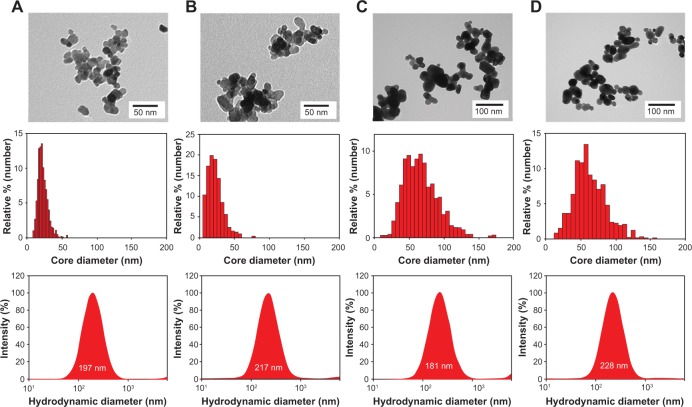
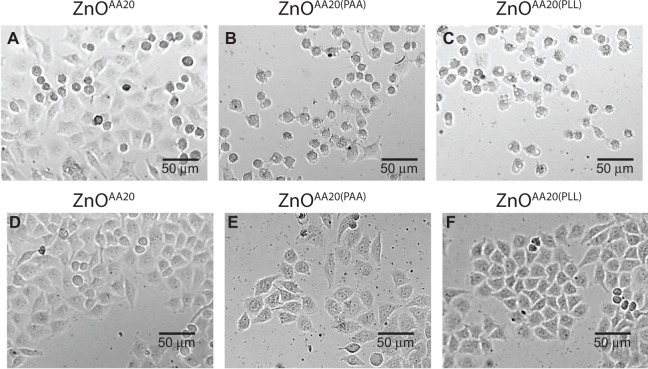
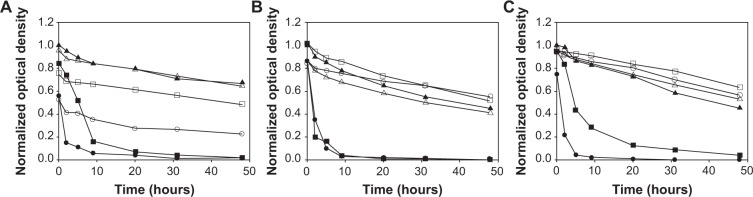
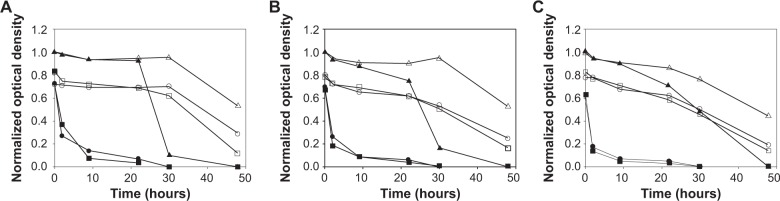
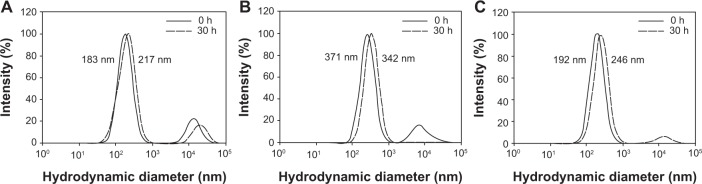
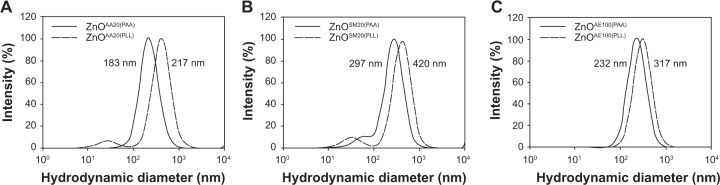
The extrinsic physicochemical properties of nanoparticles (NPs), such as hydrodynamic size, surface charge, surface functional group, and colloidal stabilities, in toxicity testing media are known to have a significant influence on in vitro toxicity assessments. Therefore, interpretation of nanotoxicity test results should be based on reliable characterization of the NPs' extrinsic properties in actual toxicity testing media. Here, we present a set of physicochemical characterization results for commercially available ZnO NPs, including core diameter, hydrodynamic diameter, surface charges, and colloidal stabilities, in two in vitro toxicity testing media (Roswell Park Memorial Institute [RPMI] and Dulbecco's Modified Eagle's Medium [DMEM]), as well as simple cell viability assay results for selected ZnO NPs. Four commercially available and manufactured ZnO NPs, with different core sizes, were used in this study, and their surface charge was modified with five different surface coating materials (sodium citrate, tris(2-aminoethyl)amine, poly(acrylic acid), poly(allylamine hydrochloride), and poly-L-lysine hydrochloride). The results showed that ZnO NPs were better dispersed in cell culture media via surface modification with positively or negatively charged molecules. Moreover, in the presence of fetal bovine serum (FBS) in RPMI and DMEM media, ZnO NPs were found even better dispersed for a longer period (at least 48 hours). For the HeLa cells exposed to ZnO NPs in DMEM media without FBS, surface charge-dependent cytotoxicity trends were observed, while these trends were not observed for those cells cultured in FBS-containing media. This confirmed the important roles of surface-modifying compounds and of surface charge on the resultant cytotoxicities of NPs.
已知纳米颗粒(NPs)的外在物理化学性质,如流体动力学尺寸、表面电荷、表面官能团和胶体稳定性,在毒性测试介质中对体外毒性评估有重大影响。因此,纳米毒性测试结果的解释应基于在实际毒性测试介质中对NPs外在性质的可靠表征。在此,我们展示了一组市售ZnO NPs在两种体外毒性测试介质(罗斯韦尔公园纪念研究所[RPMI]和杜尔贝科改良伊格尔培养基[DMEM])中的物理化学表征结果,包括核心直径、流体动力学直径、表面电荷和胶体稳定性,以及所选ZnO NPs的简单细胞活力测定结果。本研究使用了四种市售且制造的具有不同核心尺寸的ZnO NPs,并用五种不同的表面涂层材料(柠檬酸钠、三(2-氨基乙基)胺、聚丙烯酸、聚烯丙胺盐酸盐和聚-L-赖氨酸盐酸盐)对其表面电荷进行了修饰。结果表明,通过用带正电或负电的分子进行表面修饰,ZnO NPs在细胞培养基中分散得更好。此外,在RPMI和DMEM培养基中存在胎牛血清(FBS)的情况下,发现ZnO NPs能在更长时间内(至少48小时)更好地分散。对于在不含FBS的DMEM培养基中暴露于ZnO NPs的HeLa细胞,观察到了表面电荷依赖性细胞毒性趋势,而在含FBS的培养基中培养那些细胞时未观察到这些趋势。这证实了表面修饰化合物和表面电荷对NPs最终细胞毒性的重要作用。