Dubois Luiz Gustavo, Campanati Loraine, Righy Cassia, D'Andrea-Meira Isabella, Spohr Tania Cristina Leite de Sampaio E, Porto-Carreiro Isabel, Pereira Claudia Maria, Balça-Silva Joana, Kahn Suzana Assad, DosSantos Marcos F, Oliveira Marcela de Almeida Rabello, Ximenes-da-Silva Adriana, Lopes Maria Celeste, Faveret Eduardo, Gasparetto Emerson Leandro, Moura-Neto Vivaldo
Instituto Estadual do Cérebro Paulo Niemeyer, Rua do Rezende Rio de Janeiro, Brazil.
Laboratório de Morfogênese Celular, Instituto de Ciências Biomédicas da, Universidade Federal do Rio de Janeiro Rio de Janeiro, Brazil.
Front Cell Neurosci. 2014 Dec 12;8:418. doi: 10.3389/fncel.2014.00418. eCollection 2014.
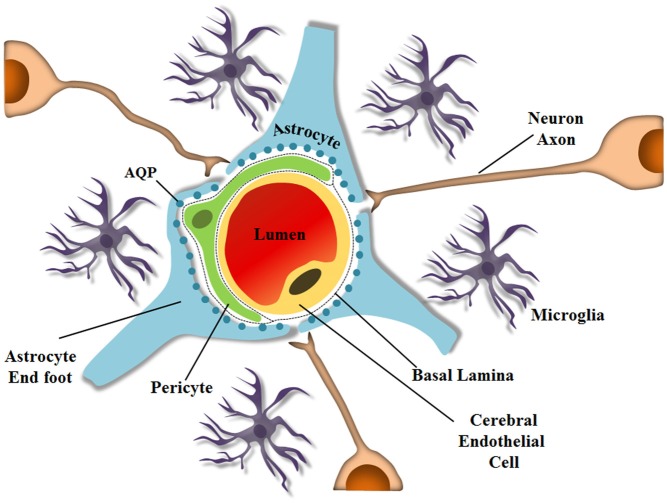
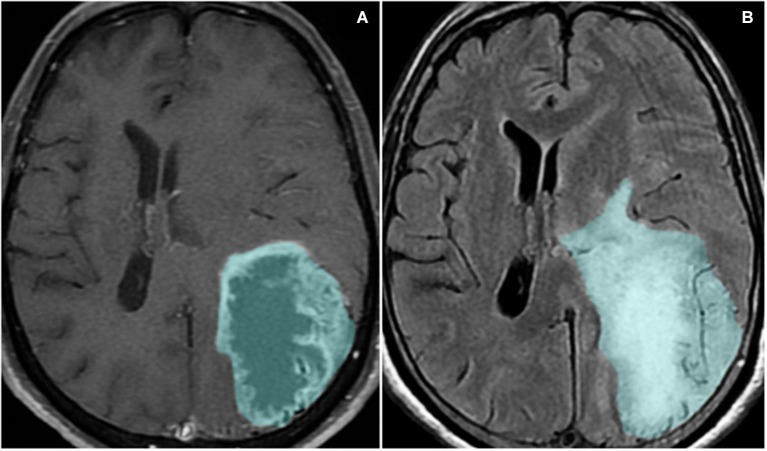
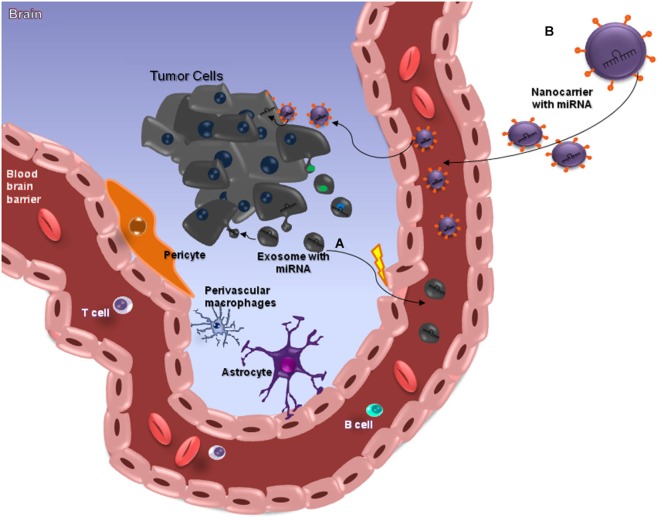
Astrocytes, members of the glial family, interact through the exchange of soluble factors or by directly contacting neurons and other brain cells, such as microglia and endothelial cells. Astrocytic projections interact with vessels and act as additional elements of the Blood Brain Barrier (BBB). By mechanisms not fully understood, astrocytes can undergo oncogenic transformation and give rise to gliomas. The tumors take advantage of the BBB to ensure survival and continuous growth. A glioma can develop into a very aggressive tumor, the glioblastoma (GBM), characterized by a highly heterogeneous cell population (including tumor stem cells), extensive proliferation and migration. Nevertheless, gliomas can also give rise to slow growing tumors and in both cases, the afflux of blood, via BBB is crucial. Glioma cells migrate to different regions of the brain guided by the extension of blood vessels, colonizing the healthy adjacent tissue. In the clinical context, GBM can lead to tumor-derived seizures, which represent a challenge to patients and clinicians, since drugs used for its treatment must be able to cross the BBB. Uncontrolled and fast growth also leads to the disruption of the chimeric and fragile vessels in the tumor mass resulting in peritumoral edema. Although hormonal therapy is currently used to control the edema, it is not always efficient. In this review we comment the points cited above, considering the importance of the BBB and the concerns that arise when this barrier is affected.
星形胶质细胞是神经胶质家族的成员,它们通过可溶性因子的交换或直接与神经元及其他脑细胞(如小胶质细胞和内皮细胞)接触来相互作用。星形胶质细胞的突起与血管相互作用,并作为血脑屏障(BBB)的额外组成部分发挥作用。通过尚未完全了解的机制,星形胶质细胞可发生致癌转化并引发胶质瘤。这些肿瘤利用血脑屏障来确保生存和持续生长。胶质瘤可发展成极具侵袭性的肿瘤,即胶质母细胞瘤(GBM),其特征是细胞群体高度异质性(包括肿瘤干细胞)、广泛增殖和迁移。然而,胶质瘤也可引发生长缓慢的肿瘤,在这两种情况下,通过血脑屏障的血液流入都至关重要。胶质瘤细胞在血管延伸的引导下迁移至大脑的不同区域,侵袭相邻的健康组织。在临床情况下,胶质母细胞瘤可导致肿瘤源性癫痫发作,这对患者和临床医生来说都是一项挑战,因为用于治疗的药物必须能够穿过血脑屏障。不受控制的快速生长还会导致肿瘤块中嵌合且脆弱的血管破裂,从而导致瘤周水肿。尽管目前使用激素疗法来控制水肿,但并不总是有效。在本综述中,我们阐述上述要点,同时考虑血脑屏障的重要性以及该屏障受到影响时引发的问题。