Angilletta Michael J, Ashley Steel E, Bartz Krista K, Kingsolver Joel G, Scheuerell Mark D, Beckman Brian R, Crozier Lisa G
Department of Ecology & Organismal Biology, Indiana State University Terre Haute, IN, USA.
Northwest Fisheries Science Center, NOAA Fisheries Service Seattle, WA, USA.
Evol Appl. 2008 May;1(2):286-99. doi: 10.1111/j.1752-4571.2008.00032.x.
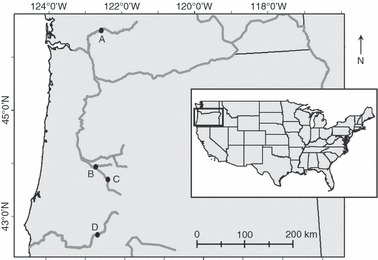
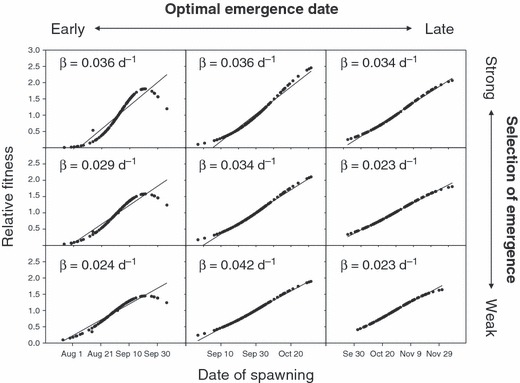
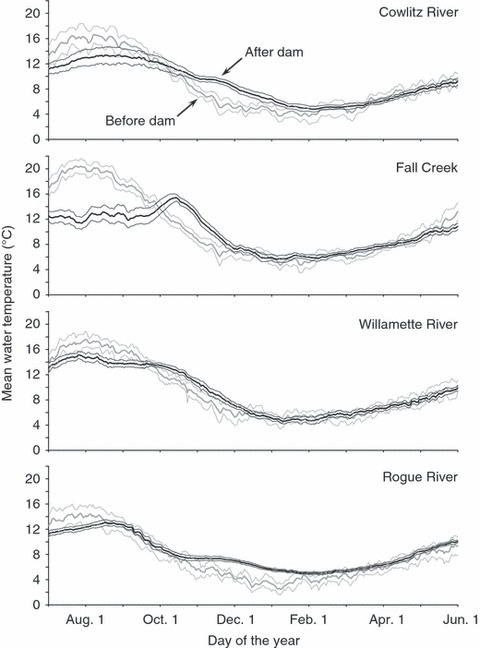
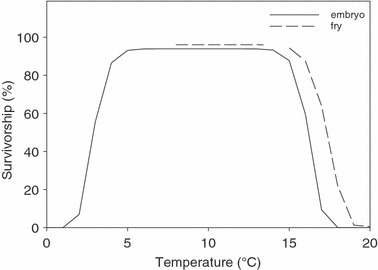
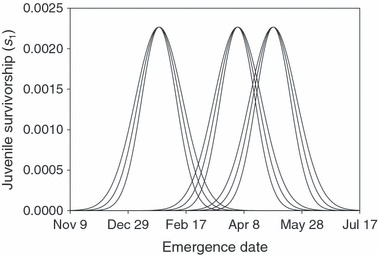
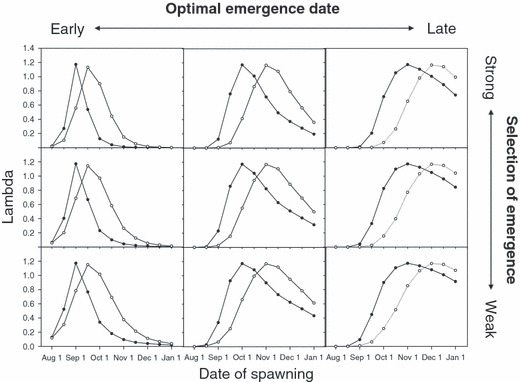
Dams designed for hydropower and other purposes alter the environments of many economically important fishes, including Chinook salmon (Oncorhynchus tshawytscha). We estimated that dams on the Rogue River, the Willamette River, the Cowlitz River, and Fall Creek decreased water temperatures during summer and increased water temperatures during fall and winter. These thermal changes undoubtedly impact the behavior, physiology, and life histories of Chinook salmon. For example, relatively high temperatures during the fall and winter should speed growth and development, leading to early emergence of fry. Evolutionary theory provides tools to predict selective pressures and genetic responses caused by this environmental warming. Here, we illustrate this point by conducting a sensitivity analysis of the fitness consequences of thermal changes caused by dams, mediated by the thermal sensitivity of embryonic development. Based on our model, we predict Chinook salmon likely suffered a decrease in mean fitness after the construction of a dam in the Rogue River. Nevertheless, these demographic impacts might have resulted in strong selection for compensatory strategies, such as delayed spawning by adults or slowed development by embryos. Because the thermal effects of dams vary throughout the year, we predict dams impacted late spawners more than early spawners. Similar analyses could shed light on the evolutionary consequences of other environmental perturbations and their interactions.
为水电及其他目的而设计的水坝改变了许多具有重要经济价值鱼类的生存环境,其中包括奇努克鲑(Oncorhynchus tshawytscha)。我们估计,罗格河、威拉米特河、考利茨河及福尔河上的水坝在夏季降低了水温,在秋冬季节则升高了水温。这些温度变化无疑会影响奇努克鲑的行为、生理机能及生活史。例如,秋冬季节相对较高的温度应会加速生长和发育,导致鱼苗提前孵化。进化理论提供了工具来预测这种环境变暖所引发的选择压力和基因反应。在此,我们通过对水坝引发的温度变化所产生的适应性后果进行敏感性分析来阐明这一点,这种温度变化是由胚胎发育的热敏感性介导的。基于我们的模型,我们预测在罗格河上修建水坝后,奇努克鲑的平均适应性可能会下降。然而,这些种群统计学上的影响可能会导致对补偿策略的强烈选择,例如成年个体延迟产卵或胚胎发育减缓。由于水坝的热效应全年各不相同,我们预测水坝对晚产卵者的影响要大于早产卵者。类似的分析可以揭示其他环境扰动及其相互作用的进化后果。