Paccez Juliano D, Duncan Kristal, Vava Akhona, Correa Ricardo G, Libermann Towia A, Parker M Iqbal, Zerbini Luiz F
International Centre for Genetic Engineering and Biotechnology, Cape Town 7925, South Africa Division of Medical Biochemistry, University of Cape Town, Cape Town, South Africa.
Sanford-Burnham Medical Research Institute, La Jolla, CA 92037.
Mol Biol Cell. 2015 Mar 1;26(5):821-31. doi: 10.1091/mbc.E14-04-0868. Epub 2015 Jan 7.
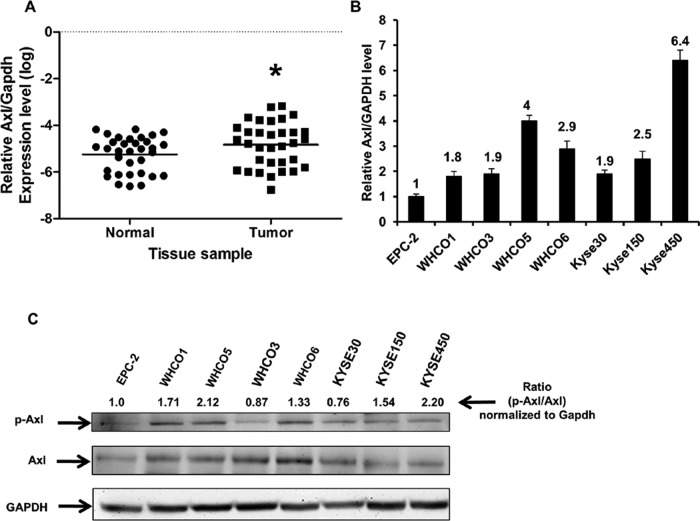
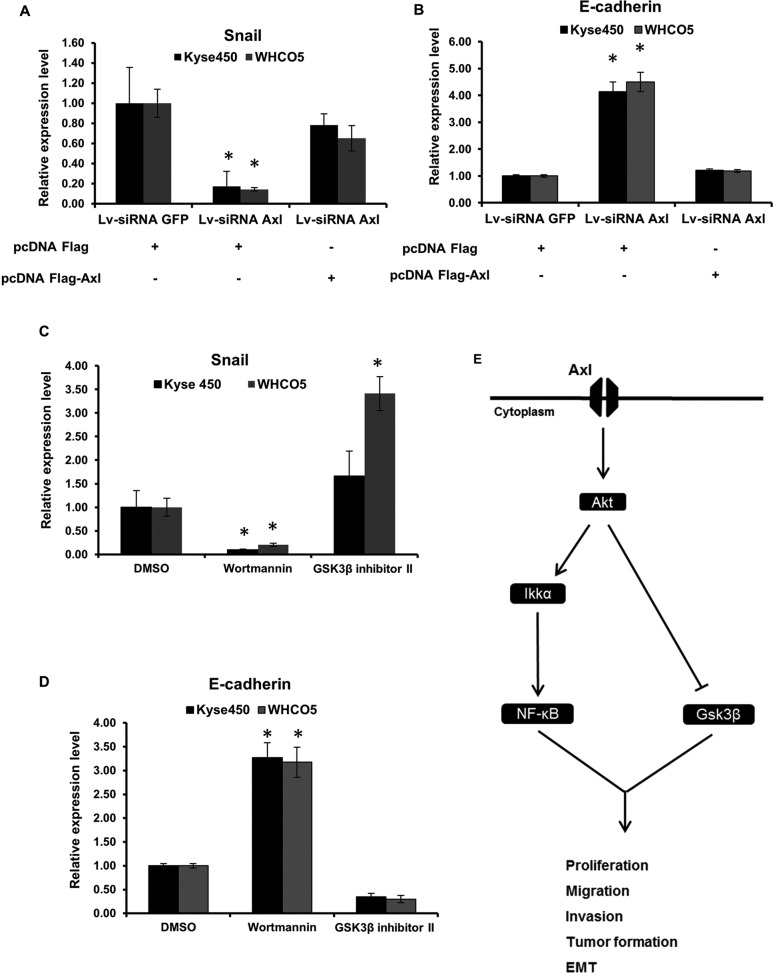
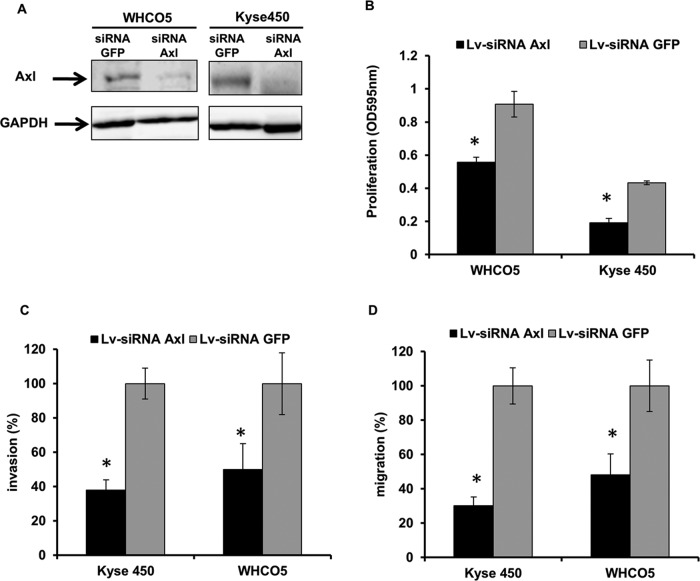
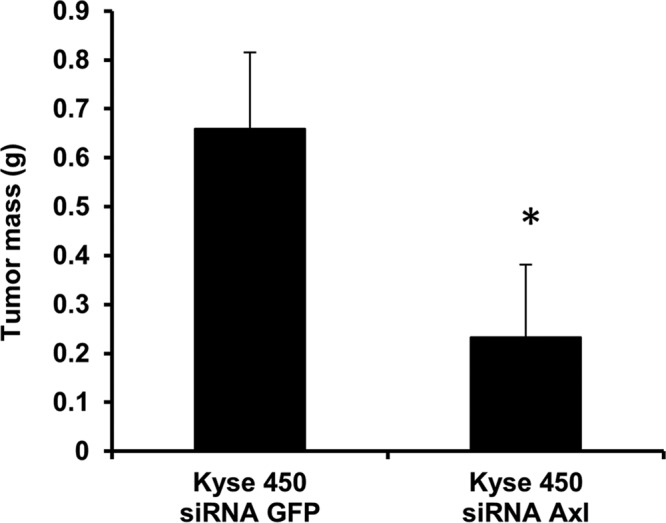
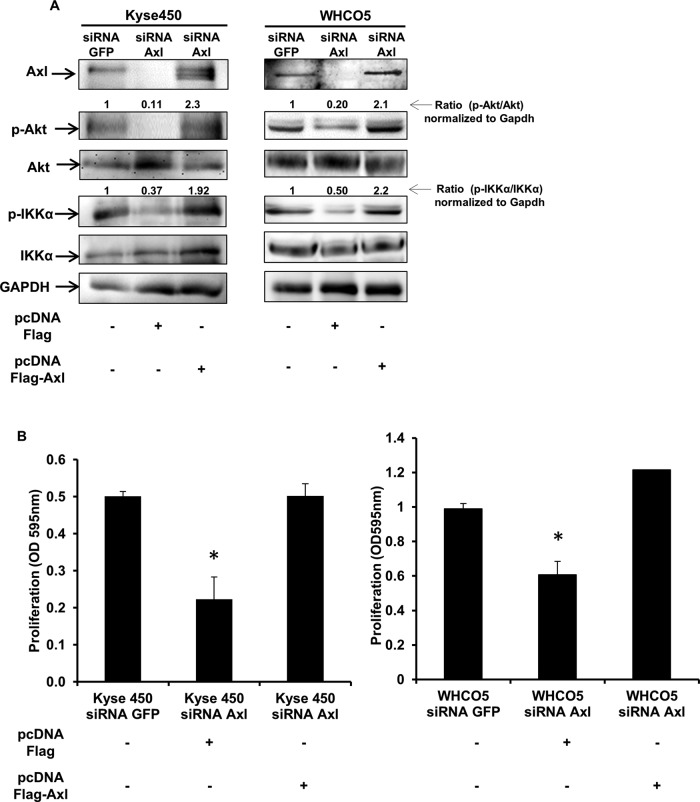
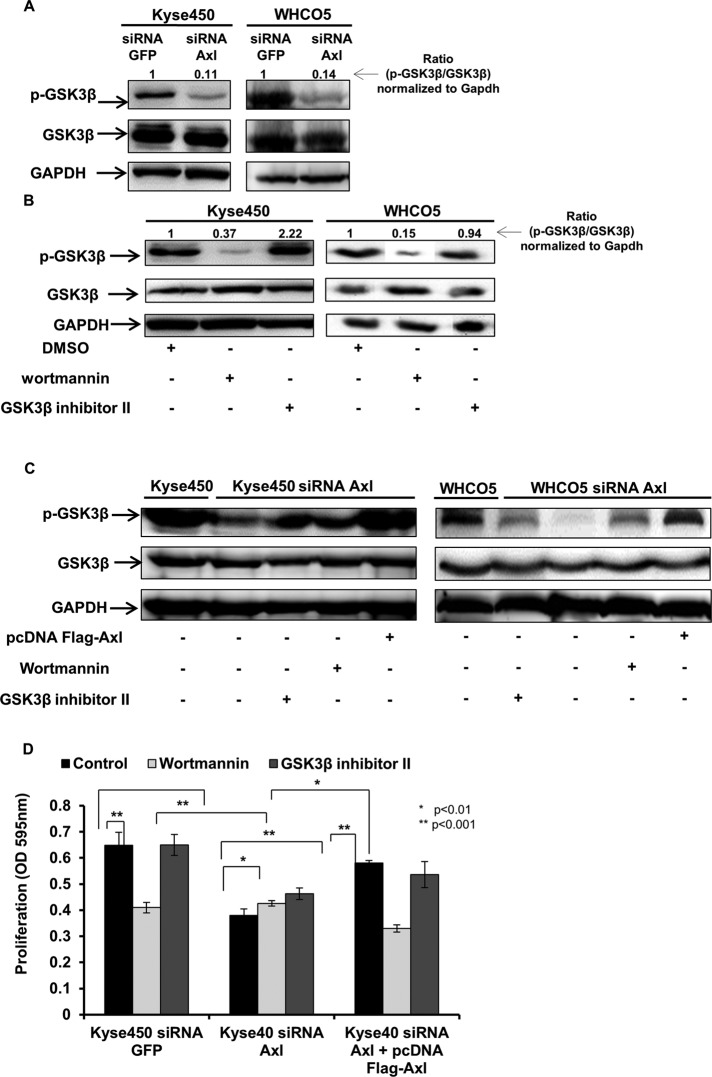
The receptor tyrosine kinase Axl has been described as an oncogene, and its deregulation has been implicated in the progression of several human cancers. While the role of Axl in esophageal adenocarcinoma has been addressed, there is no information about its role in esophageal squamous cell carcinoma (OSCC). In the current report, we identified, for the first time, deregulation of Axl expression in OSCC. Axl is consistently overexpressed in OSCC cell lines and human tumor samples, mainly in advanced stages of the disease. Blockage of Axl gene expression by small interfering RNA inhibits cell survival, proliferation, migration, and invasion in vitro and esophageal tumor growth in vivo. Additionally, repression of Axl expression results in Akt-dependent inhibition of pivotal genes involved in the nuclear factor-kappaB (NF-κB) pathway and in the induction of glycogen synthase kinase 3β (GSK3β) activity, resulting in loss of mesenchymal markers and induction of epithelial markers. Furthermore, treatment of esophageal cancer cells with the Akt inhibitor wortmannin inhibits NF-κB signaling, induces GSK3β activity, and blocks OSCC cell proliferation in an Axl-dependent manner. Taken together, our results establish a clear role for Axl in OSCC tumorigenesis with potential therapeutic implications.
受体酪氨酸激酶Axl已被描述为一种癌基因,其失调与多种人类癌症的进展有关。虽然Axl在食管腺癌中的作用已得到研究,但尚无关于其在食管鳞状细胞癌(OSCC)中作用的信息。在本报告中,我们首次发现OSCC中Axl表达失调。Axl在OSCC细胞系和人类肿瘤样本中持续过度表达,主要在疾病的晚期阶段。通过小干扰RNA阻断Axl基因表达可抑制体外细胞存活、增殖、迁移和侵袭以及体内食管肿瘤生长。此外,抑制Axl表达会导致Akt依赖性抑制参与核因子-κB(NF-κB)途径的关键基因,并诱导糖原合酶激酶3β(GSK3β)活性,导致间充质标志物丢失并诱导上皮标志物。此外,用Akt抑制剂渥曼青霉素处理食管癌细胞可抑制NF-κB信号传导,诱导GSK3β活性,并以Axl依赖性方式阻断OSCC细胞增殖。综上所述,我们的结果明确了Axl在OSCC肿瘤发生中的作用,并具有潜在的治疗意义。