Lameira Adriano R, Hardus Madeleine E, Bartlett Adrian M, Shumaker Robert W, Wich Serge A, Menken Steph B J
Institute for Biodiversity and Ecosystem Dynamics, University of Amsterdam, Amsterdam, the Netherlands; Pongo Foundation, Oudewater, the Netherlands.
Neuroscience Institute, Department of Psychology, Princeton University, Princeton, New Jersey, United States of America.
PLoS One. 2015 Jan 8;10(1):e116136. doi: 10.1371/journal.pone.0116136. eCollection 2015.
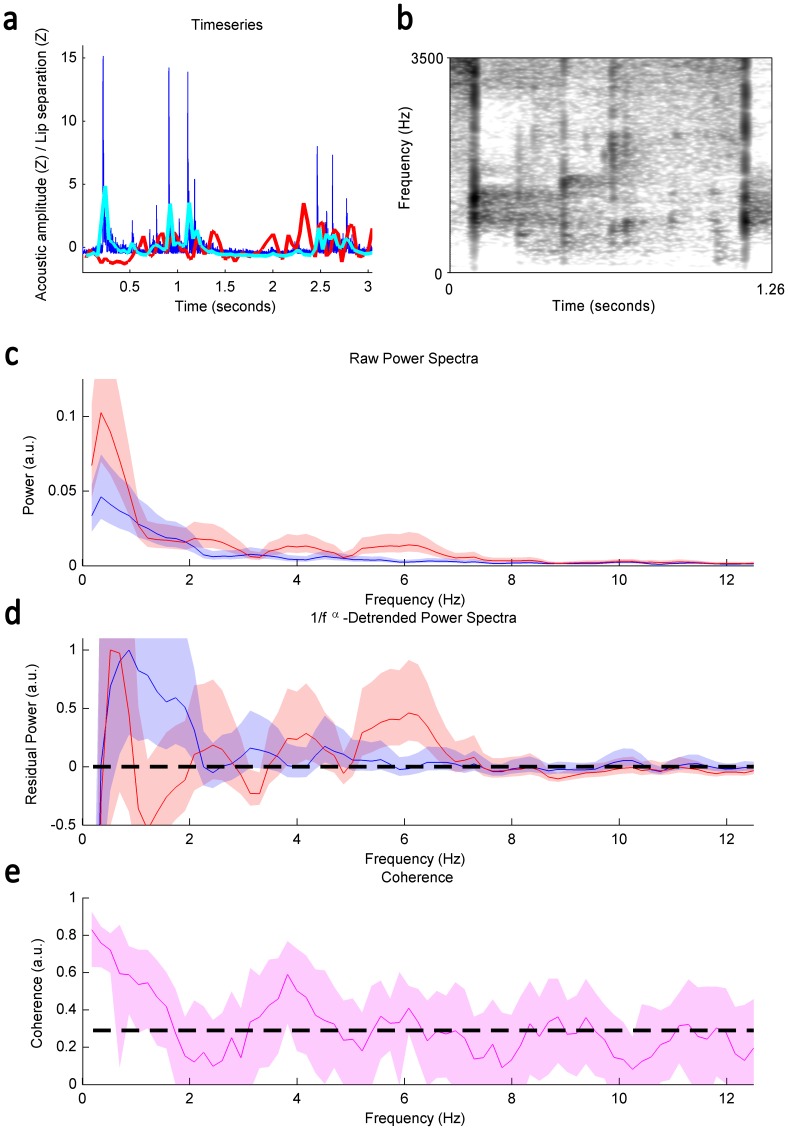
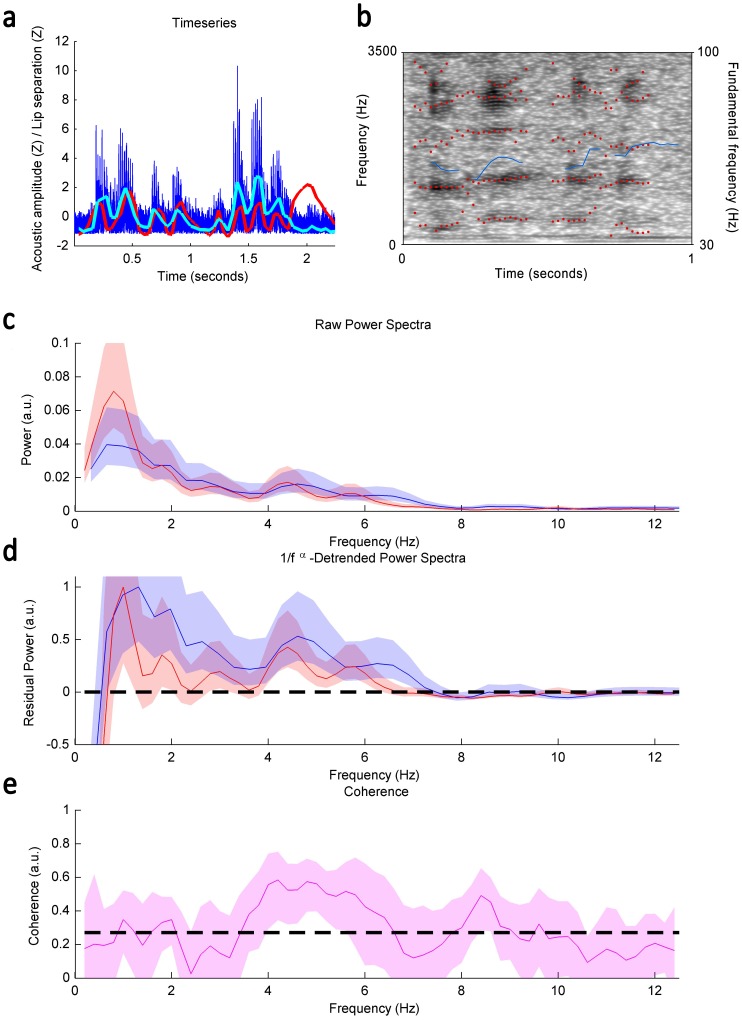
The evolutionary origins of speech remain obscure. Recently, it was proposed that speech derived from monkey facial signals which exhibit a speech-like rhythm of ∼5 open-close lip cycles per second. In monkeys, these signals may also be vocalized, offering a plausible evolutionary stepping stone towards speech. Three essential predictions remain, however, to be tested to assess this hypothesis' validity; (i) Great apes, our closest relatives, should likewise produce 5Hz-rhythm signals, (ii) speech-like rhythm should involve calls articulatorily similar to consonants and vowels given that speech rhythm is the direct product of stringing together these two basic elements, and (iii) speech-like rhythm should be experience-based. Via cinematic analyses we demonstrate that an ex-entertainment orangutan produces two calls at a speech-like rhythm, coined "clicks" and "faux-speech." Like voiceless consonants, clicks required no vocal fold action, but did involve independent manoeuvring over lips and tongue. In parallel to vowels, faux-speech showed harmonic and formant modulations, implying vocal fold and supralaryngeal action. This rhythm was several times faster than orangutan chewing rates, as observed in monkeys and humans. Critically, this rhythm was seven-fold faster, and contextually distinct, than any other known rhythmic calls described to date in the largest database of the orangutan repertoire ever assembled. The first two predictions advanced by this study are validated and, based on parsimony and exclusion of potential alternative explanations, initial support is given to the third prediction. Irrespectively of the putative origins of these calls and underlying mechanisms, our findings demonstrate irrevocably that great apes are not respiratorily, articulatorilly, or neurologically constrained for the production of consonant- and vowel-like calls at speech rhythm. Orangutan clicks and faux-speech confirm the importance of rhythmic speech antecedents within the primate lineage, and highlight potential articulatory homologies between great ape calls and human consonants and vowels.
语言的进化起源仍然不明。最近,有人提出语言源自猴子的面部信号,这些信号呈现出每秒约5个开合唇周期的类似语言的节奏。在猴子中,这些信号也可能通过发声表达,这为语言进化提供了一个合理的过渡阶段。然而,要评估这一假设的有效性,仍有三个基本预测有待验证:(i)与我们亲缘关系最近的大猩猩同样应该能发出5赫兹节奏的信号;(ii)鉴于语言节奏是将这两个基本要素串联起来的直接产物,类似语言的节奏应该涉及发音上类似于辅音和元音的叫声;(iii)类似语言的节奏应该基于经验。通过电影分析,我们证明一只退役的娱乐猩猩能以类似语言的节奏发出两种叫声,分别称为“咔嗒声”和“假语音”。像清辅音一样,咔嗒声不需要声带振动,但确实涉及嘴唇和舌头的独立动作。与元音类似,假语音表现出谐波和共振峰调制,这意味着有声带和喉上结构的动作。这种节奏比猩猩的咀嚼速度快几倍,在猴子和人类中也有类似情况。至关重要的是,这种节奏比迄今为止在有史以来最大的猩猩发声库数据库中描述的任何其他已知节奏叫声快七倍,且在语境上有所不同。本研究提出的前两个预测得到了验证,基于简约性和对潜在替代解释的排除,对第三个预测给予了初步支持。无论这些叫声的假定起源和潜在机制如何,我们的发现无可辩驳地证明,大猩猩在发出类似辅音和元音的语言节奏叫声时,在呼吸、发音或神经方面没有限制。猩猩的咔嗒声和假语音证实了灵长类谱系中节奏性语言前身的重要性,并突出了大猩猩叫声与人类辅音和元音之间潜在的发音同源性。