Gutierrez Maria G, Pfeffer Tia L, Warawa Jonathan M
Department of Microbiology and Immunology, University of Louisville, Louisville, Kentucky, United States of America.
Department of Microbiology and Immunology, University of Louisville, Louisville, Kentucky, United States of America; Center for Predictive Medicine, University of Louisville, Louisville, Kentucky, United States of America.
PLoS Negl Trop Dis. 2015 Jan 8;9(1):e3441. doi: 10.1371/journal.pntd.0003441. eCollection 2015 Jan.
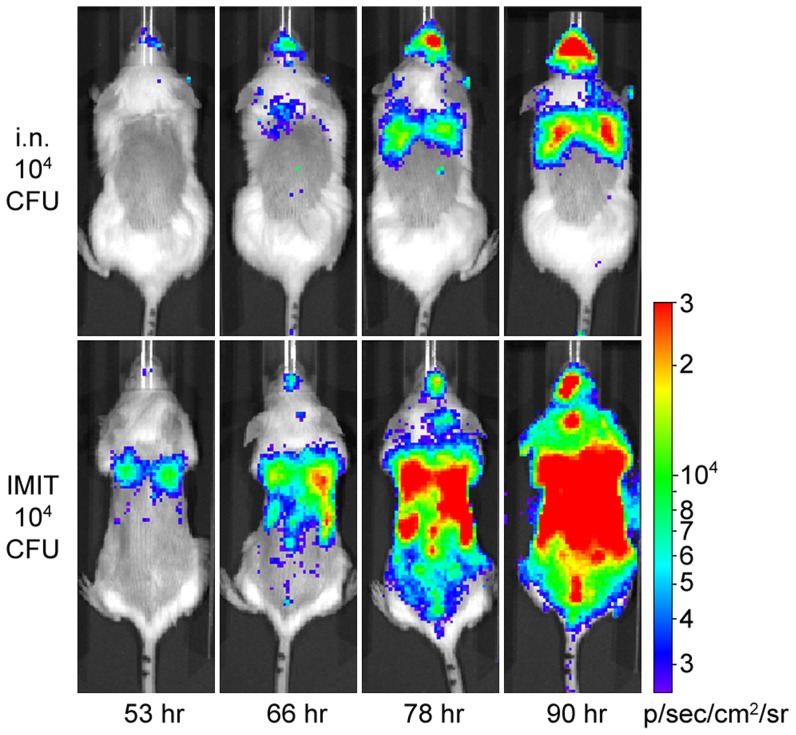
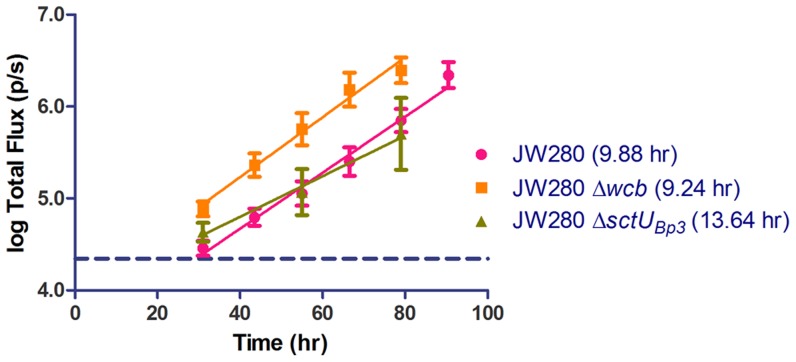
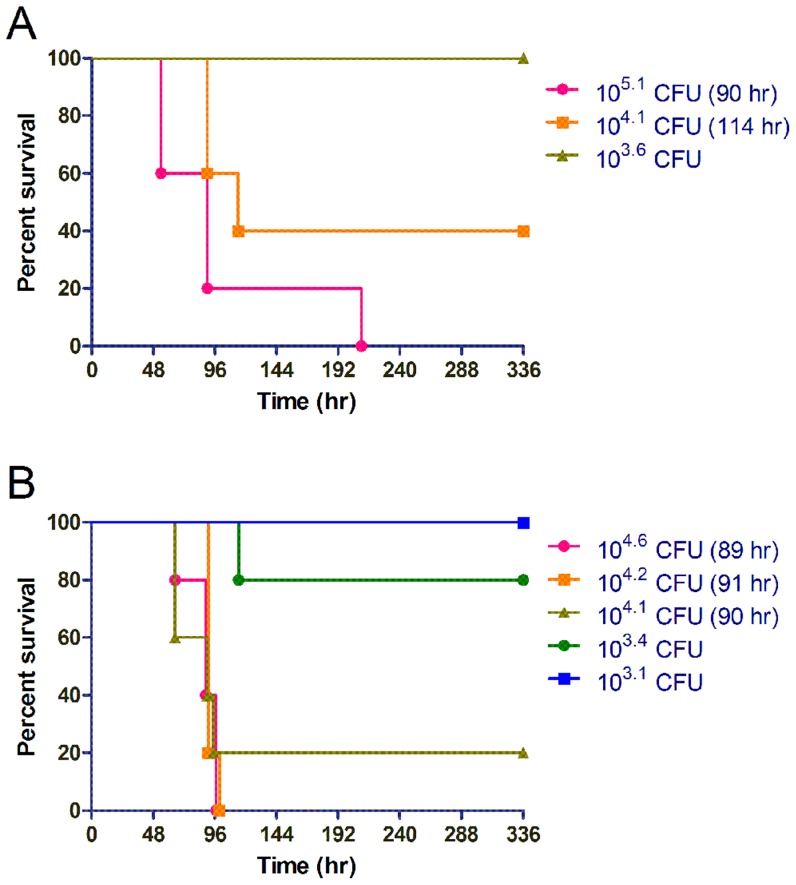
Burkholderia pseudomallei, the bacterial agent of melioidosis, causes disease through inhalation of infectious particles, and is classified as a Tier 1 Select Agent. Optical diagnostic imaging has demonstrated that murine respiratory disease models are subject to significant upper respiratory tract (URT) colonization. Because human melioidosis is not associated with URT colonization as a prominent presentation, we hypothesized that lung-specific delivery of B. pseudomallei may enhance our ability to study respiratory melioidosis in mice. We compared intranasal and intubation-mediated intratracheal (IMIT) instillation of bacteria and found that the absence of URT colonization correlates with an increased bacterial pneumonia and systemic disease progression. Comparison of the LD50 of luminescent B. pseudomallei strain, JW280, in intranasal and IMIT challenges of albino C57BL/6J mice identified a significant decrease in the LD50 using IMIT. We subsequently examined the LD50 of both capsular polysaccharide and Type 3 Secretion System cluster 3 (T3SS3) mutants by IMIT challenge of mice and found that the capsule mutant was attenuated 6.8 fold, while the T3SS3 mutant was attenuated 290 fold, demonstrating that T3SS3 is critical to respiratory melioidosis. Our previously reported intranasal challenge studies, which involve significant URT colonization, did not identify a dissemination defect for capsule mutants; however, we now report that capsule mutants exhibit significantly reduced dissemination from the lung following lung-specific instillation, suggesting that capsule mutants are competent to spread from the URT, but not the lung. We also report that a T3SS3 mutant is defective for dissemination following lung-specific delivery, and also exhibits in vivo growth defects in the lung. These findings highlight the T3SS3 as a critical virulence system for respiratory melioidosis, not only in the lung, but also for subsequent spread beyond the lung using a model system uniquely capable to characterize the fate of lung-delivered pathogen.
类鼻疽杆菌是类鼻疽病的病原体,通过吸入感染性颗粒引发疾病,被列为一级选择生物制剂。光学诊断成像显示,小鼠呼吸道疾病模型存在显著的上呼吸道(URT)定植。由于人类类鼻疽病并不以上呼吸道定植为突出表现,我们推测将类鼻疽杆菌特异性递送至肺部可能会增强我们在小鼠中研究呼吸道类鼻疽病的能力。我们比较了经鼻和插管介导的气管内(IMIT)细菌滴注,发现无URT定植与细菌性肺炎增加和全身疾病进展相关。在对白化C57BL/6J小鼠进行经鼻和IMIT攻击时,对发光类鼻疽杆菌菌株JW280的半数致死剂量(LD50)进行比较,结果表明使用IMIT时LD50显著降低。随后,我们通过对小鼠进行IMIT攻击,检测了荚膜多糖和3型分泌系统簇3(T3SS3)突变体的LD50,发现荚膜突变体的毒力减弱了6.8倍,而T3SS3突变体的毒力减弱了290倍,这表明T3SS3对呼吸道类鼻疽病至关重要。我们之前报道的经鼻攻击研究涉及大量URT定植,未发现荚膜突变体存在传播缺陷;然而,我们现在报告称,在进行肺部特异性滴注后,荚膜突变体从肺部的传播显著减少,这表明荚膜突变体能够从URT传播,但不能从肺部传播。我们还报告称,T3SS3突变体在肺部特异性递送后存在传播缺陷,并且在肺部也表现出体内生长缺陷。这些发现突出了T3SS3作为呼吸道类鼻疽病关键毒力系统的重要性,不仅在肺部如此,在使用独特的模型系统来表征肺部递送病原体的命运时,对于病原体随后扩散至肺部以外的情况也是如此。