Ou Lingling, Shi Ying, Dong Wenqi, Liu Chunming, Schmidt Thomas J, Nagarkatti Prakash, Nagarkatti Mitzi, Fan Daping, Ai Walden
Department of Pathology, Microbiology and Immunology, University of South Carolina School of Medicine, Columbia, SC, USA.
Department of Biopharmaceuticals, School of Biotechnology, Southern Medical University, Guangzhou, China.
J Invest Dermatol. 2015 May;135(5):1425-1434. doi: 10.1038/jid.2015.3. Epub 2015 Jan 12.
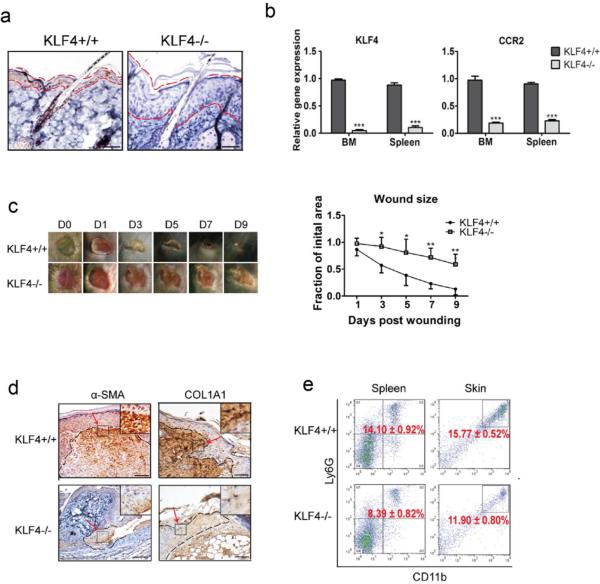
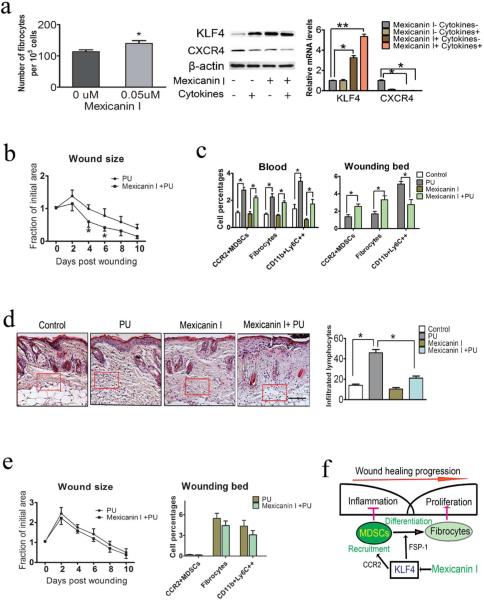
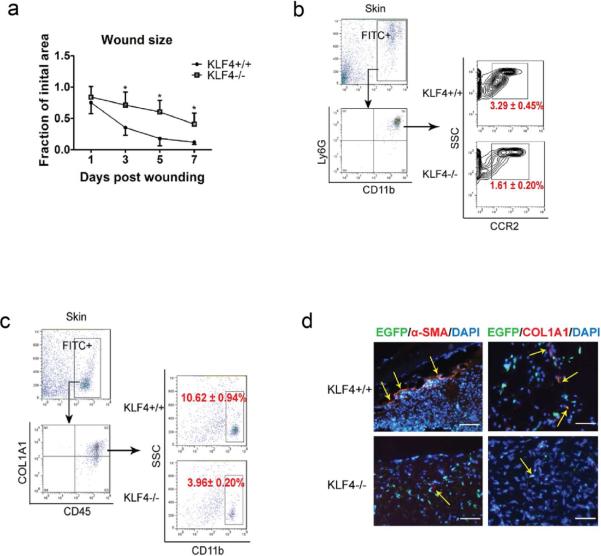
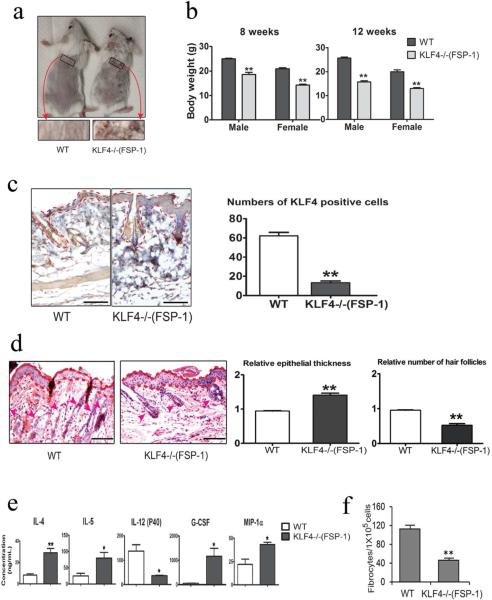
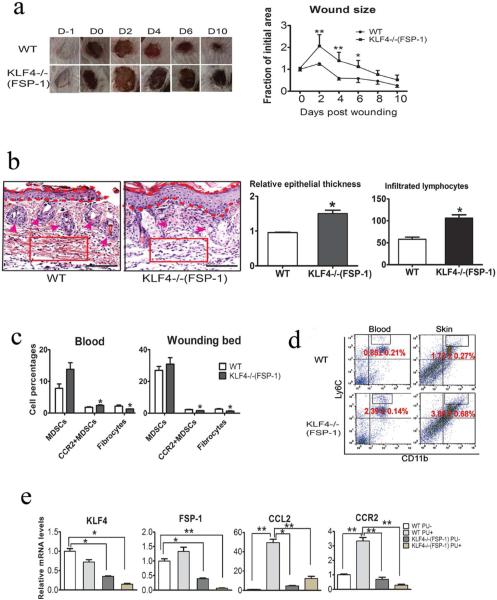
Pressure ulcers (PUs) are serious skin injuries whereby the wound healing process is frequently stalled in the inflammatory phase. Myeloid-derived suppressor cells (MDSCs) accumulate as a result of inflammation and promote cutaneous wound healing by mechanisms that are not fully understood. Recently, MDSCs have been shown to differentiate into fibrocytes, which serve as emerging effector cells that enhance cell proliferation in wound healing. We postulate that in wound healing MDSCs not only execute their immunosuppressive function to regulate inflammation but also stimulate cell proliferation once they differentiate into fibrocytes. In the current study, by using full-thickness and PU mouse models, we found that Kruppel-like factor 4 (KLF4) deficiency resulted in decreased accumulation of MDSCs and fibrocytes, and wound healing was significantly delayed. Conversely, KLF4 activation by the plant-derived product Mexicanin I increased the number of MDSCs and fibrocytes and accelerated the wound healing. Collectively, our study revealed a previously unreported function of MDSCs in cutaneous wound healing and identified Mexicanin I as a potential agent to accelerate PU wound healing.
压疮(PUs)是严重的皮肤损伤,其伤口愈合过程常常停滞在炎症阶段。髓系来源的抑制细胞(MDSCs)因炎症而积累,并通过尚未完全了解的机制促进皮肤伤口愈合。最近,已证明MDSCs可分化为纤维细胞,而纤维细胞作为新兴的效应细胞可增强伤口愈合中的细胞增殖。我们推测,在伤口愈合过程中,MDSCs不仅执行其免疫抑制功能来调节炎症,而且一旦分化为纤维细胞,还会刺激细胞增殖。在当前研究中,通过使用全层和压疮小鼠模型,我们发现克鲁ppel样因子4(KLF4)缺乏导致MDSCs和纤维细胞的积累减少,伤口愈合明显延迟。相反,植物来源的产物Mexicanin I激活KLF4可增加MDSCs和纤维细胞的数量,并加速伤口愈合。总体而言,我们的研究揭示了MDSCs在皮肤伤口愈合中以前未报道的功能,并确定Mexicanin I为加速压疮伤口愈合的潜在药物。