Weems Peyton W, Goodman Robert L, Lehman Michael N
Program in Neuroscience, University of Mississippi Medical Center, 2500 N. State St., Jackson, MS 39216, USA; Department of Neurobiology and Anatomical Sciences, University of Mississippi Medical Center, 2500 N. State St., Jackson, MS 39232, USA.
Department of Physiology & Pharmacology, West Virginia University, PO Box 6201, Morgantown, WV 26506, USA.
Front Neuroendocrinol. 2015 Apr;37:43-51. doi: 10.1016/j.yfrne.2014.12.002. Epub 2015 Jan 9.
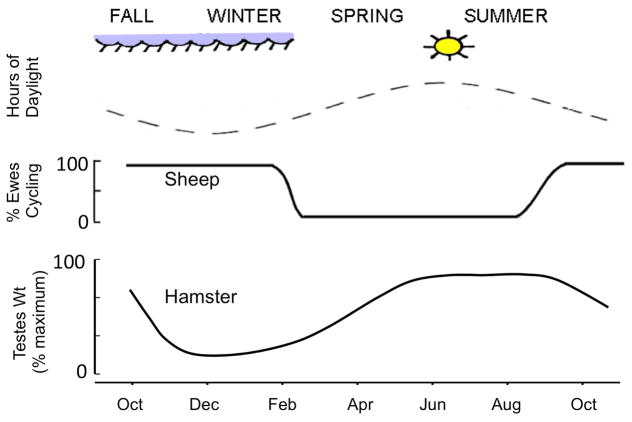
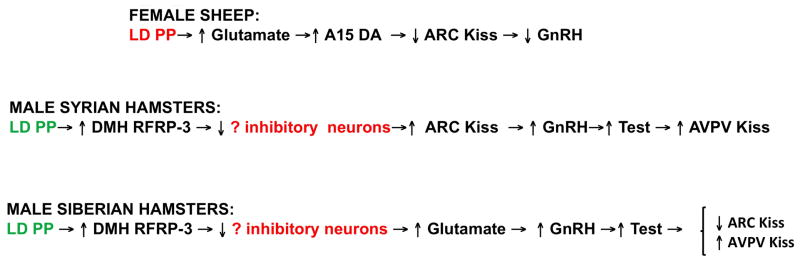
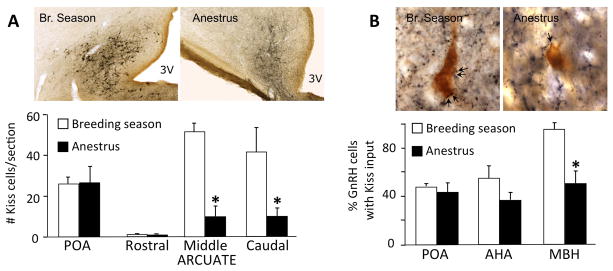
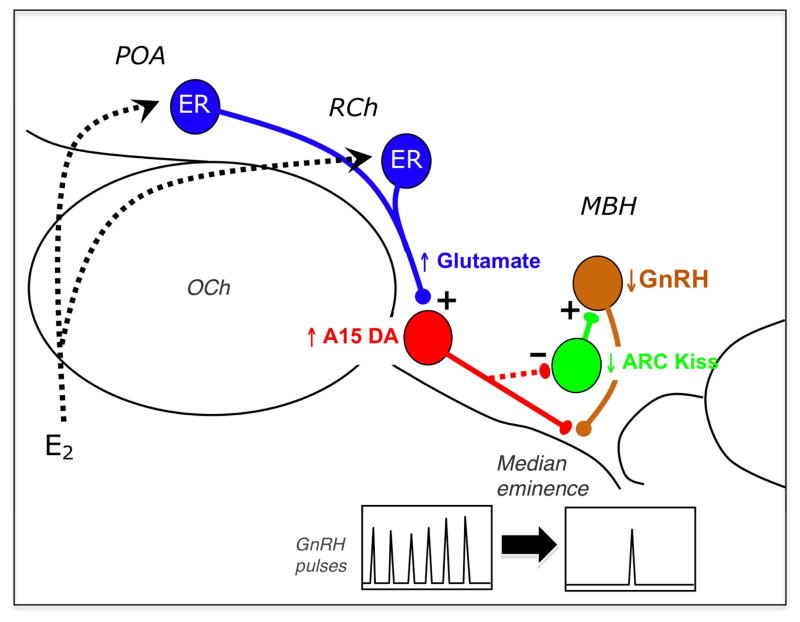
Seasonal reproduction is a common adaptive strategy among mammals that allows for breeding to occur at times of the year when it is most advantageous for the subsequent survival and growth of offspring. A major mechanism responsible for seasonal reproduction is a striking increase in the responsiveness of gonadotropin-releasing hormone (GnRH) neurons to the negative feedback effects of estradiol. The neural and neuroendocrine circuitry responsible for mammalian seasonal reproduction has been primarily studied in three animal models: the sheep, and two species of hamsters. In this review, we first describe the afferent signals, neural circuitry and transmitters/peptides responsible for seasonal reproductive transitions in sheep, and then compare these mechanisms with those derived from studies in hamsters. The results suggest common principles as well as differences in the role of specific brain nuclei and neuropeptides, including that of kisspeptin cells of the hypothalamic arcuate nucleus, in regulating seasonal reproduction among mammals.
季节性繁殖是哺乳动物中一种常见的适应性策略,它使得繁殖能够在一年中对后代随后的生存和生长最为有利的时期发生。导致季节性繁殖的一个主要机制是促性腺激素释放激素(GnRH)神经元对雌二醇负反馈作用的反应性显著增加。负责哺乳动物季节性繁殖的神经和神经内分泌回路主要在三种动物模型中进行了研究:绵羊以及两种仓鼠。在这篇综述中,我们首先描述负责绵羊季节性繁殖转变的传入信号、神经回路以及递质/肽类,然后将这些机制与仓鼠研究中得出的机制进行比较。结果表明,在调节哺乳动物季节性繁殖方面,存在共同的原理以及特定脑核团和神经肽(包括下丘脑弓状核的 kisspeptin 细胞)作用的差异。