Adams Rick A, Aponte Eduardo, Marshall Louise, Friston Karl J
The Wellcome Trust Centre for Neuroimaging, Institute of Neurology, University College London, 12 Queen Square, London WC1N 3BG, UK.
The Wellcome Trust Centre for Neuroimaging, Institute of Neurology, University College London, 12 Queen Square, London WC1N 3BG, UK; Translational Neuromodeling Unit (TNU), Institute for Biomedical Engineering, University of Zurich & ETH Zurich, Wilfriedstr. 6, 8032 Zurich, Switzerland.
J Neurosci Methods. 2015 Mar 15;242:1-14. doi: 10.1016/j.jneumeth.2015.01.003. Epub 2015 Jan 10.
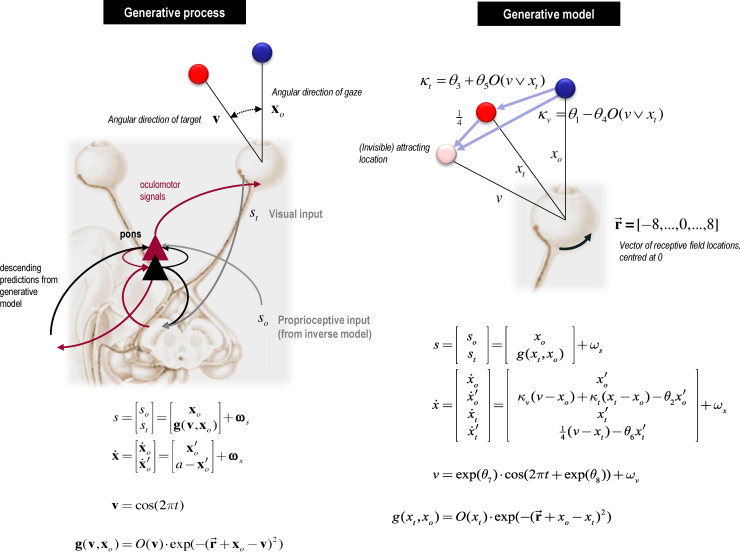
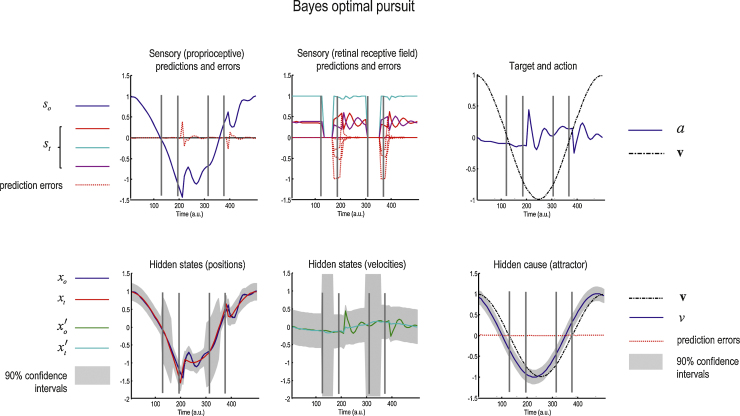
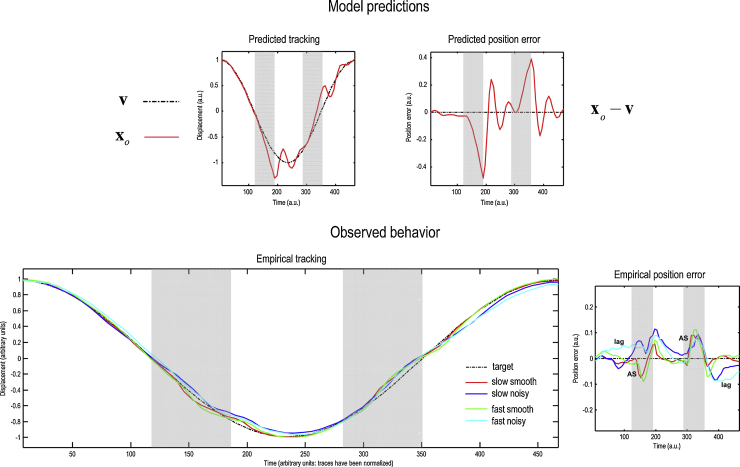
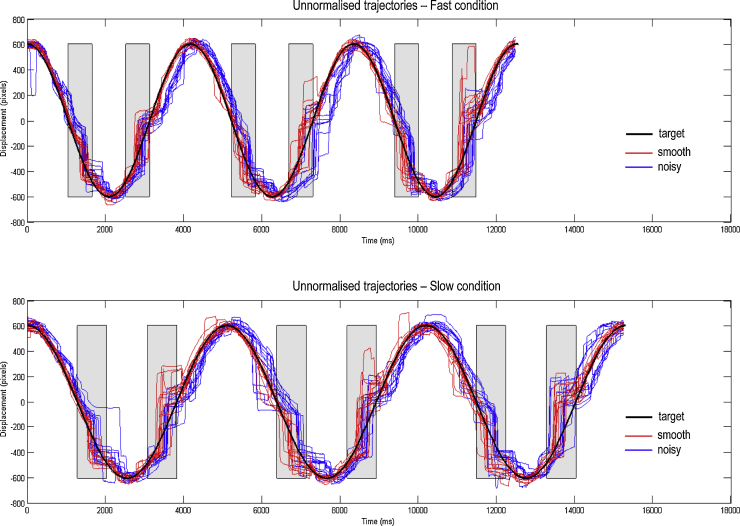
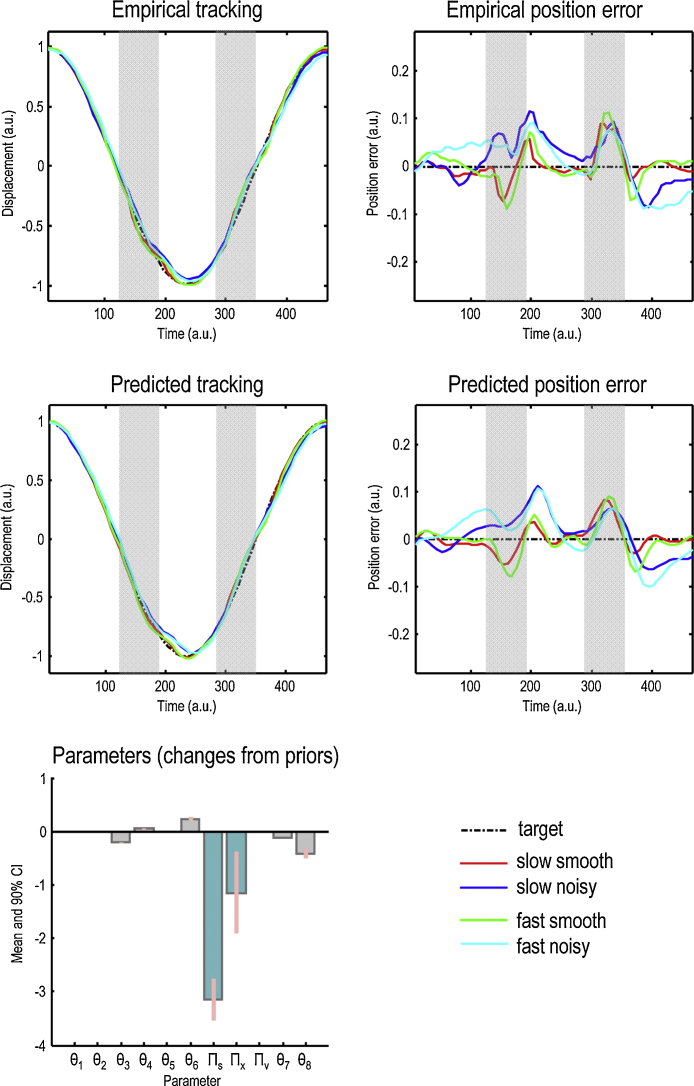
This paper introduces a new paradigm that allows one to quantify the Bayesian beliefs evidenced by subjects during oculomotor pursuit. Subjects' eye tracking responses to a partially occluded sinusoidal target were recorded non-invasively and averaged. These response averages were then analysed using dynamic causal modelling (DCM). In DCM, observed responses are modelled using biologically plausible generative or forward models - usually biophysical models of neuronal activity.
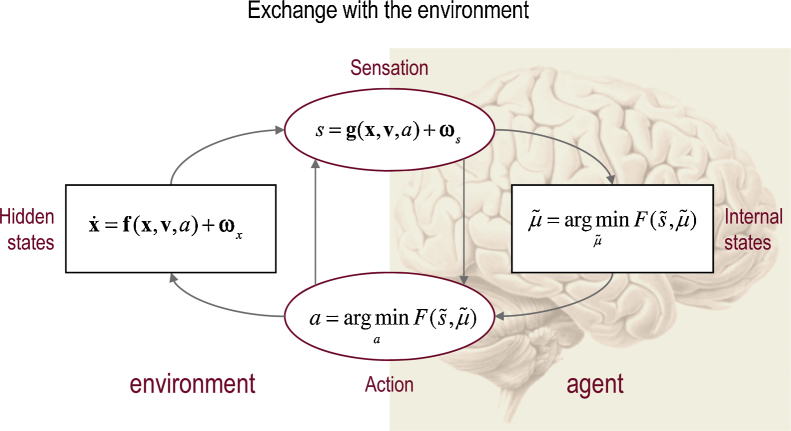
Our key innovation is to use a generative model based on a normative (Bayes-optimal) model of active inference to model oculomotor pursuit in terms of subjects' beliefs about how visual targets move and how their oculomotor system responds. Our aim here is to establish the face validity of the approach, by manipulating the content and precision of sensory information - and examining the ensuing changes in the subjects' implicit beliefs. These beliefs are inferred from their eye movements using the normative model.
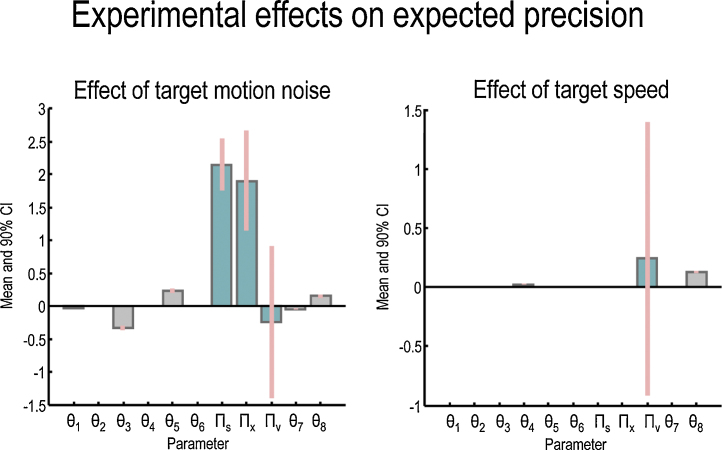
We show that on average, subjects respond to an increase in the 'noise' of target motion by increasing sensory precision in their models of the target trajectory. In other words, they attend more to the sensory attributes of a noisier stimulus. Conversely, subjects only change kinetic parameters in their model but not precision, in response to increased target speed.
Using this technique one can estimate the precisions of subjects' hierarchical Bayesian beliefs about target motion. We hope to apply this paradigm to subjects with schizophrenia, whose pursuit abnormalities may result from the abnormal encoding of precision.
本文介绍了一种新的范式,该范式能够量化受试者在眼球运动追踪过程中所表现出的贝叶斯信念。以非侵入性方式记录并平均了受试者对部分遮挡的正弦波目标的眼动追踪反应。然后使用动态因果模型(DCM)对这些反应平均值进行分析。在DCM中,使用具有生物学合理性的生成模型或前向模型(通常是神经元活动的生物物理模型)对观察到的反应进行建模。
我们的关键创新在于使用基于主动推理的规范(贝叶斯最优)模型的生成模型,根据受试者对视觉目标如何移动以及其眼动系统如何响应的信念,对眼球运动追踪进行建模。我们在此的目的是通过操纵感官信息的内容和精度,并检查受试者隐含信念随之发生的变化,来确立该方法的表面效度。这些信念是使用规范模型从他们的眼动中推断出来的。
我们表明,平均而言,受试者通过提高其目标轨迹模型中的感官精度来应对目标运动“噪声”的增加。换句话说,他们会更加关注噪声更大的刺激的感官属性。相反,受试者仅在响应目标速度增加时改变其模型中的动力学参数,而不改变精度。
使用这种技术可以估计受试者关于目标运动的分层贝叶斯信念的精度。我们希望将此范式应用于精神分裂症患者,他们的追踪异常可能源于精度的异常编码。