Papadimitriou Konstantinos, Anastasiou Rania, Maistrou Eleni, Plakas Thomas, Papandreou Nikos C, Hamodrakas Stavros J, Ferreira Stéphanie, Supply Philip, Renault Pierre, Pot Bruno, Tsakalidou Effie
Laboratory of Dairy Research, Department of Food Science and Human Nutrition, Agricultural University of Athens, Iera Odos 75, 118 55, Athens, Greece.
Laboratory of Dairy Research, Department of Food Science and Human Nutrition, Agricultural University of Athens, Iera Odos 75, 118 55, Athens, Greece; Department of Cell Biology and Biophysics, Faculty of Biology, University of Athens, Panepistimiopolis, 157 01, Athens, Greece.
PLoS One. 2015 Jan 13;10(1):e0116337. doi: 10.1371/journal.pone.0116337. eCollection 2015.
Streptococcus macedonicus is an intriguing streptococcal species whose most frequent source of isolation is fermented foods similarly to Streptococcus thermophilus. However, S. macedonicus is closely related to commensal opportunistic pathogens of the Streptococcus bovis/Streptococcus equinus complex.
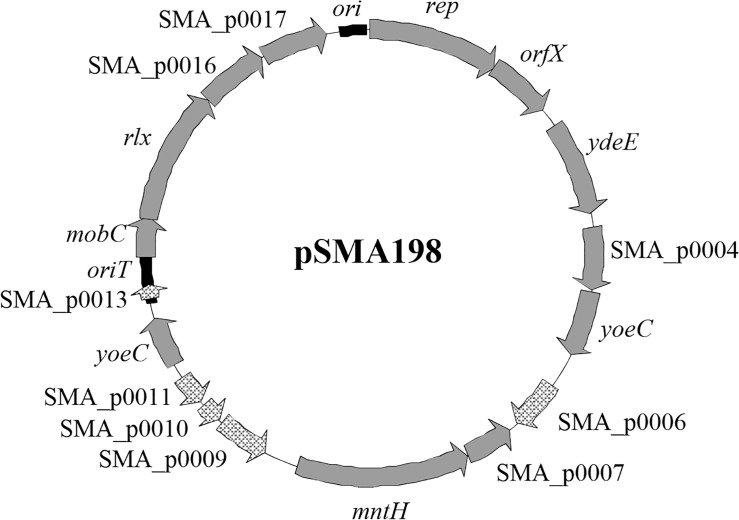
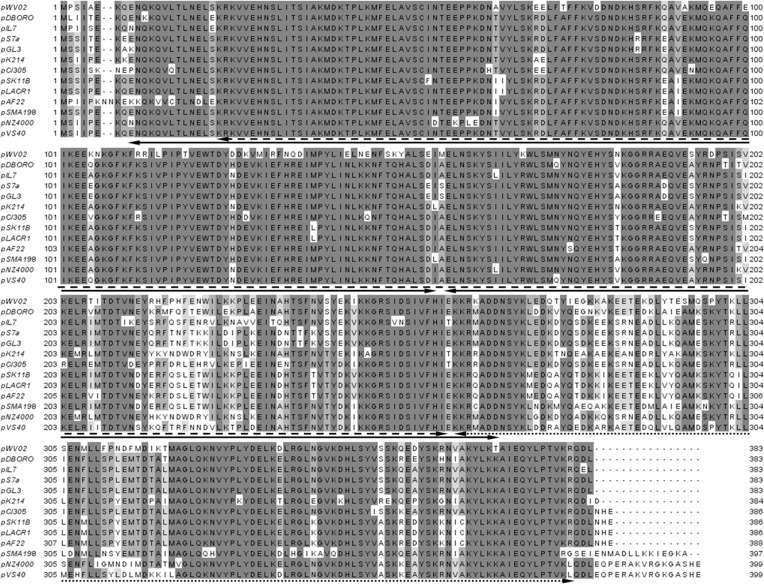
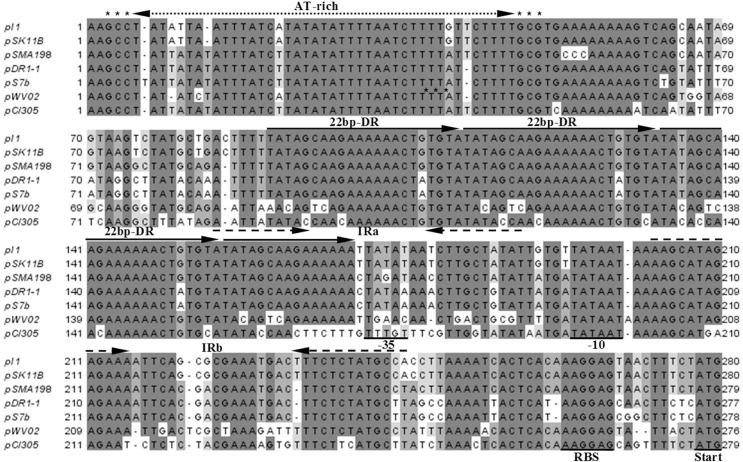
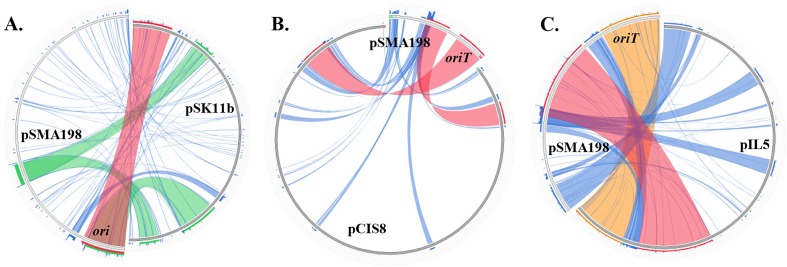
METHODOLOGY/PRINCIPAL FINDINGS: We analyzed the pSMA198 plasmid isolated from the dairy strain Streptococcus macedonicus ACA-DC 198 in order to provide novel clues about the main ecological niche of this bacterium. pSMA198 belongs to the narrow host range pCI305/pWV02 family found primarily in lactococci and to the best of our knowledge it is the first such plasmid to be reported in streptococci. Comparative analysis of the pSMA198 sequence revealed a high degree of similarity with plasmids isolated from Lactococcus lactis strains deriving from milk or its products. Phylogenetic analysis of the pSMA198 Rep showed that the vast majority of closely related proteins derive from lactococcal dairy isolates. Additionally, cloning of the pSMA198 ori in L. lactis revealed a 100% stability of replication over 100 generations. Both pSMA198 and the chromosome of S. macedonicus exhibit a high percentage of potential pseudogenes, indicating that they have co-evolved under the same gene decay processes. We identified chromosomal regions in S. macedonicus that may have originated from pSMA198, also supporting a long co-existence of the two replicons. pSMA198 was also found in divergent biotypes of S. macedonicus and in strains isolated from dispersed geographic locations (e.g. Greece and Switzerland) showing that pSMA198's acquisition is not a recent event.
CONCLUSIONS/SIGNIFICANCE: Here we propose that S. macedonicus acquired plasmid pSMA198 from L. lactis via an ancestral genetic exchange event that took place most probably in milk or dairy products. We provide important evidence that point towards the dairy origin of this species.
马其顿链球菌是一种有趣的链球菌,与嗜热链球菌类似,其最常见的分离来源是发酵食品。然而,马其顿链球菌与牛链球菌/马链球菌复合体的共生机会致病菌密切相关。
方法/主要发现:我们分析了从乳制品菌株马其顿链球菌ACA-DC 198中分离出的pSMA198质粒,以便为该细菌的主要生态位提供新线索。pSMA198属于主要在乳球菌中发现的窄宿主范围pCI305/pWV02家族,据我们所知,它是首次在链球菌中报道的此类质粒。pSMA198序列的比较分析显示,它与从牛奶或其产品中分离出的乳酸乳球菌菌株的质粒具有高度相似性。pSMA198 Rep的系统发育分析表明,绝大多数密切相关的蛋白质来自乳球菌乳制品分离株。此外,将pSMA198 ori克隆到乳酸乳球菌中显示,在100代以上的时间里复制稳定性为100%。pSMA198和马其顿链球菌的染色体都显示出高比例的潜在假基因,表明它们在相同的基因衰变过程中共同进化。我们在马其顿链球菌中鉴定出可能起源于pSMA198的染色体区域,这也支持了这两个复制子的长期共存。在马其顿链球菌的不同生物型以及从分散地理位置(如希腊和瑞士)分离出的菌株中也发现了pSMA198,这表明pSMA198的获得并非近期事件。
结论/意义:在此我们提出,马其顿链球菌通过一次最有可能发生在牛奶或乳制品中的祖先基因交换事件从乳酸乳球菌获得了质粒pSMA198。我们提供了重要证据,表明该物种起源于乳制品。