Asadpour Elham, Sadeghnia Hamid Reza, Ghorbani Ahmad, Boroushaki Mohammad Taher
Department of Pharmacology, Faculty of Medicine, Mashhad University of Medical Sciences, Mashhad, Iran.
Department of Pharmacology, Faculty of Medicine, Mashhad University of Medical Sciences, Mashhad, Iran. ; Neurocognitive Research Center, Faculty of Medicine, Mashhad University of Medical Sciences, Mashhad, Iran.
Iran J Pharm Res. 2014 Fall;13(4):1141-8.
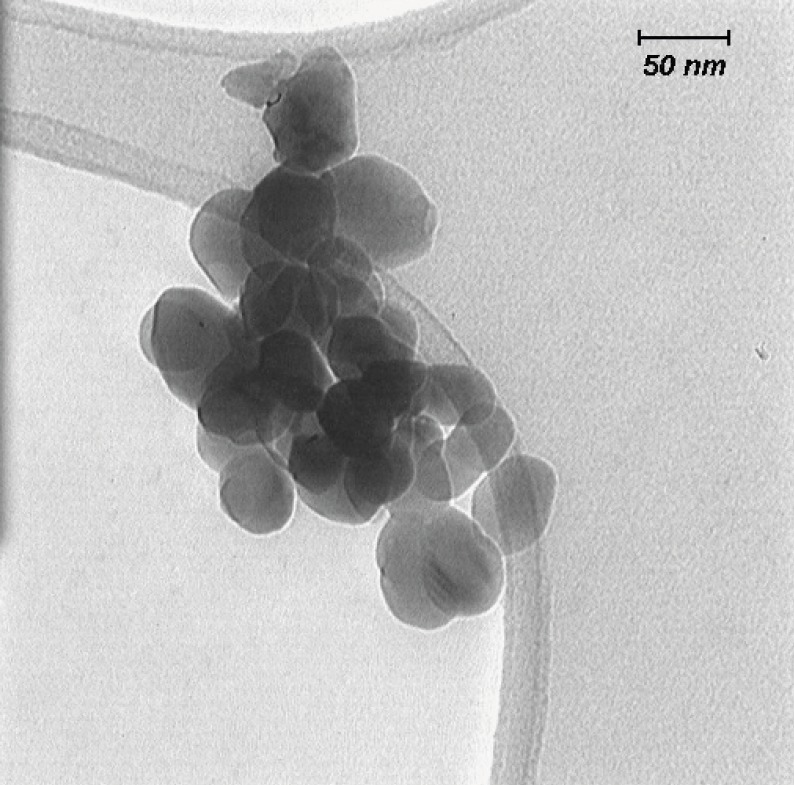
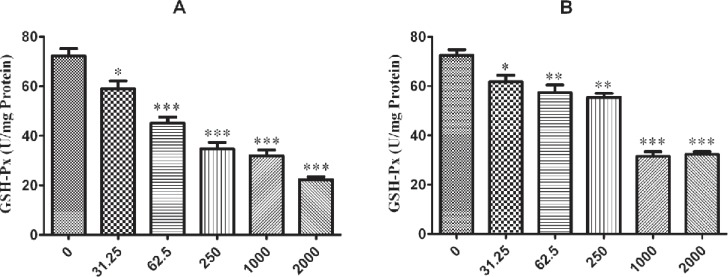
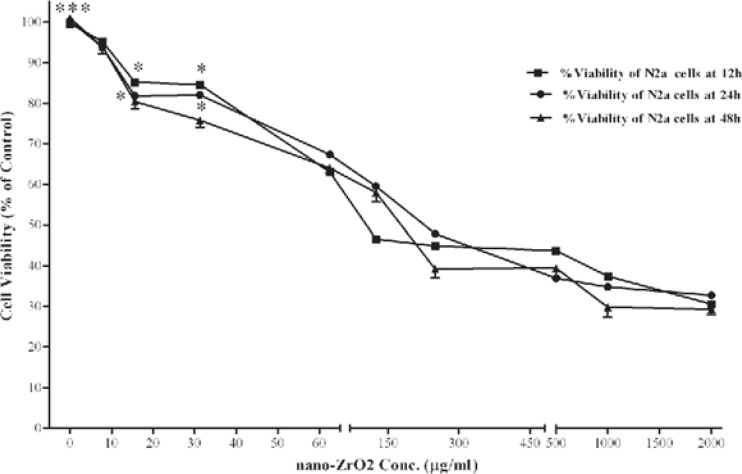
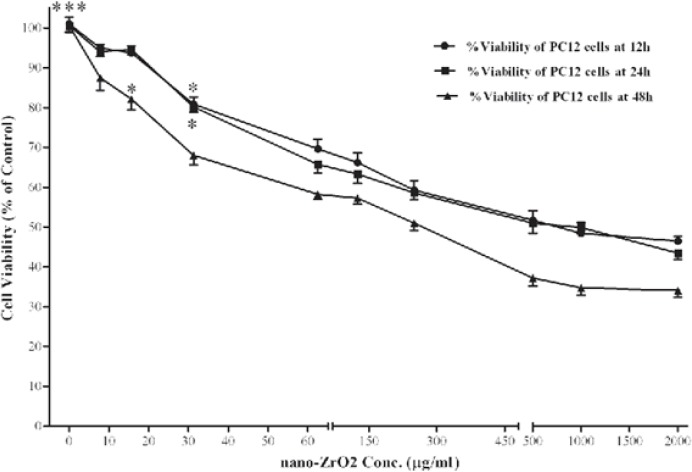
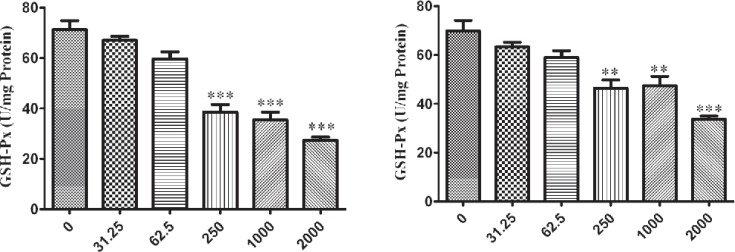
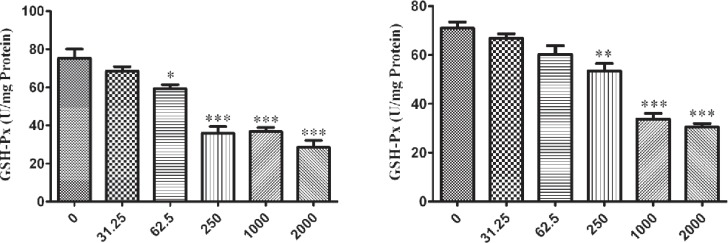
Today, special attention is paid to the use of zirconium dioxide nanoparticle (nano-ZrO2), a neutral bioceramic metal, particularly for drug and gene delivery in medicine. However, there are some reports implying that use of nano-ZrO2 is associated with cytotoxic effects like inhibiting the cell proliferation, DNA damage and apoptosis. In the present study, we examined whether nano-ZrO2 alters cell viability and glutathione peroxidase (GPx) activity in two neuronal cell lines. The PC12 and N2a cells were cultured in the absence or presence of varying concentrations (31.25-2000 µg/mL) of nano-ZrO2 for 12, 24 or 48 h. The cell viability was evaluated using 3-(4,5-dimethylthiazol-2-yl)-5-(3-carboxymethoxyphenyl)-2-(4-sulfophenyl)-2H-tetrazolium (MTS) assay and GPx activity was determined by quantifying the rate of oxidation of the reduced glutathione to the oxidized glutathione. Nano-ZrO2 caused a significant reduction in cell viability and GPx activity after 12, 24 and 48 h, as compared with control group. These effects were concentration dependent and started from 250 µg/mL. The present study demonstrated that nano-ZrO2, at concentrations of > 250 µg/mL, has antiproliferative effects via reducing the cell defense mechanism against oxidative stress.
如今,二氧化锆纳米颗粒(纳米ZrO₂)这种中性生物陶瓷金属的应用受到了特别关注,尤其是在医学领域用于药物和基因递送。然而,有一些报道暗示,纳米ZrO₂的使用与细胞毒性效应有关,如抑制细胞增殖、DNA损伤和细胞凋亡。在本研究中,我们检测了纳米ZrO₂是否会改变两种神经元细胞系的细胞活力和谷胱甘肽过氧化物酶(GPx)活性。将PC12和N2a细胞在不存在或存在不同浓度(31.25 - 2000 µg/mL)的纳米ZrO₂的情况下培养12、24或48小时。使用3 -(4,5 - 二甲基噻唑 - 2 - 基)- 5 -(3 - 羧甲氧基苯基)- 2 -(4 - 磺基苯基)- 2H - 四唑(MTS)测定法评估细胞活力,并通过量化还原型谷胱甘肽氧化为氧化型谷胱甘肽的速率来测定GPx活性。与对照组相比,纳米ZrO₂在12、24和48小时后导致细胞活力和GPx活性显著降低。这些效应呈浓度依赖性,从250 µg/mL开始。本研究表明,浓度> 250 µg/mL的纳米ZrO₂通过降低细胞对氧化应激的防御机制具有抗增殖作用。