Kwak Ju Yeon, Ham Hyun Joo, Kim Cheol Min, Hwang Eun Seong
Department of Life Science, University of Seoul, Seoul 130-743, Korea.
Biochemistry, Pusan National University Medical College, Busan 602-739, Korea.
Mol Cells. 2015 Mar;38(3):229-35. doi: 10.14348/molcells.2015.2253. Epub 2015 Jan 19.
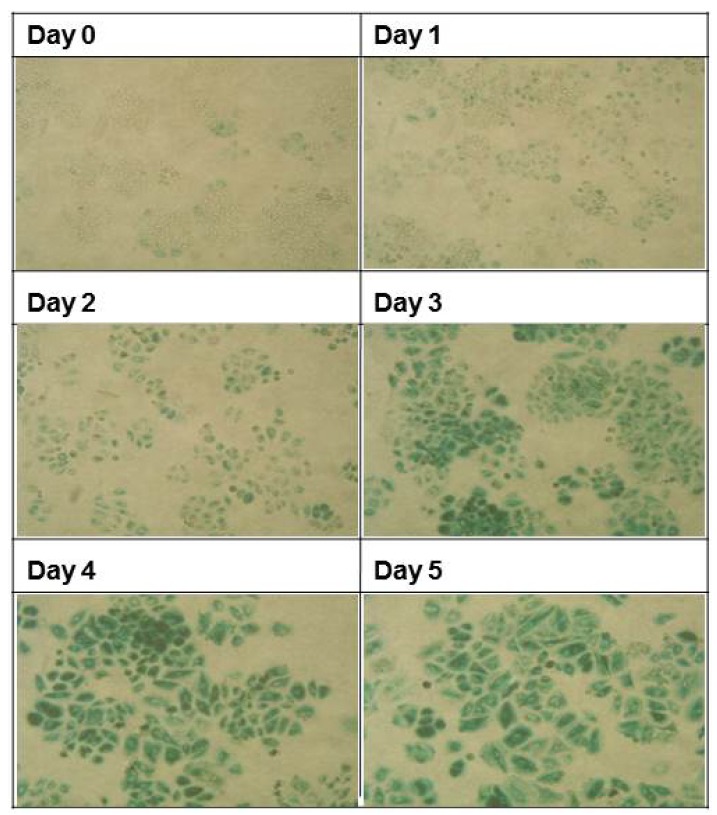
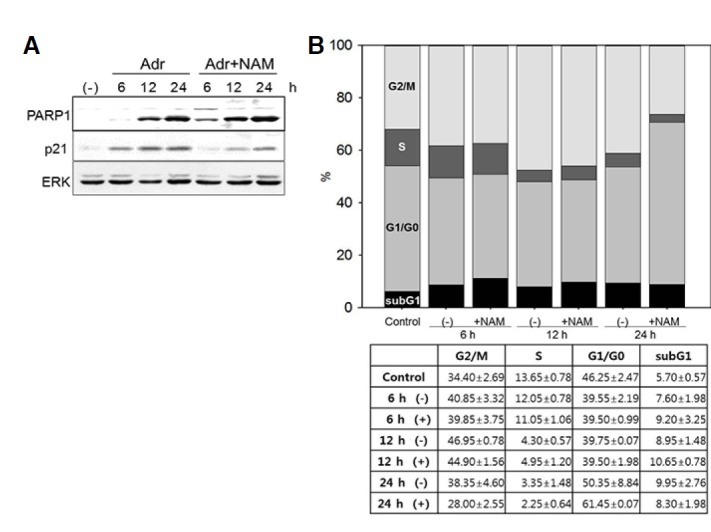
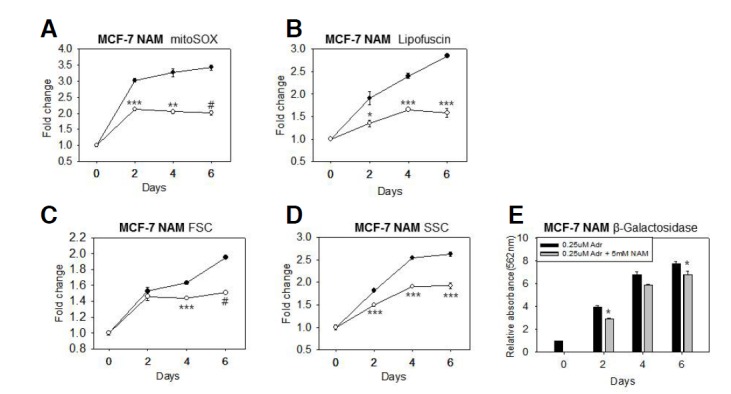
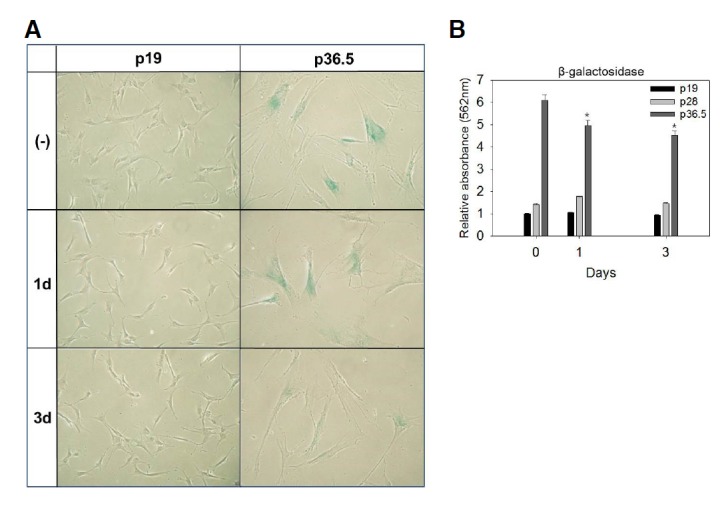
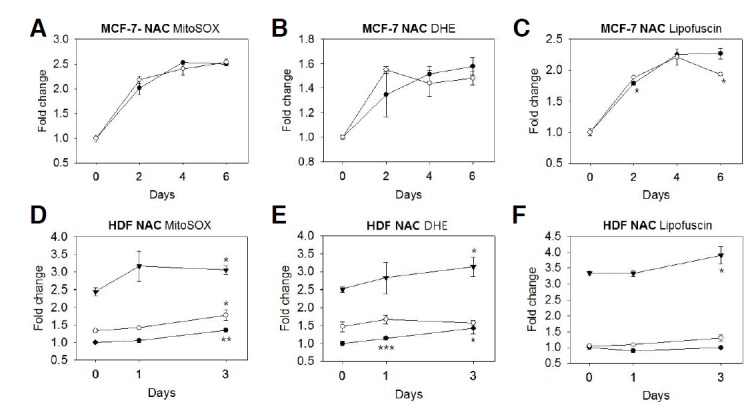
Nicotinamide (NAM) has been shown to suppress reactive oxygen species (ROS) production in primary human fibroblasts, thereby extending their replicative lifespan when added to the medium during long-term cultivation. Based on this finding, NAM is hypothesized to affect cellular senescence progression by keeping ROS accumulation low. In the current study, we asked whether NAM is indeed able to reduce ROS levels and senescence phenotypes in cells undergoing senescence progression and those already in senescence. We employed two different cellular models: MCF-7 cells undergoing senescence progression and human fibroblasts in a state of replicative senescence. In both models, NAM treatment substantially decreased ROS levels. In addition, NAM attenuated the expression of the assessed senescence phenotypes, excluding irreversible growth arrest. N-acetyl cysteine, a potent ROS scavenger, did not have comparable effects in the tested cell types. These data show that NAM has potent antioxidative as well as anti-senescent effects. Moreover, these findings suggest that NAM can reduce cellular deterioration caused by oxidative damage in postmitotic cells in vivo.
烟酰胺(NAM)已被证明可抑制原代人成纤维细胞中活性氧(ROS)的产生,因此在长期培养过程中添加到培养基中时可延长其复制寿命。基于这一发现,推测NAM通过保持低水平的ROS积累来影响细胞衰老进程。在本研究中,我们探究了NAM是否真的能够降低正在经历衰老进程的细胞以及已经处于衰老状态的细胞中的ROS水平和衰老表型。我们采用了两种不同的细胞模型:正在经历衰老进程的MCF-7细胞和处于复制性衰老状态的人成纤维细胞。在这两种模型中,NAM处理均显著降低了ROS水平。此外,NAM减弱了所评估的衰老表型的表达,但不包括不可逆的生长停滞。N-乙酰半胱氨酸,一种有效的ROS清除剂,在测试的细胞类型中没有类似的作用。这些数据表明NAM具有强大的抗氧化和抗衰老作用。此外,这些发现表明NAM可以减少体内有丝分裂后细胞中由氧化损伤引起的细胞退化。