Kretowski Adam, Adamska Edyta, Maliszewska Katarzyna, Wawrusiewicz-Kurylonek Natalia, Citko Anna, Goscik Joanna, Bauer Witold, Wilk Juliusz, Golonko Anna, Waszczeniuk Magdalena, Lipinska Danuta, Hryniewicka Justyna, Niemira Magdalena, Paczkowska Magdalena, Ciborowski Michal, Gorska Maria
Department of Endocrinology, Diabetology and Internal Medicine, Medical University of Bialystok, M.C. Sklodowskiej-Curie 24A, 15-276 Bialystok, Poland.
Clinical Research Centre, Medical University of Bialystok, Bialystok, Poland.
Genes Nutr. 2015 Mar;10(2):4. doi: 10.1007/s12263-015-0454-6. Epub 2015 Jan 20.
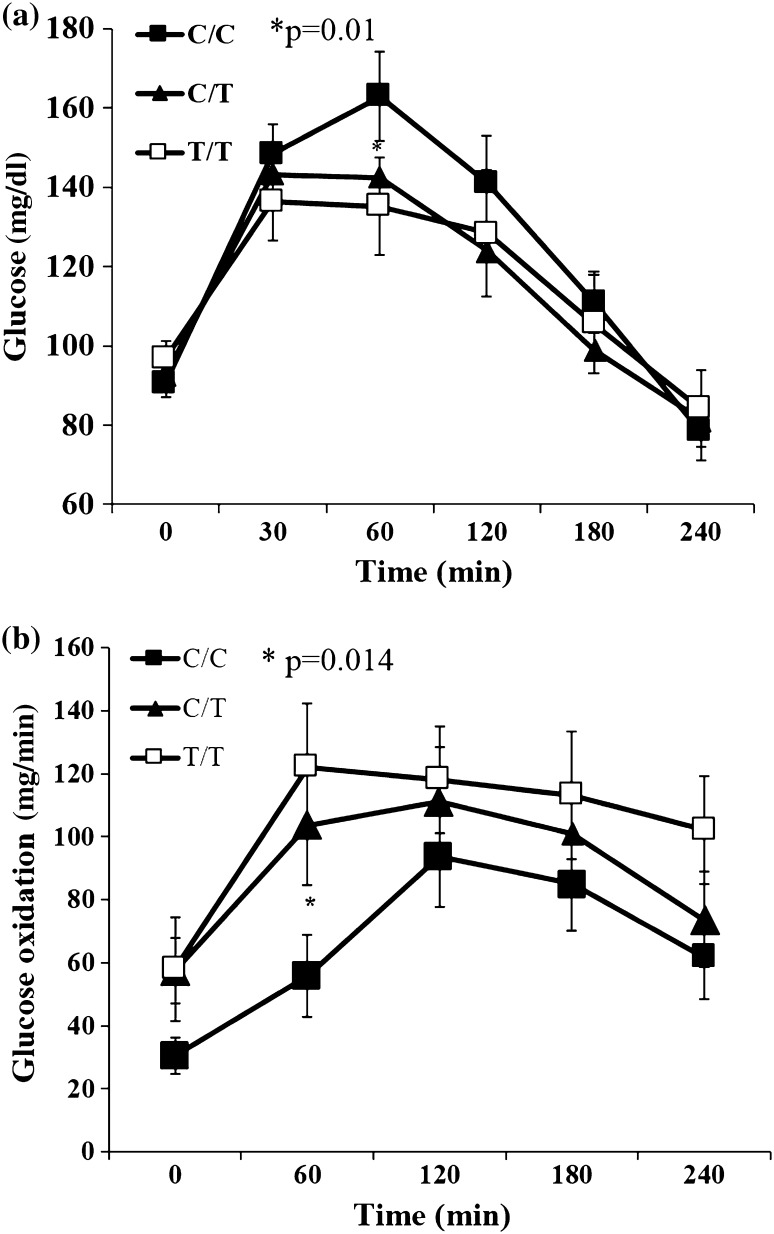
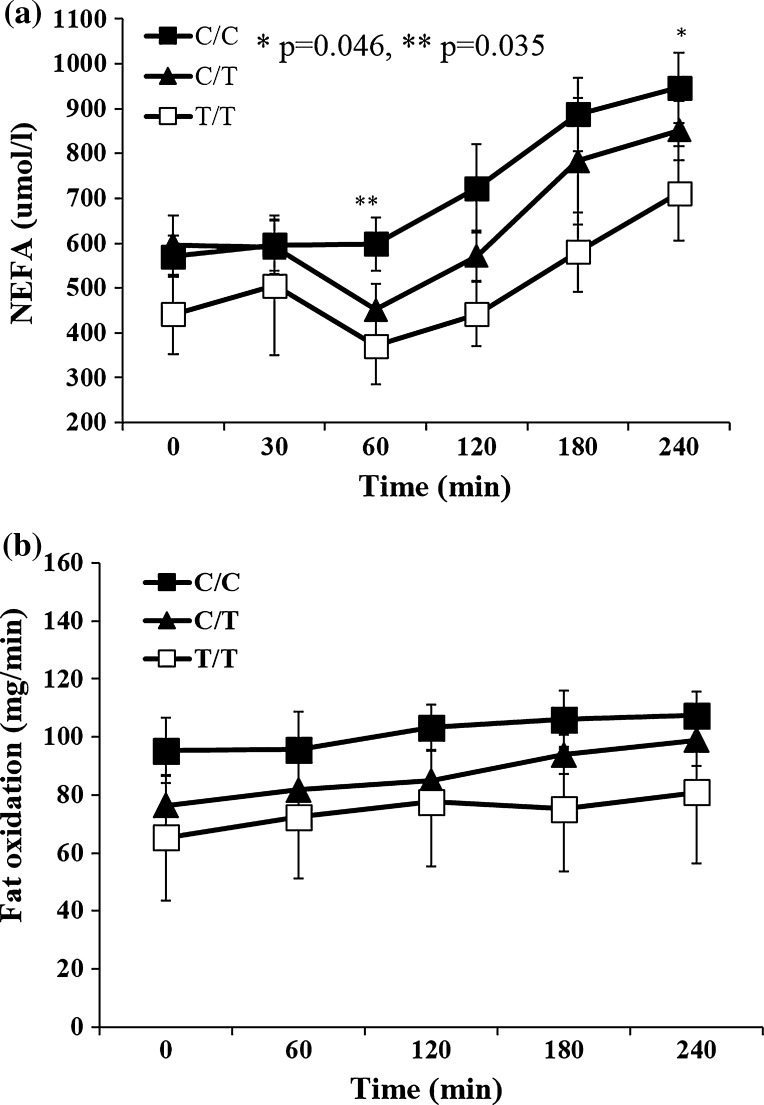
Large-scale meta-analyses of genome-wide association studies have recently confirmed that the rs340874 single-nucleotide polymorphism in PROX1 gene is associated with fasting glycemia and type 2 diabetes mellitus; however, the mechanism of this link was not well established. The aim of our study was to evaluate the functional/phenotypic differences related to rs340874 PROX1 variants. The study group comprised 945 subjects of Polish origin (including 634 with BMI > 25) without previously known dysglycemia. We analyzed behavioral patterns (diet, physical activity), body fat distribution and glucose/fat metabolism after standardized meals and during the oral glucose tolerance test. We found that the carriers of the rs340874 PROX1 CC genotype had higher nonesterified fatty acids levels after high-fat meal (p = 0.035) and lower glucose oxidation (p = 0.014) after high-carbohydrate meal in comparison with subjects with other PROX1 genotypes. Moreover, in subjects with CC variant, we found higher accumulation of visceral fat (p < 0.02), but surprisingly lower daily food consumption (p < 0.001). We hypothesize that lipid metabolism alterations in subjects with the PROX1 CC genotype may be a primary cause of higher glucose levels after glucose load, since the fatty acids can inhibit insulin-stimulated glucose uptake by decreasing carbohydrate oxidation. Our observations suggest that the PROX1 variants have pleiotropic effect on disease pathways and it seem to be a very interesting goal of research on prevention of obesity and type 2 diabetes mellitus. The study may help to understand the mechanisms of visceral obesity and type 2 diabetes mellitus risk development.
全基因组关联研究的大规模荟萃分析最近证实,PROX1基因中的rs340874单核苷酸多态性与空腹血糖和2型糖尿病相关;然而,这种关联的机制尚未完全明确。我们研究的目的是评估与rs340874 PROX1变体相关的功能/表型差异。研究组包括945名波兰裔受试者(其中634人体重指数>25),这些受试者之前没有已知的血糖异常。我们分析了标准化餐后和口服葡萄糖耐量试验期间的行为模式(饮食、身体活动)、体脂分布以及葡萄糖/脂肪代谢。我们发现,与其他PROX1基因型的受试者相比,rs340874 PROX1 CC基因型的携带者在高脂餐后非酯化脂肪酸水平较高(p = 0.035),在高碳水化合物餐后葡萄糖氧化较低(p = 0.014)。此外,在携带CC变体的受试者中,我们发现内脏脂肪积累较多(p < 0.02),但令人惊讶的是每日食物摄入量较低(p < 0.001)。我们推测,PROX1 CC基因型受试者的脂质代谢改变可能是葡萄糖负荷后血糖水平升高的主要原因,因为脂肪酸可通过减少碳水化合物氧化来抑制胰岛素刺激的葡萄糖摄取。我们的观察结果表明,PROX1变体对疾病途径具有多效性影响,这似乎是预防肥胖和2型糖尿病研究中一个非常有趣的目标。该研究可能有助于理解内脏肥胖和2型糖尿病风险发展的机制。