Müller Michaela
Department of Gastroenterology, German Diagnostic Clinic Helios Clinic Wiesbaden, Wiesbaden, Germany.
Ann Gastroenterol. 2015 Jan-Mar;28(1):3-9.
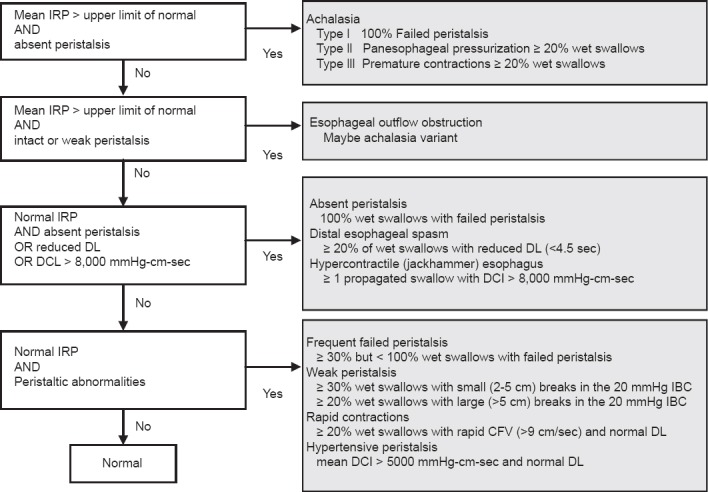
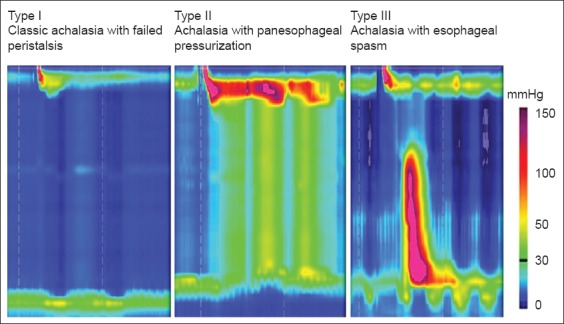
Achalasia is a primary neurodegenerative disorder of the esophagus characterized by loss of function of the lower esophageal sphincter (LES) and of esophageal peristalsis, which causes symptoms such as dysphagia, regurgitation, weight loss, and chest pain. Esophageal manometry is the gold standard for the diagnosis of achalasia. The typical manometric features are incomplete relaxation of a frequently hypertensive LES and lack of peristalsis in the tubular esophagus. High-resolution manometry using catheters with 36 solid-state sensors spaced 1cm apart has more and more replaced water-perfused and pull-through manometry. However, the main innovation of this method is the conversion of pressure data into a topographical plot. The data can be modified using interpolation to generate high-resolution esophageal pressure topography (HREPT). HREPT is more sensitive, provides more detailed information, and is easier to perform than conventional manometry. Introduction of HREPT had an impact especially on the diagnosis and management of achalasia. A clinically relevant impact was achieved by the identification of 3 clinical subtypes which seem to predict treatment outcomes. This review analyzes the progress made in the diagnosis and management of achalasia since the recent introduction of HREPT.
贲门失弛缓症是一种原发性食管神经退行性疾病,其特征为食管下括约肌(LES)功能丧失以及食管蠕动功能丧失,可导致吞咽困难、反流、体重减轻和胸痛等症状。食管测压是诊断贲门失弛缓症的金标准。典型的测压特征是常为高压的LES不完全松弛以及管状食管缺乏蠕动。使用间隔1厘米的36个固态传感器的导管进行的高分辨率测压已越来越多地取代了水灌注测压和牵拉式测压。然而,该方法的主要创新在于将压力数据转换为地形图。数据可通过插值进行修改,以生成高分辨率食管压力地形图(HREPT)。HREPT比传统测压更敏感,能提供更详细的信息,且操作更简便。HREPT的引入尤其对贲门失弛缓症的诊断和管理产生了影响。通过识别3种似乎可预测治疗结果的临床亚型,取得了临床相关影响。本综述分析了自近期引入HREPT以来贲门失弛缓症诊断和管理方面取得的进展。