Xu Xiao, Liu Zhikun, Zhou Lin, Xie Haiyang, Cheng Jun, Ling Qi, Wang Jianguo, Guo Haijun, Wei Xuyong, Zheng Shusen
Division of Hepatobiliary and Pancreatic Surgery, Department of Surgery, First Affiliated Hospital, Zhejiang University School of Medicine, 79 QingChun Road, HangZhou, China.
Key Lab of Combined Multi-Organ Transplantation, Ministry of Public Health, First Affiliated Hospital, Zhejiang University School of Medicine, HangZhou, China.
J Exp Clin Cancer Res. 2015 Jan 22;34(1):6. doi: 10.1186/s13046-015-0121-1.
Transcription factor CP2 (TFCP2) is overexpressed in hepatocellular carcinoma(HCC) and correlated with the progression of the disease. Here we report the use of an integrated systems biology approach to identify genome-wide scale map of TFCP2 targets as well as the molecular function and pathways regulated by TFCP2 in HCC.
We combined Chromatin immunoprecipitation (ChIP) on chip along with gene expression microarrays to study global transcriptional regulation of TFCP2 in HCC. The biological functions, molecular pathways, and networks associated with TFCP2 were identified using computational approaches. Validation of selected target gene expression and direct binding of TFCP2 to promoters were performed by ChIP -PCR and promoter reporter.
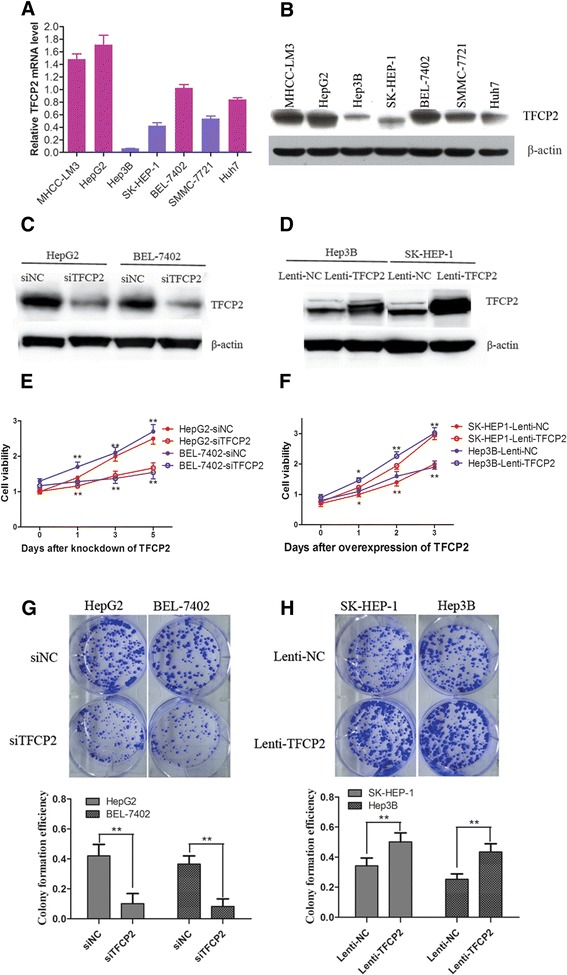
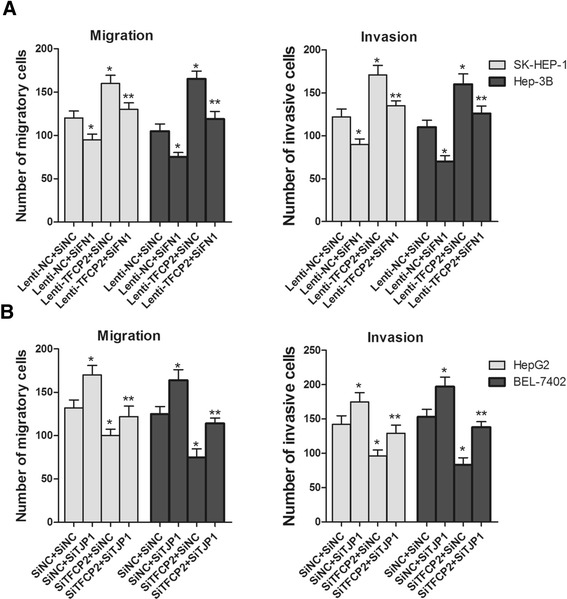
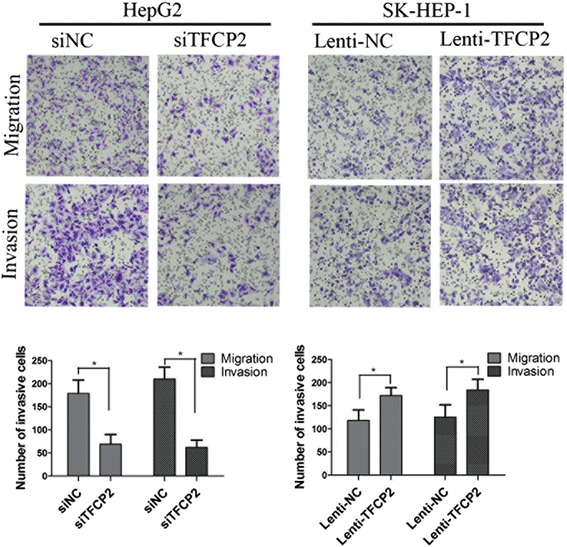
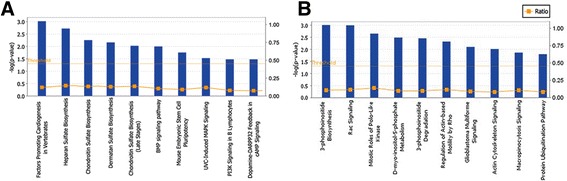
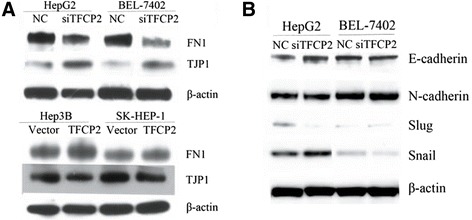
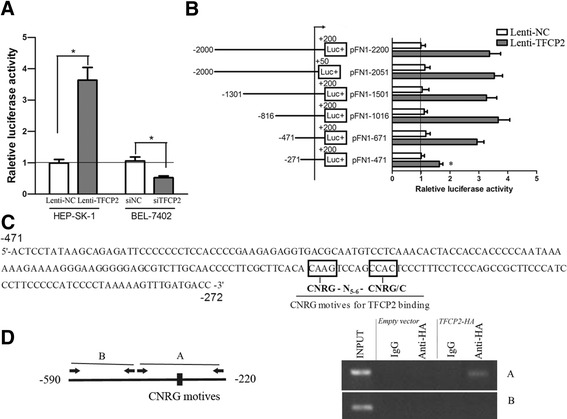
TFCP2 fostered a highly aggressive and metastatic phenotype in different HCC cells. Transcriptome analysis showed that alteration of TFCP2 in HCC cells led to change of genes in biological functions involved in cancer, cellular growth and proliferation, angiogenesis, cell movement and attachment. Pathways related to cell movement and cancer progression were also enriched. A quest for TFCP2-regulated factors contributing to metastasis, by integration of transcriptome and ChIP on chip assay, identified fibronectin 1 (FN1) and tight junction protein 1 (TJP1) as targets of TFCP2, and as key mediators of HCC metastasis. Promoter reporter identified the TFCP2-responsive region, and located the motifs of TFCP2-binding sites in the FN1 promoter, which then was confirmed by ChIP-PCR. We further showed that FN1 inhibition blocks the TFCP2-induced increase in HCC cell aggression, and that overexpression of TFCP2 can rescue the effects of FN1 inhibition. Knock down of TJP1 could also rescue, at least in part, the aggressive effect of TFCP2 knockdown in HCC cells.
The identification of global targets, molecular pathways and networks associated with TFCP2, together with the discovery of the effect of TFCP2 on FN1 and TJP1 that are involved in metastasis, adds to our understanding of the mechanisms that determine a highly aggressive and metastatic phenotype in hepatocarcinogenesis.
转录因子CP2(TFCP2)在肝细胞癌(HCC)中过表达,并与疾病进展相关。在此,我们报告使用综合系统生物学方法来识别TFCP2靶标的全基因组规模图谱,以及TFCP2在HCC中调节的分子功能和信号通路。
我们将染色质免疫沉淀芯片(ChIP)与基因表达微阵列相结合,以研究HCC中TFCP2的全局转录调控。使用计算方法鉴定与TFCP2相关的生物学功能、分子信号通路和网络。通过ChIP-PCR和启动子报告基因对选定靶基因表达及TFCP2与启动子的直接结合进行验证。
TFCP2在不同的HCC细胞中促成高度侵袭性和转移性表型。转录组分析表明,HCC细胞中TFCP2的改变导致参与癌症、细胞生长和增殖、血管生成、细胞运动和黏附的生物学功能相关基因发生变化。与细胞运动和癌症进展相关的信号通路也得到富集。通过整合转录组和芯片ChIP分析,寻找促成转移的TFCP2调节因子,确定纤连蛋白1(FN1)和紧密连接蛋白1(TJP1)为TFCP2的靶标,以及HCC转移的关键介质。启动子报告基因鉴定了TFCP2反应区域,并在FN1启动子中定位了TFCP2结合位点的基序,随后通过ChIP-PCR得以证实。我们进一步表明,抑制FN1可阻断TFCP2诱导的HCC细胞侵袭增加,并且TFCP2的过表达可挽救FN1抑制的作用。敲低TJP1也可至少部分挽救HCC细胞中TFCP2敲低的侵袭作用。
与TFCP2相关的全局靶标、分子信号通路和网络的鉴定,以及TFCP2对参与转移的FN1和TJP1的影响的发现,加深了我们对肝癌发生过程中决定高度侵袭性和转移性表型机制的理解。