Cinato Mathieu, Kang Ryeonshi, Kramar Solomiia, Savchenko Lesia, Pizzinat Nathalie, Swiader Audrey, Kel Alexander, Kalmykov Aleksandr, Stelmashenko Daria, Martinelli Ilenia, Roncalli Jerome, Laborde Charlotte, Kunduzova Oksana
National Institute of Health and Medical Research (INSERM) U1297-University of Toulouse, 31432 Toulouse Cedex 4, France.
Department of Molecular and Clinical Medicine/Wallenberg Laboratory, Institute of Medicine, Sahlgrenska Academy at University of Gothenburg and Sahlgrenska University Hospital, Gothenburg, Sweden.
Sci Adv. 2025 Aug 15;11(33):eadx0968. doi: 10.1126/sciadv.adx0968. Epub 2025 Aug 13.
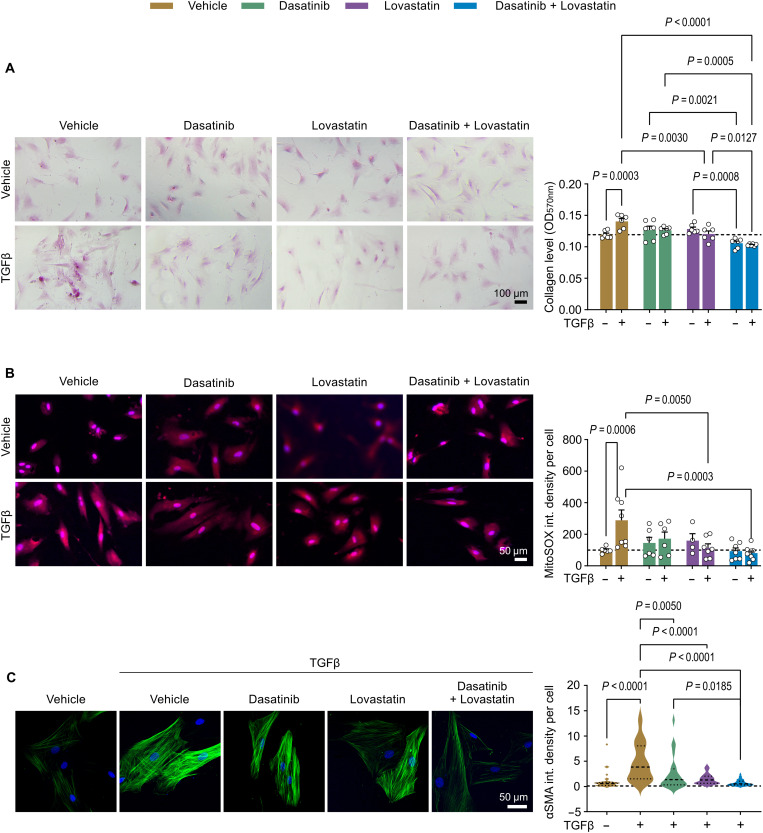
Aberrant activation of fibroblasts is a pivotal component of cardiac fibrosis predisposing to heart failure. However, the molecular regulation of the functional state of cardiac fibroblasts in fibrosis resolution remains largely unexplored, and therefore, effective antifibrosis therapies are still lacking. By translating mouse transcriptomics to humans, we unlocked common molecular denominators connecting the fibroblast phenotypic state and fibrogenic signaling pathways in cardiac fibrosis. Through the construction of a fibroblast-specific transcriptional gene regulatory network, we found ITGAL and DUSP9 as key druggable targets for human myocardial fibrosis. A computational drug repurposing approach predicted 367 antifibrotic candidate compounds for heart disease. In primary cardiac fibroblasts derived from patients with heart failure, we provided experimental validation of the top 2-ranked repositioned drug candidates and their combination. These innovative approaches facilitate the identification of potential targets and drug candidates for cardiac fibrosis, providing actionable opportunities for clinical translation.
成纤维细胞的异常激活是导致心力衰竭的心脏纤维化的关键组成部分。然而,在纤维化消退过程中心脏成纤维细胞功能状态的分子调控在很大程度上仍未被探索,因此,仍然缺乏有效的抗纤维化治疗方法。通过将小鼠转录组学转化为人类研究,我们揭示了连接心脏纤维化中 成纤维细胞表型状态和纤维化信号通路的共同分子特征。通过构建成纤维细胞特异性转录基因调控网络,我们发现整合素αL(ITGAL)和双特异性磷酸酶 9(DUSP9)是人类心肌纤维化的关键可药物靶向。一种计算药物重新利用方法预测了 367 种用于心脏病的抗纤维化候选化合物。在源自心力衰竭患者的原代心脏成纤维细胞中,我们对排名前两位的重新定位药物候选物及其组合进行了实验验证。这些创新方法有助于识别心脏纤维化的潜在靶点和药物候选物,为临床转化提供可行的机会。