Mweya Clement N, Kimera Sharadhuli I, Mellau Lesakit S B, Mboera Leonard E G
Tukuyu Research Centre, National Institute for Medical Research, Tukuyu, Tanzania; Department of Veterinary Medicine and Public Health, Sokoine University of Agriculture, Morogoro, Tanzania;
Department of Veterinary Medicine and Public Health, Sokoine University of Agriculture, Morogoro, Tanzania.
Glob Health Action. 2015 Jan 21;8:25929. doi: 10.3402/gha.v8.25929. eCollection 2015.
Rift Valley fever (RVF) is a mosquito-borne viral zoonosis that primarily affects ruminants but also has the capacity to infect humans.
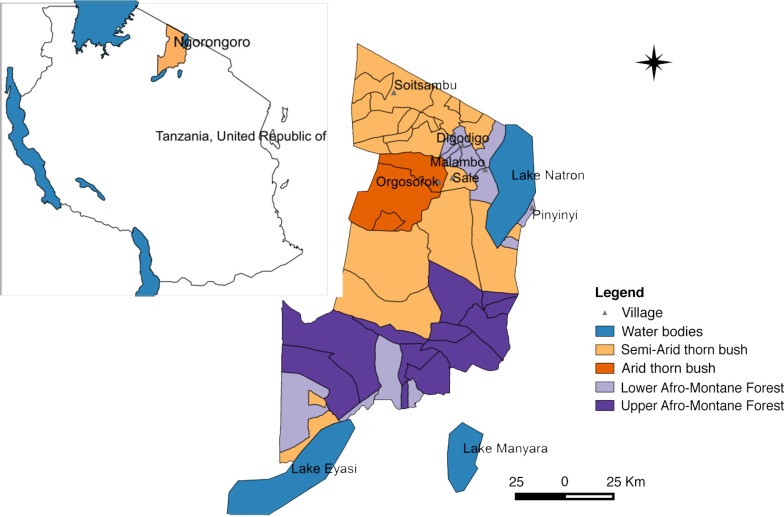
To determine the abundance and distribution of mosquito vectors in relation to their potential role in the virus transmission and maintenance in disease epidemic areas of Ngorongoro district in northern Tanzania.
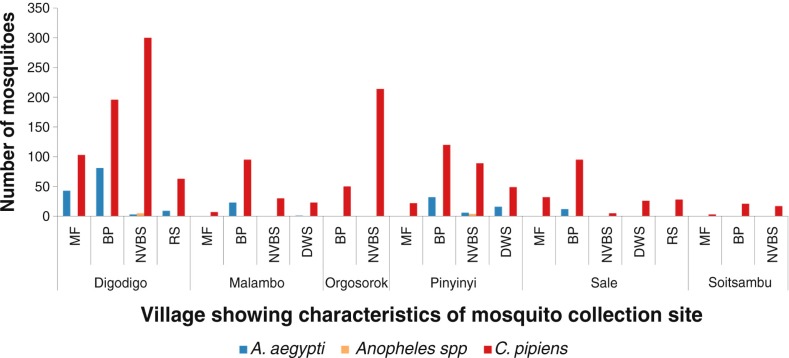
A cross-sectional entomological investigation was carried out before the suspected RVF outbreak in October 2012. Mosquitoes were sampled both outdoors and indoors using the Centre for Disease Control (CDC) light traps and Mosquito Magnets baited with attractants. Outdoor traps were placed in proximity with breeding sites and under canopy in banana plantations close to the sleeping places of animals.
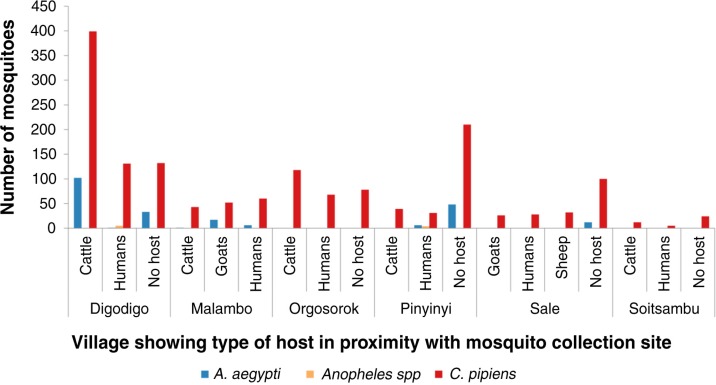
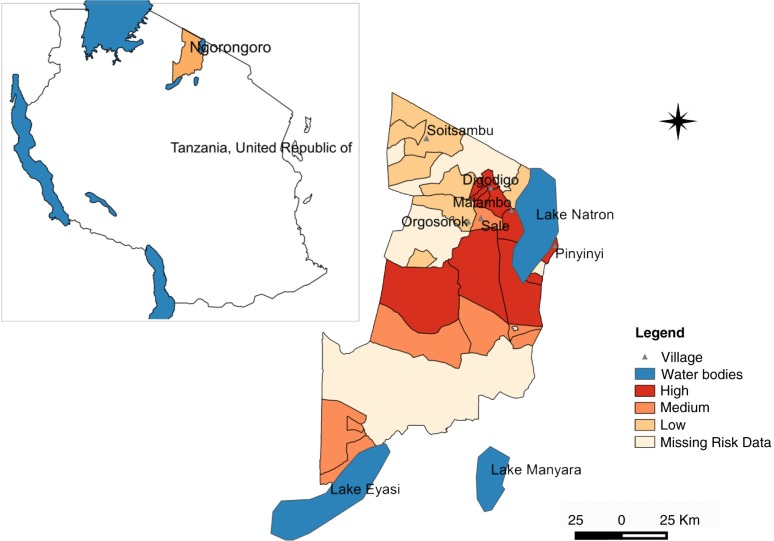
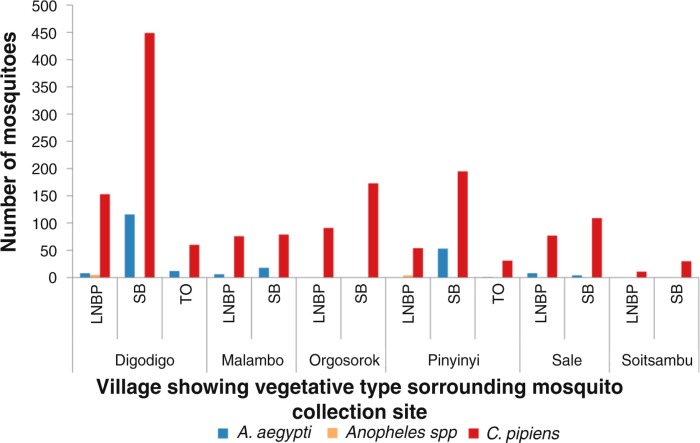
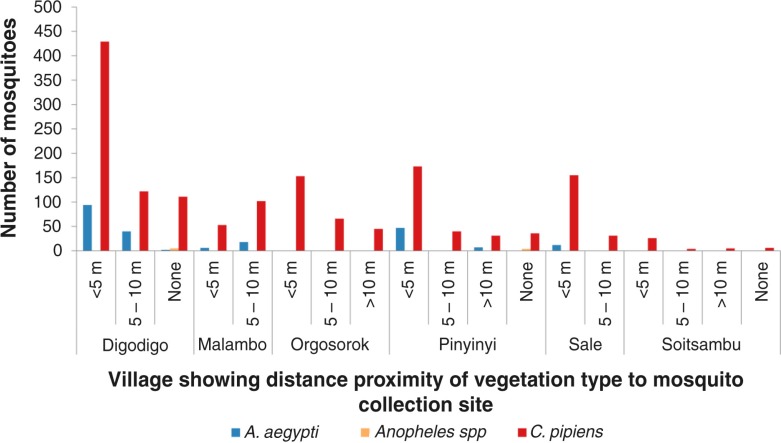
A total of 1,823 mosquitoes were collected, of which 87% (N=1,588) were Culex pipiens complex, 12% (N=226) Aedes aegypti, and 0.5% (N=9) Anopheles species. About two-thirds (67%; N=1,095) of C. pipiens complex and nearly 100% (N=225) of A. aegypti were trapped outdoors using Mosquito Magnets. All Anopheles species were trapped indoors using CDC light traps. There were variations in abundance of C. pipiens complex and A. aegypti among different ecological and vegetation habitats. Over three quarters (78%) of C. pipiens complex and most (85%) of the A. aegypti were trapped in banana and maize farms. Both C. pipiens complex and A. aegypti were more abundant in proximity with cattle and in semi-arid thorn bushes and lower Afro-montane. The highest number of mosquitoes was recorded in villages that were most affected during the RVF epidemic of 2007. Of the tested 150 pools of C. pipiens complex and 45 pools of A. aegypti, none was infected with RVF virus.
These results provide insights into unique habitat characterisation relating to mosquito abundances and distribution in RVF epidemic-prone areas of Ngorongoro district in northern Tanzania.
裂谷热(RVF)是一种由蚊子传播的病毒性人畜共患病,主要影响反刍动物,但也能够感染人类。
确定坦桑尼亚北部恩戈罗恩戈罗区疾病流行地区蚊子媒介的丰度和分布情况,以及它们在病毒传播和维持中的潜在作用。
在2012年10月疑似裂谷热疫情爆发前进行了一项横断面昆虫学调查。使用疾病控制中心(CDC)诱蚊灯和用引诱剂诱饵的灭蚊器在室外和室内采集蚊子。室外诱捕器放置在繁殖地附近以及靠近动物睡眠场所的香蕉种植园的树冠下。
共采集到1823只蚊子,其中87%(N = 1588)为尖音库蚊复合组,12%(N = 226)为埃及伊蚊,0.5%(N = 9)为按蚊属物种。使用灭蚊器在室外捕获了约三分之二(67%;N = 1095)的尖音库蚊复合组和近100%(N = 225)的埃及伊蚊。所有按蚊属物种均使用CDC诱蚊灯在室内捕获。尖音库蚊复合组和埃及伊蚊在不同生态和植被栖息地的丰度存在差异。超过四分之三(78%)的尖音库蚊复合组和大多数(85%)的埃及伊蚊在香蕉和玉米农场中捕获。尖音库蚊复合组和埃及伊蚊在靠近牛群的地方以及半干旱荆棘丛和低地非洲山地更为丰富。在2007年裂谷热疫情期间受影响最严重的村庄记录到的蚊子数量最多。在测试的150组尖音库蚊复合组和45组埃及伊蚊中,均未感染裂谷热病毒。
这些结果为坦桑尼亚北部恩戈罗恩戈罗区裂谷热易流行地区与蚊子丰度和分布相关的独特栖息地特征提供了见解。