Cai Qingqing, Chen Kailin, Young Ken H
1] Department of Medical Oncology, Sun Yat-sen University Cancer Center, State Key Laboratory of Oncology in South China, Collaborative Innovation Center of Cancer Medicine, Guangzhou, China [2] Department of Hematopathology, The University of Texas MD Anderson Cancer Center, Houston, TX, USA.
Department of Medical Oncology, Sun Yat-sen University Cancer Center, State Key Laboratory of Oncology in South China, Collaborative Innovation Center of Cancer Medicine, Guangzhou, China.
Exp Mol Med. 2015 Jan 23;47(1):e133. doi: 10.1038/emm.2014.105.
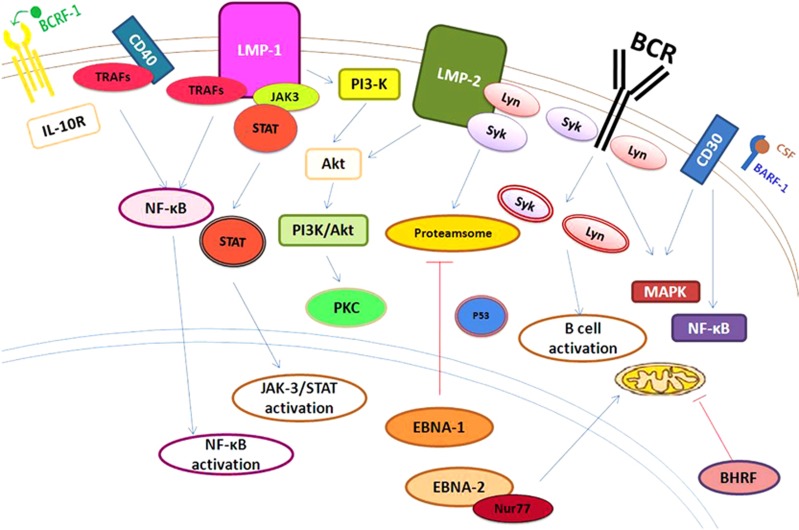
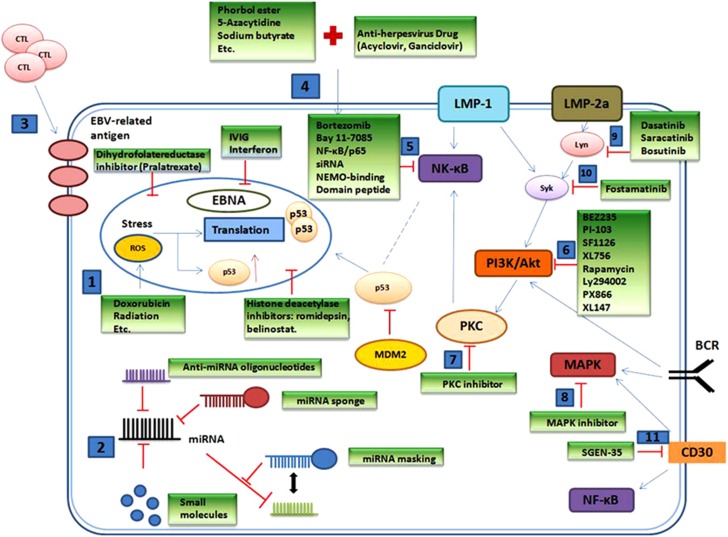
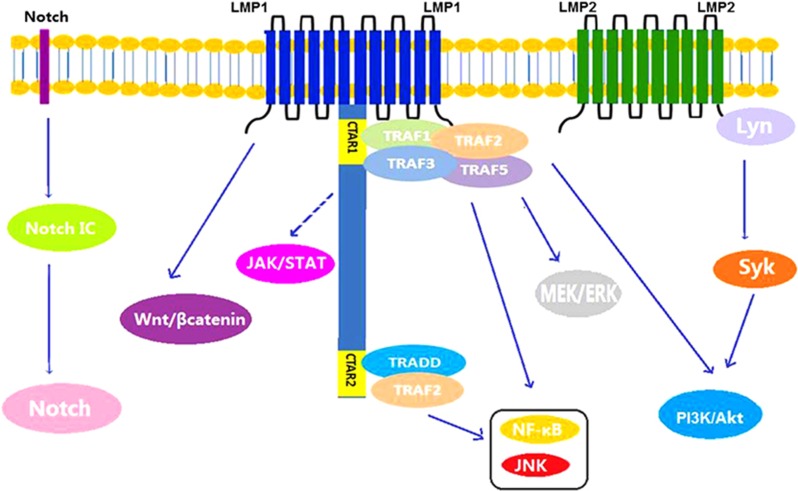
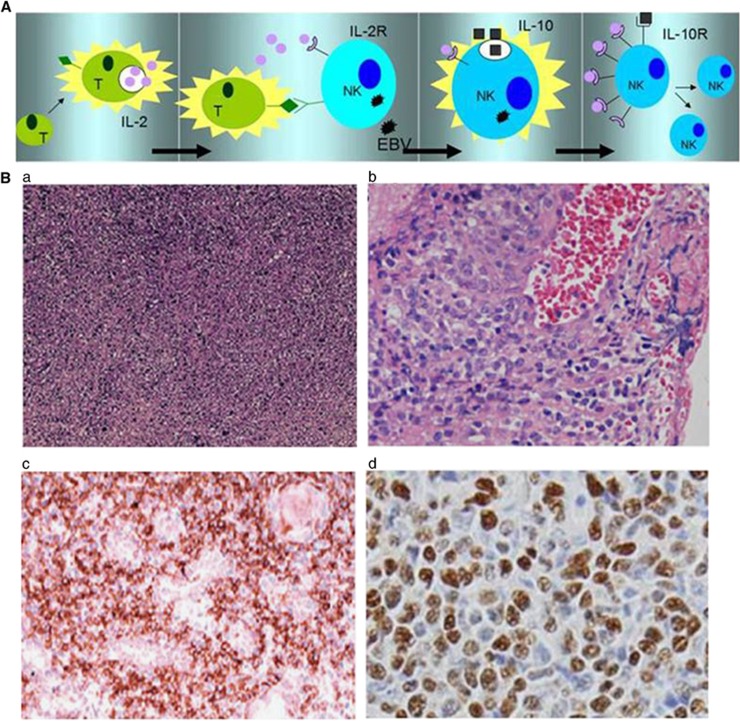
Epstein-Barr virus, a ubiquitous human herpesvirus, can induce both lytic and latent infections that result in a variety of human diseases, including lymphoproliferative disorders. The oncogenic potential of Epstein-Barr virus is related to its ability to infect and transform B lymphocytes into continuously proliferating lymphoblastoid cells. However, Epstein-Barr virus has also been implicated in the development of T/natural killer cell lymphoproliferative diseases. Epstein-Barr virus encodes a series of products that mimic several growth, transcription and anti-apoptotic factors, thus usurping control of pathways that regulate diverse homeostatic cellular functions and the microenvironment. However, the exact mechanism by which Epstein-Barr virus promotes oncogenesis and inflammatory lesion development remains unclear. Epstein-Barr virus-associated T/natural killer cell lymphoproliferative diseases often have overlapping clinical symptoms as well as histologic and immunophenotypic features because both lymphoid cell types derive from a common precursor. Accurate classification of Epstein-Barr virus-associated T/natural killer cell lymphoproliferative diseases is a prerequisite for appropriate clinical management. Currently, the treatment of most T/natural killer cell lymphoproliferative diseases is less than satisfactory. Novel and targeted therapies are strongly required to satisfy clinical demands. This review describes our current knowledge of the genetics, oncogenesis, biology, diagnosis and treatment of Epstein-Barr virus-associated T/natural killer cell lymphoproliferative diseases.
爱泼斯坦-巴尔病毒是一种普遍存在的人类疱疹病毒,可引发裂解性感染和潜伏性感染,导致包括淋巴增殖性疾病在内的多种人类疾病。爱泼斯坦-巴尔病毒的致癌潜力与其感染并将B淋巴细胞转化为持续增殖的淋巴母细胞的能力有关。然而,爱泼斯坦-巴尔病毒也与T/自然杀伤细胞淋巴增殖性疾病的发生有关。爱泼斯坦-巴尔病毒编码一系列产物,这些产物可模拟多种生长、转录和抗凋亡因子,从而篡夺对调节多种细胞稳态功能和微环境的信号通路的控制。然而,爱泼斯坦-巴尔病毒促进肿瘤发生和炎症性病变发展的确切机制仍不清楚。爱泼斯坦-巴尔病毒相关的T/自然杀伤细胞淋巴增殖性疾病通常具有重叠的临床症状以及组织学和免疫表型特征,因为这两种淋巴细胞类型都源自共同的前体细胞。准确分类爱泼斯坦-巴尔病毒相关的T/自然杀伤细胞淋巴增殖性疾病是进行适当临床管理的前提条件。目前,大多数T/自然杀伤细胞淋巴增殖性疾病的治疗效果并不理想。迫切需要新的靶向治疗方法来满足临床需求。本综述描述了我们目前对爱泼斯坦-巴尔病毒相关的T/自然杀伤细胞淋巴增殖性疾病的遗传学、肿瘤发生、生物学、诊断和治疗的认识。