Kodavanti Prasada Rao S, Royland Joyce E, Osorio Cristina, Winnik Witold M, Ortiz Pedro, Lei Lei, Ramabhadran Ram, Alzate Oscar
Neurotoxicology Branch, and 2Genetic and Cellular Toxicology Branch, Office of Research and Development (ORD), U.S. Environmental Protection Agency (EPA), Research Triangle Park, North Carolina, USA.
Environ Health Perspect. 2015 May;123(5):428-36. doi: 10.1289/ehp.1408504. Epub 2014 Dec 19.
Polybrominated diphenyl ethers (PBDEs) are structurally similar to polychlorinated biphenyls (PCBs) and have both central (learning and memory deficits) and peripheral (motor dysfunction) neurotoxic effects at concentrations/doses similar to those of PCBs. The cellular and molecular mechanisms for these neurotoxic effects are not fully understood; however, several studies have shown that PBDEs affect thyroid hormones, cause oxidative stress, and disrupt Ca2+-mediated signal transduction. Changes in these signal transduction pathways can lead to differential gene regulation with subsequent changes in protein expression, which can affect the development and function of the nervous system.
In this study, we examined the protein expression profiles in the rat cerebellum and hippocampus following developmental exposure to a commercial PBDE mixture, DE-71.
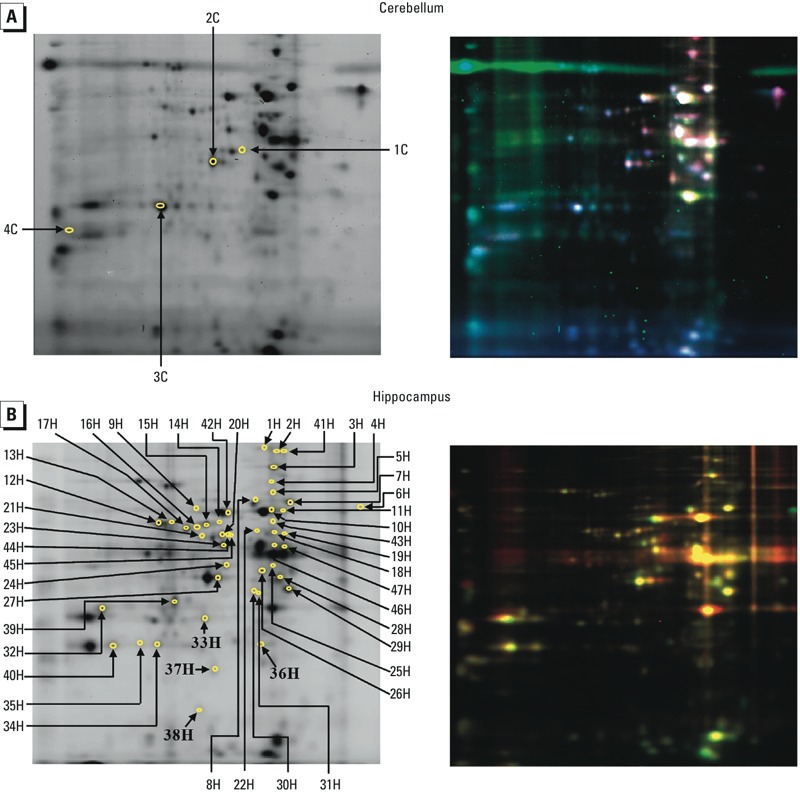
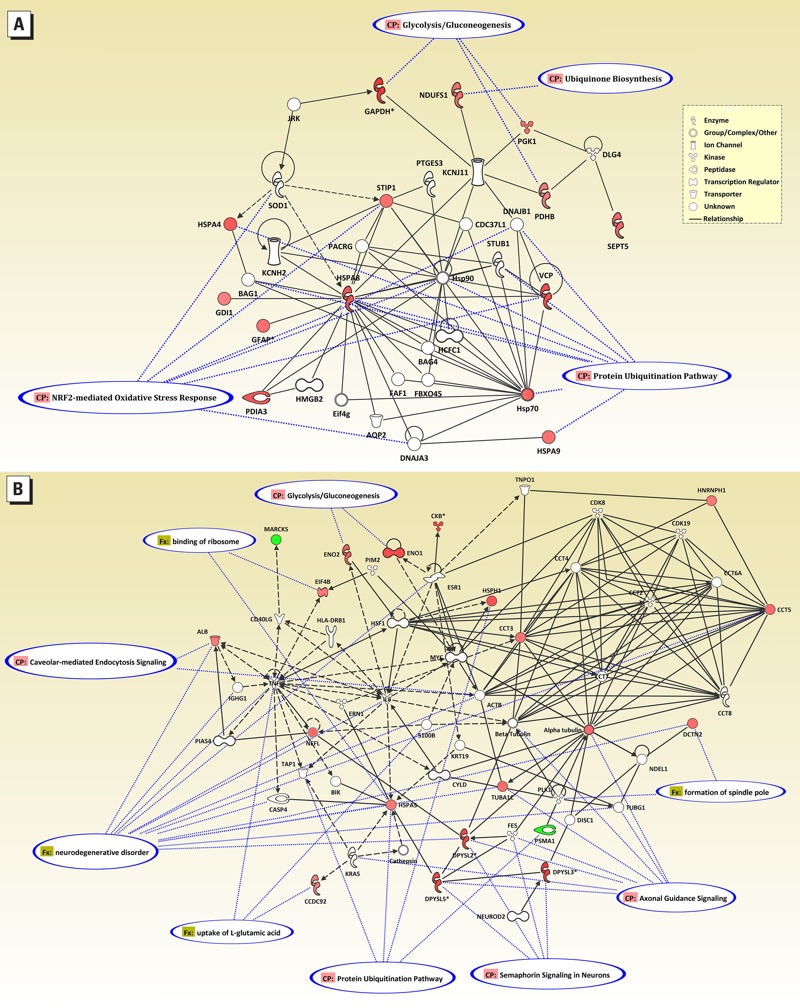
Pregnant Long-Evans rats were dosed perinatally with 0 or 30.6 mg/kg/day of DE-71 from gestation day 6 through sampling on postnatal day 14. Proteins from the cerebellum and hippocampus were extracted, expression differences were detected by two-dimensional difference gel electrophoresis, and proteins were identified by tandem mass spectrometry. Protein network interaction analysis was performed using Ingenuity® Pathway Analysis, and the proteins of interest were validated by Western blotting.
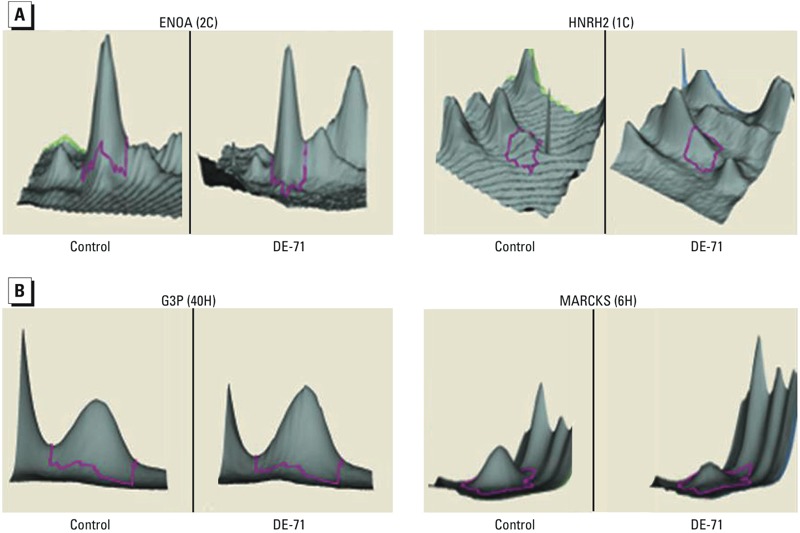
Four proteins were significantly differentially expressed in the cerebellum following DE-71 exposure, whereas 70 proteins were significantly differentially expressed in the hippocampus. Of these proteins, 4 from the cerebellum and 47 from the hippocampus, identifiable by mass spectrometry, were found to have roles in mitochondrial energy metabolism, oxidative stress, apoptosis, calcium signaling, and growth of the nervous system.
Results suggest that changes in energy metabolism and processes related to neuroplasticity and growth may be involved in the developmental neurotoxicity of PBDEs.
多溴二苯醚(PBDEs)在结构上与多氯联苯(PCBs)相似,在与PCBs相似的浓度/剂量下具有中枢(学习和记忆缺陷)和外周(运动功能障碍)神经毒性作用。这些神经毒性作用的细胞和分子机制尚未完全明确;然而,多项研究表明,PBDEs会影响甲状腺激素、引起氧化应激并破坏Ca2+介导的信号转导。这些信号转导途径的变化可导致基因调控差异,进而引起蛋白质表达变化,这可能会影响神经系统的发育和功能。
在本研究中,我们检测了发育期暴露于商用PBDE混合物DE-71后大鼠小脑和海马中的蛋白质表达谱。
将怀孕的Long-Evans大鼠在围产期从妊娠第6天开始每天给予0或30.6 mg/kg的DE-71,直至出生后第14天取样。提取小脑和海马中的蛋白质,通过二维差异凝胶电泳检测表达差异,并用串联质谱法鉴定蛋白质。使用Ingenuity®通路分析进行蛋白质网络相互作用分析,并用蛋白质印迹法验证感兴趣的蛋白质。
DE-71暴露后,小脑中有4种蛋白质表达有显著差异,而海马中有70种蛋白质表达有显著差异。在这些蛋白质中,通过质谱鉴定出的小脑中有4种、海马中有47种蛋白质在神经线粒体能量代谢、氧化应激、细胞凋亡、钙信号传导和生长中发挥作用。
结果表明,能量代谢以及与神经可塑性和生长相关的过程的变化可能与PBDEs的发育神经毒性有关。