Wang Haiping, Wang Xin, Ke Zun-Ji, Comer Ashley L, Xu Mei, Frank Jacqueline A, Zhang Zhuo, Shi Xianglin, Luo Jia
Department of Pharmacology and Nutritional Sciences, University of Kentucky College of Medicine, Lexington, KY 40536, USA.
Department of Biochemistry, Shanghai University of Traditional Chinese Medicine, 1200 Cailun Road, Shanghai 201203, China.
Toxicol Appl Pharmacol. 2015 Mar 15;283(3):157-67. doi: 10.1016/j.taap.2014.12.019. Epub 2015 Jan 23.
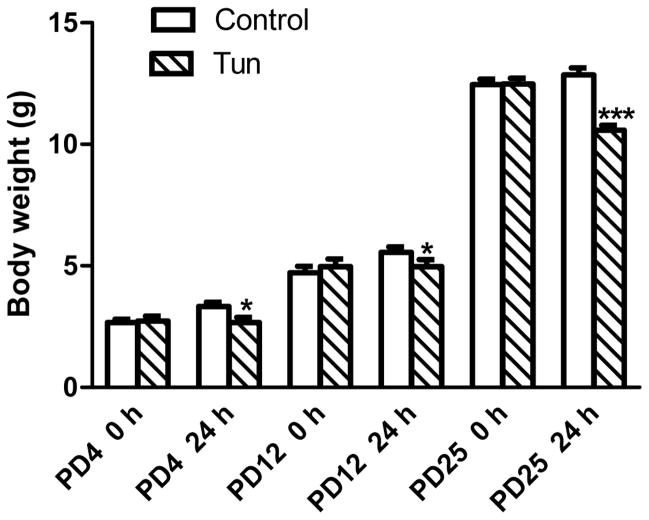
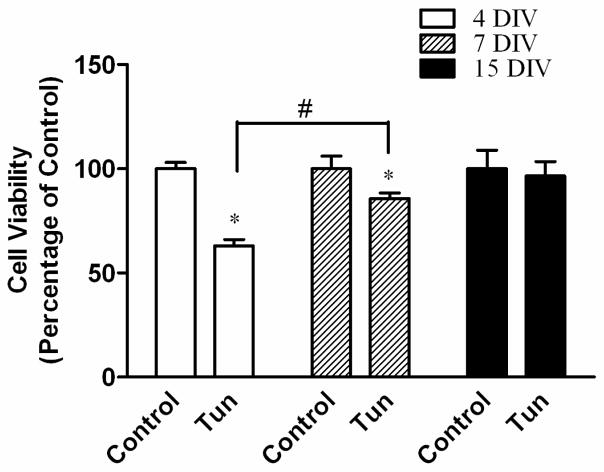
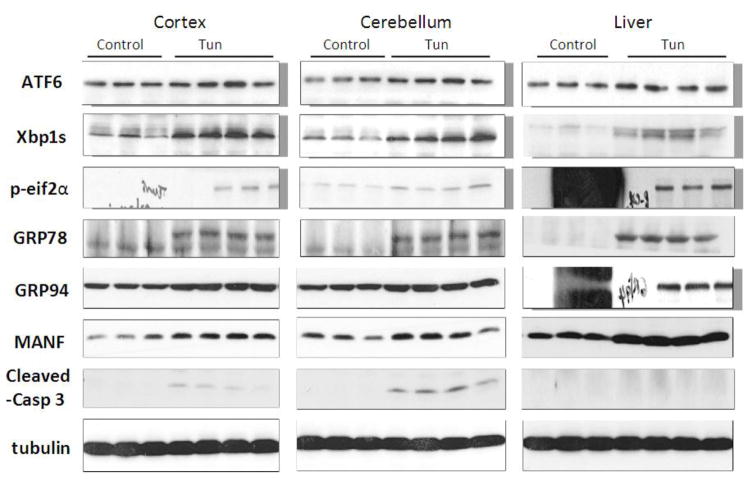
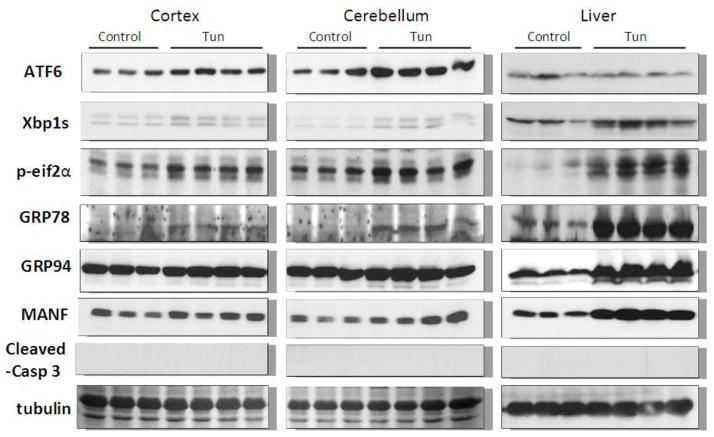
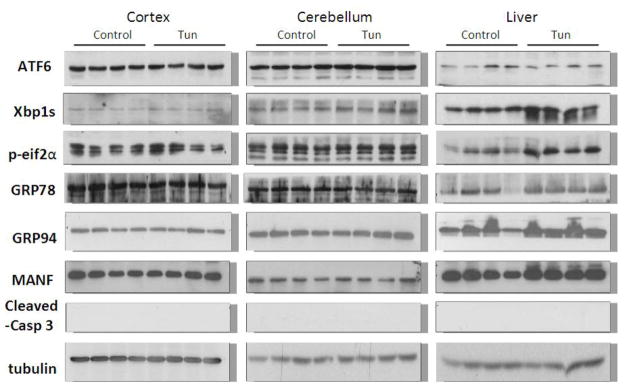
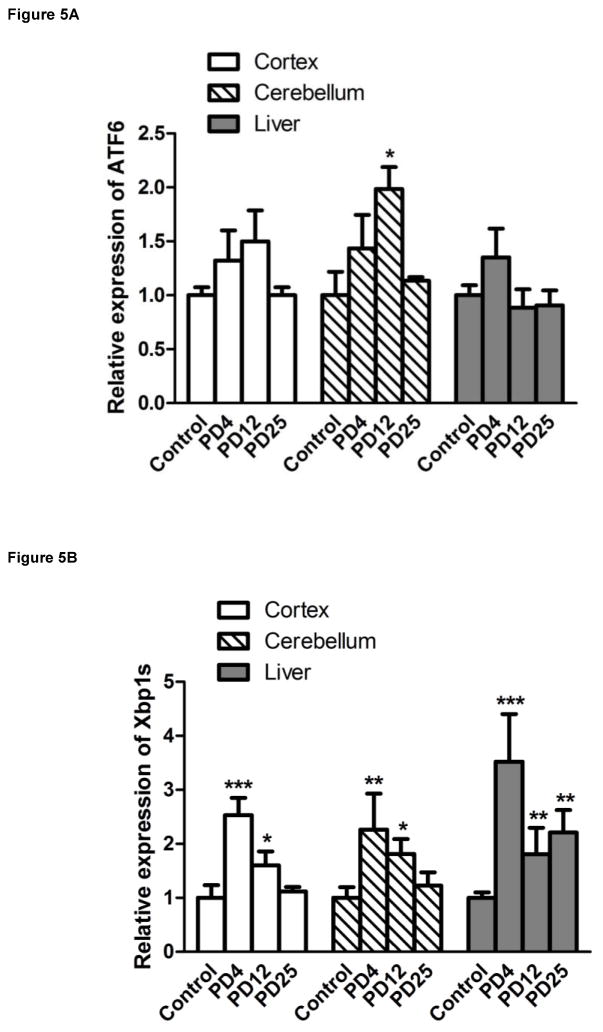
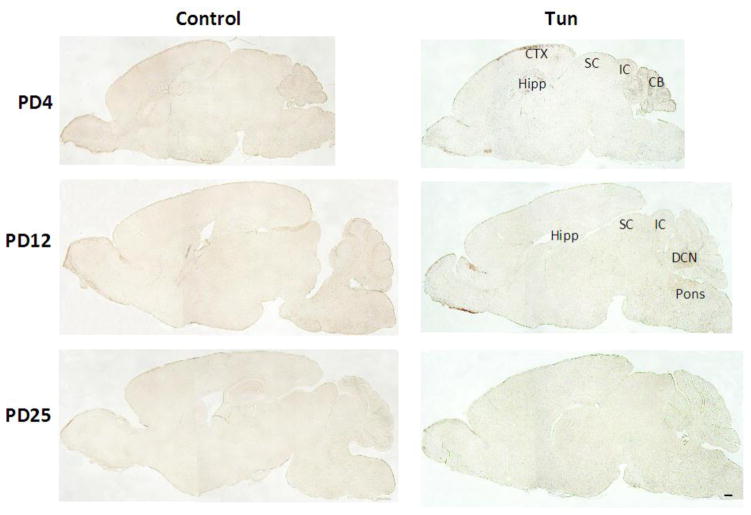
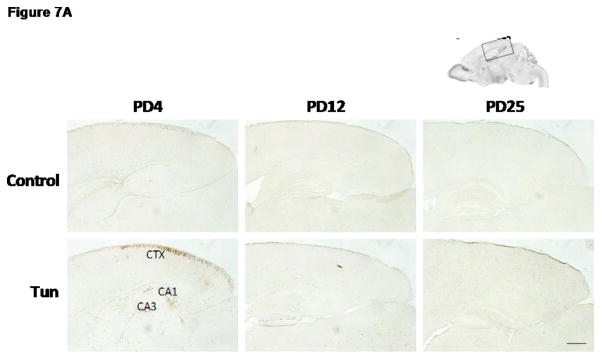
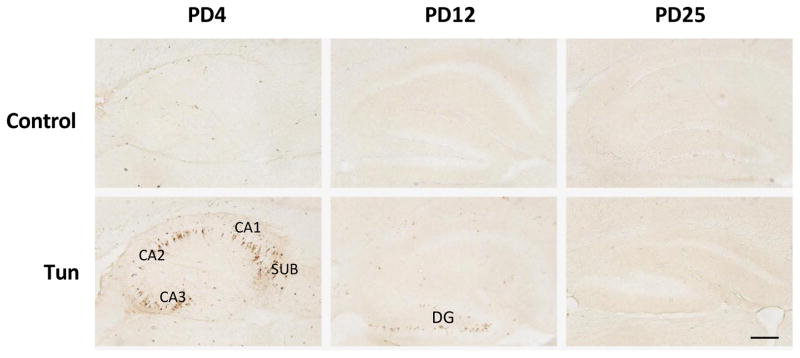
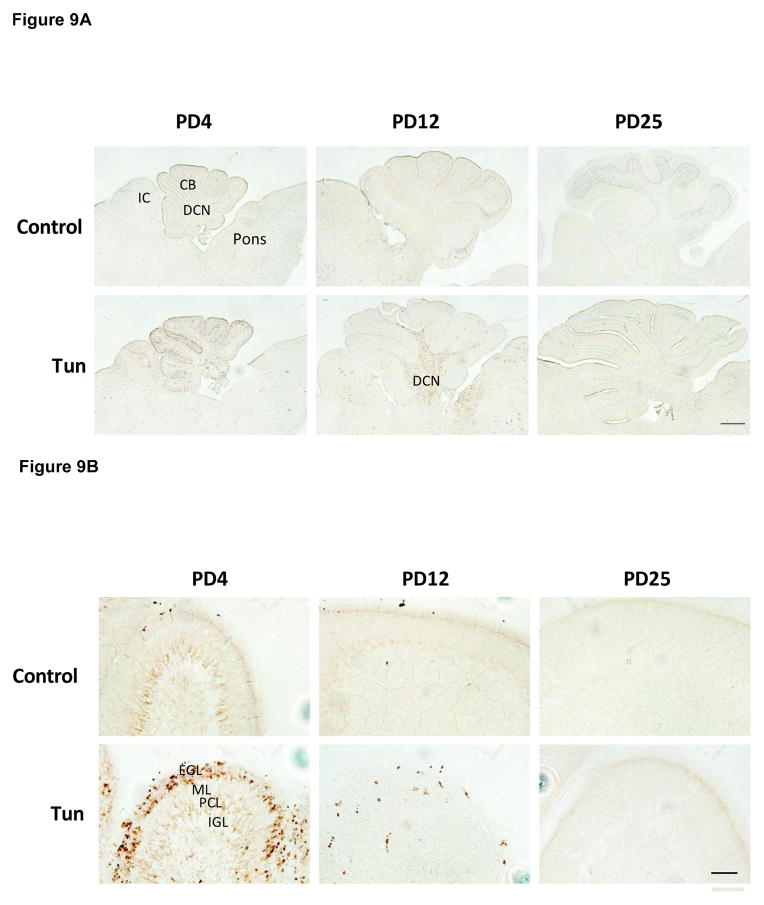
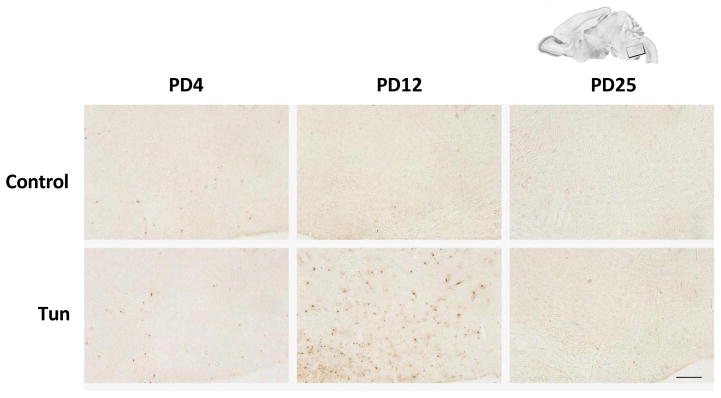
Accumulation of unfolded or misfolded proteins in the endoplasmic reticulum (ER) causes ER stress, resulting in the activation of the unfolded protein response (UPR). ER stress and UPR are associated with many neurodevelopmental and neurodegenerative disorders. The developing brain is particularly susceptible to environmental insults which may cause ER stress. We evaluated the UPR in the brain of postnatal mice. Tunicamycin, a commonly used ER stress inducer, was administered subcutaneously to mice of postnatal days (PDs) 4, 12 and 25. Tunicamycin caused UPR in the cerebral cortex, hippocampus and cerebellum of mice of PD4 and PD12, which was evident by the upregulation of ATF6, XBP1s, p-eIF2α, GRP78, GRP94 and MANF, but failed to induce UPR in the brain of PD25 mice. Tunicamycin-induced UPR in the liver was observed at all stages. In PD4 mice, tunicamycin-induced caspase-3 activation was observed in layer II of the parietal and optical cortex, CA1-CA3 and the subiculum of the hippocampus, the cerebellar external germinal layer and the superior/inferior colliculus. Tunicamycin-induced caspase-3 activation was also shown on PD12 but to a much lesser degree and mainly located in the dentate gyrus of the hippocampus, deep cerebellar nuclei and pons. Tunicamycin did not activate caspase-3 in the brain of PD25 mice and the liver of all stages. Similarly, immature cerebellar neurons were sensitive to tunicamycin-induced cell death in culture, but became resistant as they matured in vitro. These results suggest that the UPR is developmentally regulated and the immature brain is more susceptible to ER stress.
内质网(ER)中未折叠或错误折叠蛋白质的积累会导致内质网应激,从而激活未折叠蛋白反应(UPR)。内质网应激和UPR与许多神经发育和神经退行性疾病有关。发育中的大脑特别容易受到可能导致内质网应激的环境损伤。我们评估了出生后小鼠大脑中的UPR。将常用的内质网应激诱导剂衣霉素皮下注射给出生后第4、12和25天的小鼠。衣霉素在出生后第4天和第12天小鼠的大脑皮层、海马体和小脑中引起了UPR,这通过ATF6、XBP1s、p-eIF2α、GRP78、GRP94和MANF的上调得以体现,但未能在出生后第25天小鼠的大脑中诱导UPR。在所有阶段都观察到衣霉素诱导肝脏中的UPR。在出生后第4天的小鼠中,在顶叶和视皮层的II层、海马体的CA1-CA3和下托、小脑外生发层以及上/下丘中观察到衣霉素诱导的caspase-3激活。在出生后第12天也显示出衣霉素诱导的caspase-3激活,但程度要小得多,主要位于海马体的齿状回、小脑深部核团和脑桥。衣霉素在出生后第25天小鼠的大脑以及所有阶段的肝脏中均未激活caspase-3。同样,未成熟的小脑神经元在培养中对衣霉素诱导的细胞死亡敏感,但在体外成熟后变得具有抗性。这些结果表明,UPR受到发育调控,未成熟的大脑对内质网应激更敏感。