Kubinak Jason L, Petersen Charisse, Stephens W Zac, Soto Ray, Bake Erin, O'Connell Ryan M, Round June L
Department of Pathology, Division of Microbiology and Immunology, University of Utah School of Medicine, Salt Lake City, UT 84112, USA.
Department of Pathology, Division of Microbiology and Immunology, University of Utah School of Medicine, Salt Lake City, UT 84112, USA.
Cell Host Microbe. 2015 Feb 11;17(2):153-63. doi: 10.1016/j.chom.2014.12.009. Epub 2015 Jan 22.
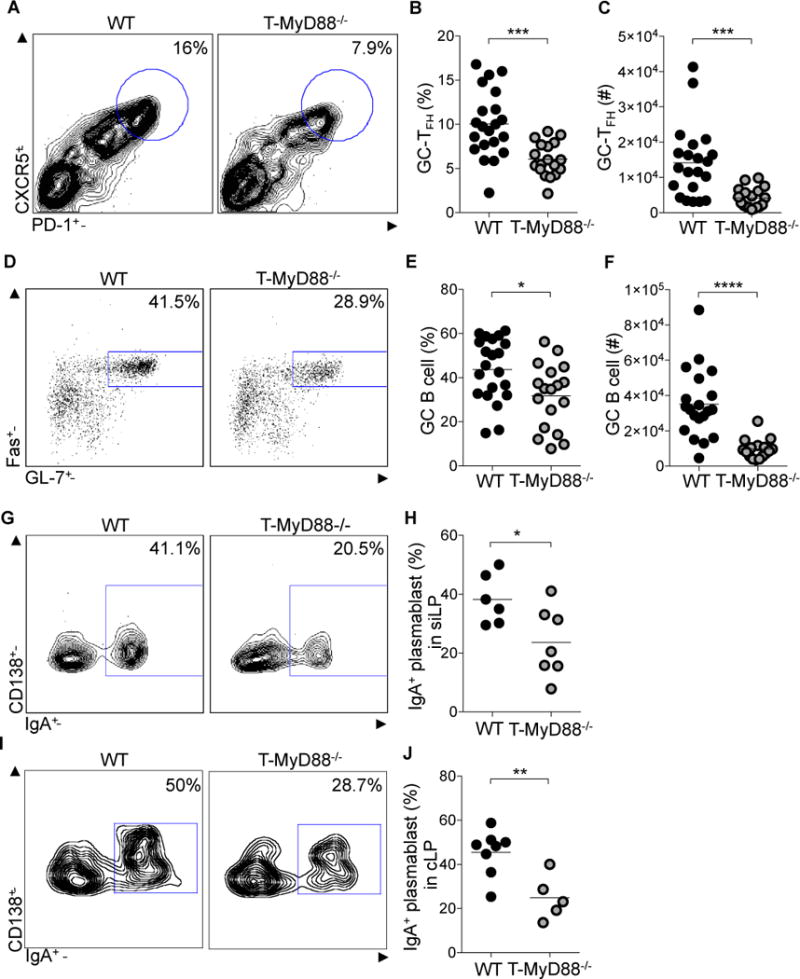
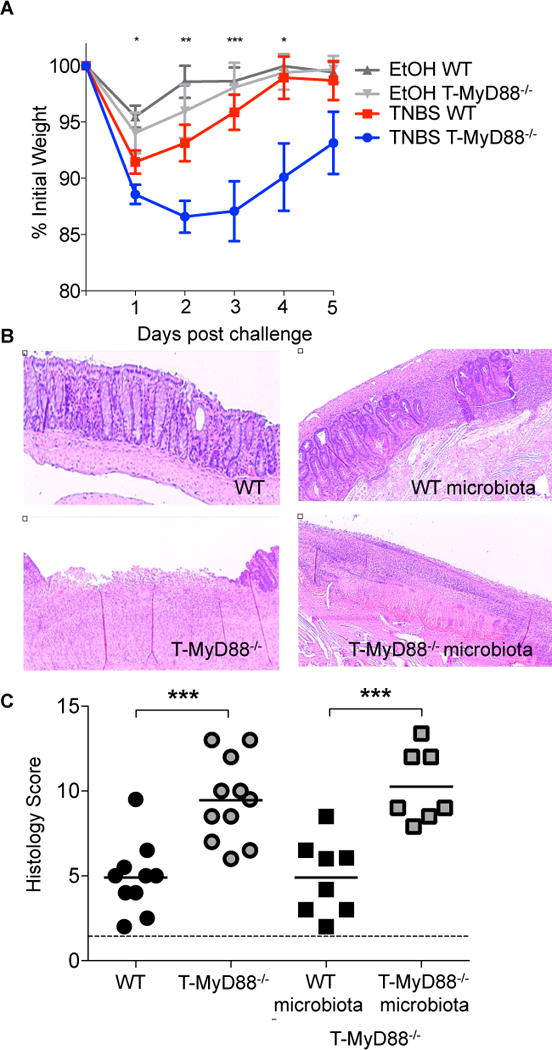
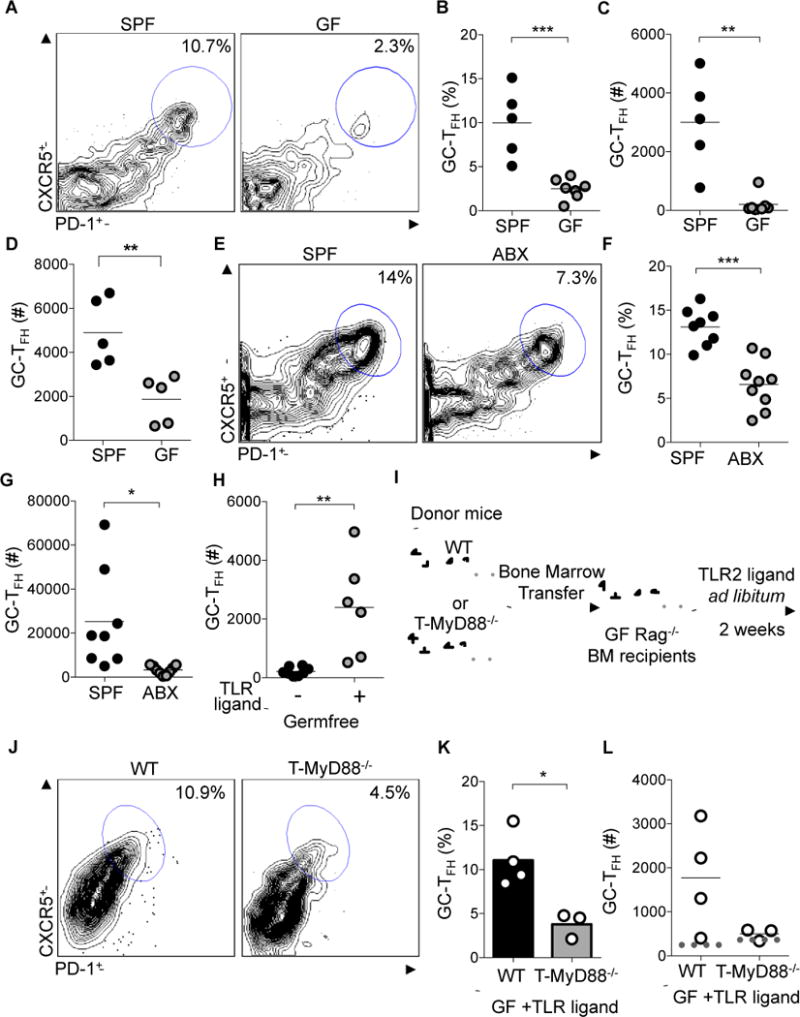
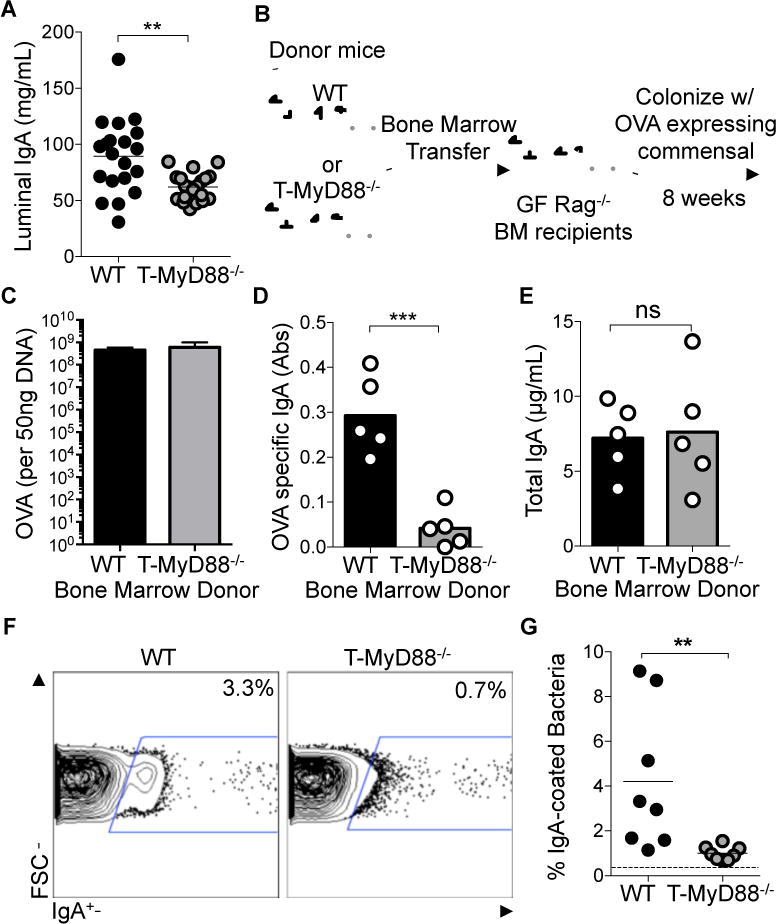
Altered commensal communities are associated with human disease. IgA mediates intestinal homeostasis and regulates microbiota composition. Intestinal IgA is produced at high levels as a result of T follicular helper cell (TFH) and B cell interactions in germinal centers. However, the pathways directing host IgA responses toward the microbiota remain unknown. Here, we report that signaling through the innate adaptor MyD88 in gut T cells coordinates germinal center responses, including TFH and IgA+ B cell development. TFH development is deficient in germ-free mice and can be restored by feeding TLR2 agonists that activate T cell-intrinsic MyD88 signaling. Loss of this pathway diminishes high-affinity IgA targeting of the microbiota and fails to control the bacterial community, leading to worsened disease. Our findings identify that T cells converge innate and adaptive immune signals to coordinate IgA against the microbiota, constraining microbial community membership to promote symbiosis.
共生群落的改变与人类疾病相关。免疫球蛋白A(IgA)介导肠道内稳态并调节微生物群组成。由于生发中心内T滤泡辅助细胞(TFH)与B细胞的相互作用,肠道IgA得以高水平产生。然而,引导宿主针对微生物群产生IgA反应的途径仍不明确。在此,我们报告称,肠道T细胞中通过先天性接头蛋白髓样分化因子88(MyD88)发出的信号协调生发中心反应,包括TFH和IgA+B细胞的发育。在无菌小鼠中,TFH发育存在缺陷,而喂食可激活T细胞内在MyD88信号的Toll样受体2(TLR2)激动剂可使其恢复。该途径的缺失会减少针对微生物群的高亲和力IgA,并无法控制细菌群落,从而导致疾病恶化。我们的研究结果表明,T细胞整合先天性和适应性免疫信号,以协调针对微生物群的IgA反应,限制微生物群落成员以促进共生。